

Reading coffee bag flavor notes is the skill of decoding natural taste and aroma profiles that reveal a coffee’s origin, processing, and roast character. These notes are not added ingredients. They are the roaster’s shorthand for the natural aromatic compounds your nose and palate will detect in the cup. The industry term for this practice is sensory evaluation, and it is guided by standards like the SCA Flavor Wheel and the World Coffee Research Sensory Lexicon, which together define over 110 distinct flavor attributes. Once you understand the system behind those words, picking the right bag becomes far less guesswork and far more skill.
What do coffee flavor notes on bags actually mean?
Flavor notes are the roaster’s description of natural flavor compounds detected during professional cupping, not added flavorings. Coffee contains over 1,000 aroma compounds, which is more than wine, and those compounds create the fruity, floral, nutty, or chocolatey sensations you taste. The notes on the bag are a map, not a guarantee.
Professional cuppers assign these notes under controlled lab conditions using multi-taster consensus. That process is precise and repeatable. Your home brew will vary based on grind size, water temperature, and equipment, so your experience will naturally differ from the lab result.

The SCA Flavor Wheel organizes descriptors into 9 major categories with 80-plus individual terms. Those categories include fruity, floral, sweet, nutty/cocoa, spicy, roasted, green/vegetative, sour/fermented, and other. Knowing which category a note belongs to helps you set realistic expectations before you brew.
The ISO 18794:2025 standard, updated in january 2026, formalizes sensory vocabulary terms like “intensity,” “over-extracted,” and “stewed” for consistent communication. This standard matters because it means the word “bright” on one bag and “bright” on another refer to the same sensory experience.
Here is what shapes the flavor notes you see on any bag:
- Origin and altitude: High-altitude beans from Ethiopia often carry floral and berry notes. Beans from Brazil tend toward nutty and chocolate profiles due to lower altitude and different varietals.
- Processing method: Washed coffees taste cleaner and more acidic. Natural processed beans ferment in the fruit, producing wilder, fruitier notes. Honey processed coffees land in between.
- Roast level: Heat transforms the bean’s natural sugars and acids, shifting the flavor profile dramatically.
- Varietal: Arabica varietals like Gesha or Bourbon carry distinct genetic flavor tendencies regardless of origin.
- Brew method: A French press extracts differently than a pour-over, which changes which notes you actually taste.
Pro Tip: When you see three or more notes listed on a bag, focus on the first one. Roasters typically list notes in order of dominance, so the first descriptor is the flavor you are most likely to detect.
How does roast level affect the flavor notes you see on a coffee bag?
Roast level is the single fastest shortcut for predicting a coffee’s flavor family. Light roasts highlight fruity and floral notes, medium roasts balance caramel and nutty elements, and dark roasts lean toward chocolatey and smoky profiles. Understanding this relationship lets you filter bags before you even read the tasting notes.
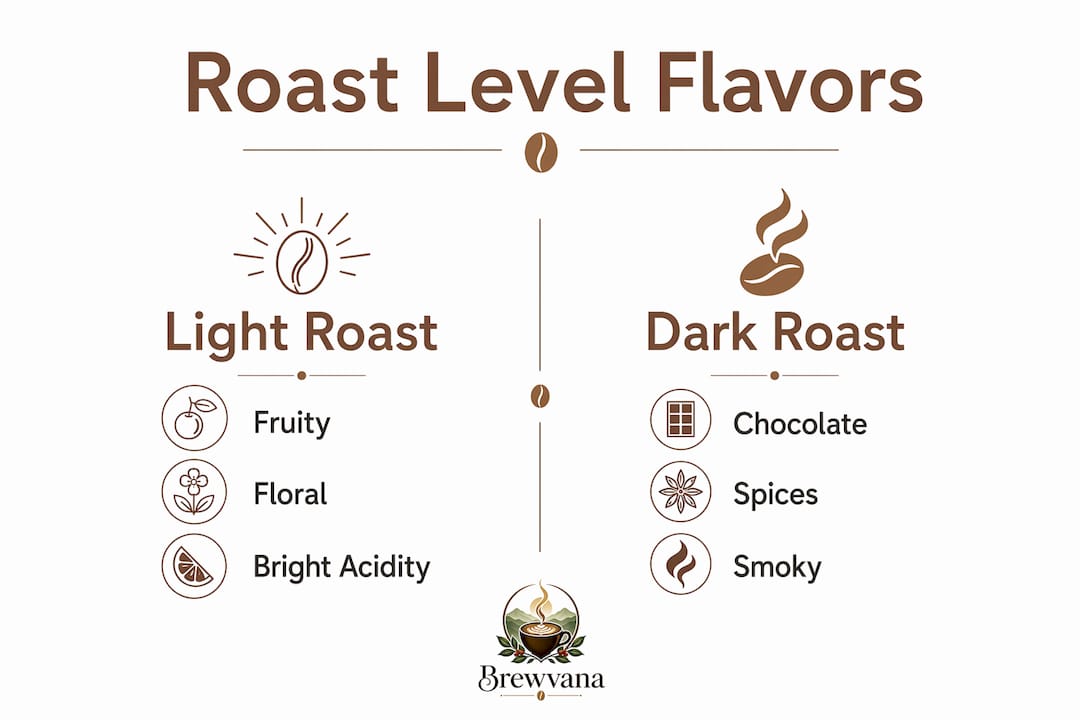
Heat breaks down the bean’s chlorogenic acids and develops Maillard reaction compounds. Light roasts preserve more of the bean’s original character. Dark roasts replace those delicate compounds with roasted, bitter, and smoky ones.
| Roast level | Dominant flavor families | Common note examples |
|---|---|---|
| Light | Fruity, floral, bright acidity | Blueberry, jasmine, lemon, peach |
| Medium | Sweet, balanced, nutty | Caramel, hazelnut, brown sugar, apple |
| Dark | Bold, roasted, low acidity | Dark chocolate, smoke, molasses, cedar |
This table works as a quick filter. If you love bright, tea-like coffees, scan for light roast bags. If you want something rich and low-acid, dark roast is your starting point. The flavor notes then give you the specific character within that family.
One important nuance: a dark roast labeled “dark chocolate” and a medium roast labeled “milk chocolate” are pointing to very different experiences. Dark chocolate notes come from roast development. Milk chocolate notes come from the bean’s natural sweetness. Both are valid, but they taste distinct in the cup.
Pro Tip: If a bag lists both a roast level and tasting notes that seem to contradict each other, trust the roast level for the dominant experience. A “light roast” labeled with “dark chocolate” likely has cocoa undertones, not a bold, bitter chocolate flavor.
You can learn more about how heat shapes flavor in Brewvana’s roast levels flavor guide.
Which other coffee label details help interpret flavor notes better?
Origin, processing method, and roast date are the three supporting details that give flavor notes real context. Without them, a note like “stone fruit” could mean a dozen different things. With them, you can predict the intensity, sweetness, and clarity of that note before brewing.
Here is what to look for on the label beyond the tasting notes themselves:
- Country and region: Ethiopian coffees from Yirgacheffe are famous for floral and citrus notes. Colombian coffees from Huila tend toward red fruit and caramel. Geographic origin shapes flavor more than almost any other variable.
- Processing method: A natural processed Ethiopian will taste far fruitier and more complex than a washed Ethiopian from the same farm. The processing method determines how much fruit contact the bean has before drying, which directly affects sweetness and fermentation character.
- Roast date: Freshness matters. Coffee peaks in flavor between 5 and 30 days after roasting. A bag with no roast date is a red flag. Stale coffee loses its volatile aromatic compounds, which means the notes on the bag will not show up in your cup.
- Varietal or farm name: Single-origin bags that list a specific farm or varietal, like Bourbon or Typica, signal that the roaster has traced the coffee’s lineage. These coffees tend to have more distinct and reliable flavor notes.
- Altitude: Higher altitude means slower cherry development, denser beans, and more complex acidity. Bags that list altitude above 1,800 meters often carry brighter, more layered flavor profiles.
Reading all these details together gives you a complete picture. A washed Yirgacheffe, roasted 10 days ago, from a farm at 2,000 meters, labeled with “bergamot and lemon” is a very specific and predictable cup. A generic “medium roast blend” with no origin or date is a much harder read.
How to taste your brewed coffee to connect with the flavor notes on the bag
Tasting coffee intentionally is a skill, and it builds quickly with practice. The goal is not to taste every note listed on the bag. Most home brewers detect only one or two dominant notes due to equipment and extraction variables. Matching the dominant flavor family counts as a successful tasting session.
Follow these steps to connect your sensory experience with the bag’s descriptions:
- Smell before you sip. Hold the cup under your nose and inhale slowly. Your nose detects aroma compounds before your palate does. Try to identify a broad category: does it smell fruity, earthy, sweet, or roasted?
- Sip and hold. Take a small sip and let the coffee sit on your tongue for two to three seconds before swallowing. This gives your taste buds time to register acidity, sweetness, and body.
- Describe the sensation first. Experts recommend describing sensations like brightness, sweetness, or heaviness before naming specific flavors. This prevents confirmation bias, where you taste what the bag tells you to taste rather than what is actually there.
- Match to a broad category. Once you have a sensation, move to a flavor family. Is the brightness citrusy or berry-like? Is the sweetness more caramel or honey? Use the SCA Flavor Wheel’s major categories as your reference.
- Compare with the bag. Now look at the tasting notes. Do your sensations align with the listed notes? You do not need an exact match. If the bag says “blueberry and jasmine” and you tasted “something fruity and floral,” that is a successful connection.
- Write it down. Keep a short tasting journal. Note the coffee name, roast level, brew method, and your impressions. Over time, patterns emerge and your palate calibrates faster.
Attending a local cupping event accelerates this process significantly. A structured 45-minute cupping session builds more sensory skill than weeks of solo tasting at home. Cupping exposes you to multiple coffees side by side, which trains your palate to detect differences rather than just describe a single cup in isolation.
Pro Tip: Try your coffee black for the first few sips before adding milk or sugar. Dairy and sweeteners coat the palate and mask the subtle notes that make specialty coffee worth the price.
For a deeper practice guide, Brewvana’s cupping at home guide walks through the full process step by step.
Key Takeaways
Reading coffee bag flavor notes accurately requires combining sensory vocabulary, roast knowledge, and label context to predict and confirm what you taste in the cup.
| Point | Details |
|---|---|
| Flavor notes are natural, not added | Notes describe aromatic compounds from origin and processing, not flavor additives. |
| Roast level predicts flavor family | Light roasts favor fruity notes; dark roasts favor chocolate and smoke. |
| Label context sharpens interpretation | Origin, processing method, and roast date clarify what flavor notes will actually taste like. |
| Describe sensations before naming flavors | Identifying brightness or sweetness first prevents confirmation bias during tasting. |
| One or two dominant notes is a win | Home brewers rarely taste every listed note; matching the dominant family is the real goal. |
Brewvana’s take on reading coffee flavor notes
The most common mistake coffee drinkers make is treating tasting notes as a checklist. They sip a coffee labeled “raspberry, hibiscus, and dark chocolate” and feel like they failed because they only tasted something vaguely fruity and rich. That is not failure. That is an accurate tasting experience.
Flavor notes are directional signals, not contractual promises. Professional cuppers work in controlled lab conditions with calibrated palates and multiple reference samples. You are brewing at home with tap water and a drip machine. The gap between those two environments is real, and it is not a flaw in your palate.
What I have found works better is focusing on flavor families rather than specific notes. If a bag says “stone fruit, brown sugar, and almond,” ask yourself one question: does this coffee taste more fruity and sweet, or more nutty and rich? That single distinction tells you whether the coffee is delivering its intended character. The specific fruits and nuts are details that come with time and practice.
The other thing I would push back on is the idea that you need expensive equipment to taste well. A clean grinder and filtered water matter more than a $500 brewer. Freshness matters more than both. Buy coffee with a visible roast date, brew it within 30 days, and your palate has a real chance to meet the notes on the bag.
Sensory skill is cumulative. Every cup you taste with intention adds to your reference library. The flavor wheel and lexicon are tools, not tests. Use them to build vocabulary, not to grade yourself.
— Brewvana
Specialty coffees with flavor notes worth tasting at Brewvana
Brewvana sources and roasts coffees with full label transparency, including roast date, origin, and detailed flavor descriptions on every product page.
The Single Origin Favorites Sample Pack is the best starting point for putting your new tasting skills to work. It gives you multiple origins side by side, which is the fastest way to train your palate to detect differences. For something with a clear, approachable flavor profile, the Dubai Chocolate flavored coffee showcases how chocolate notes express differently across roast levels. Every Brewvana coffee ships roasted to order, so the notes on the bag have a real chance of showing up in your cup.
FAQ
What are coffee flavor notes on a bag?
Flavor notes are the roaster’s description of natural aromatic compounds detected during professional cupping. They represent the coffee’s taste character from origin and processing, not added ingredients.
Are coffee flavor notes added to the beans?
No. Coffee’s flavor compounds develop naturally through the plant’s genetics, growing conditions, and roasting. Flavored coffees are a separate category where natural or artificial flavoring is added after roasting.
Why can’t I taste all the notes listed on the bag?
Most home brewers detect one or two dominant notes because equipment, water quality, and extraction variables all affect which compounds reach your palate. Matching the dominant flavor family is a successful result.
How does processing method affect flavor notes?
Washed coffees taste cleaner and brighter. Natural processed coffees develop wilder, fruitier notes from extended fruit contact during drying. The processing method is one of the strongest predictors of a coffee’s flavor character.
What is the best way to improve my ability to read flavor notes?
Attend a local cupping event. A structured cupping session builds sensory skill faster than solo tasting because you compare multiple coffees simultaneously, which trains your palate to detect differences rather than describe a single cup in isolation.