

The regions producing the best coffee share three defining traits: altitude above 1,200 meters, a climate with distinct wet and dry seasons, and processing methods that amplify the natural flavors locked inside each bean. Ethiopia, Brazil, Colombia, Kenya, and Indonesia lead the global conversation on coffee quality, but the full picture spans dozens of countries across the Coffee Belt, a band stretching between the Tropics of Cancer and Capricorn. Understanding where great coffee comes from, and why it tastes the way it does, transforms how you shop, brew, and appreciate every cup.
1. Brazil’s Cerrado Mineiro: the volume leader with specialty ambitions
Brazil is the world’s largest coffee producer, accounting for 30 to 40% of global output at roughly 63 million 60-kg bags annually. That scale alone makes Brazil unavoidable in any conversation about top coffee producing regions. What most enthusiasts miss, though, is that Brazil has moved well beyond commodity status.
The Cerrado Mineiro region recently received a Designation of Origin, a formal recognition that ensures consistent quality from uniform cherry ripening across the plateau. Coffees from this area deliver chocolate and nutty flavors with low acidity, making them ideal for espresso blends and reliable single-origin cups. The flat terrain and mechanized harvesting allow for scale without sacrificing traceability.
- Altitude range: 800 to 1,300 meters
- Dominant processing: natural and pulped natural
- Flavor profile: chocolate, nuts, caramel, low acidity
Pro Tip: When buying Brazilian single-origin, look for “Cerrado Mineiro” on the bag rather than just “Brazil.” The Designation of Origin guarantees a level of quality control that generic Brazilian lots do not.
2. Colombia’s Huila and Nariño: bright acidity and syrupy sweetness
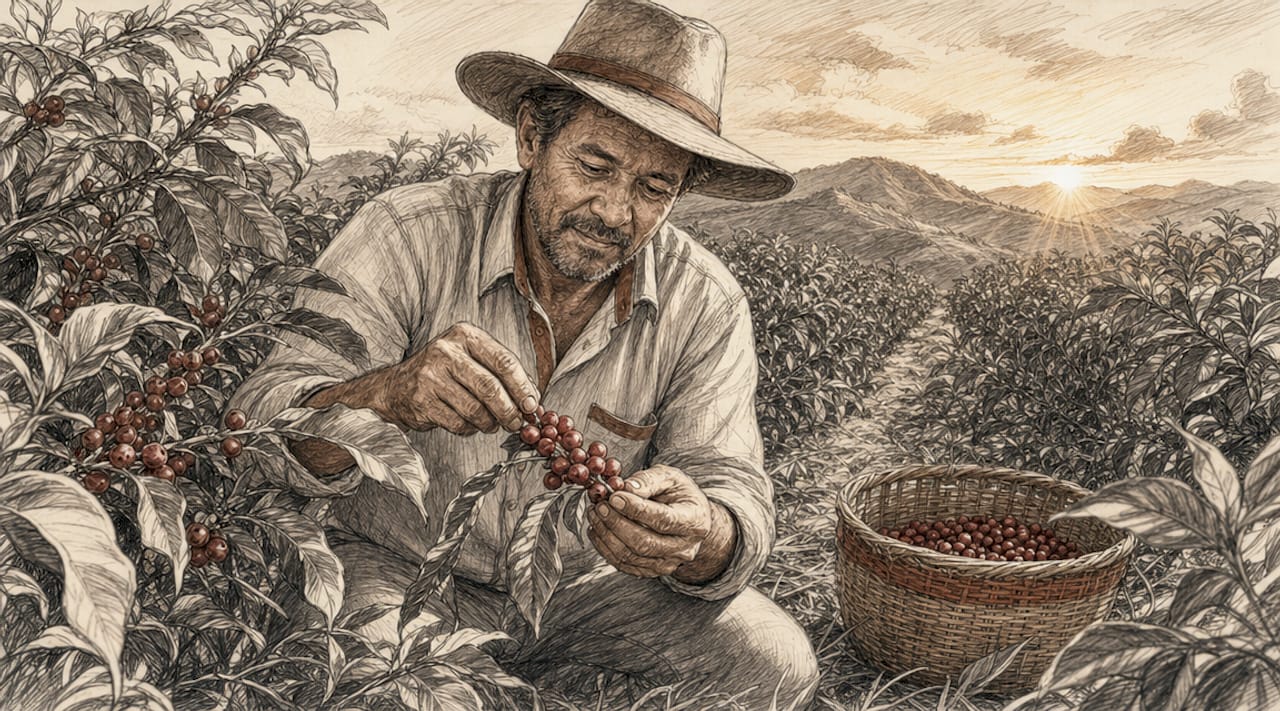
Colombia’s best coffee growing areas sit in the Andean mountain ranges, where altitude, rainfall, and volcanic soil combine to produce some of the most balanced Arabica in the world. Huila and Nariño are the two departments that consistently appear on specialty roasters’ sourcing lists. Both regions produce coffees with bright acidity, stone fruit notes, and a syrupy body that holds up beautifully in both filter and espresso formats.
Nariño sits closer to the equator and at higher elevations than most Colombian departments, which slows cherry maturation and concentrates sugars. Huila benefits from two harvest cycles per year due to its geography, giving buyers more frequent access to fresh lots. Colombia scores in the 85 to 88 SCA range for specialty Arabica, a strong benchmark that reflects the country’s consistent investment in quality.
3. Ethiopia’s Yirgacheffe and Sidama: the world’s highest-scoring origins
Ethiopia is the birthplace of Arabica coffee, and its Yirgacheffe and Sidama regions consistently produce the highest specialty scores globally, ranging from 88 to 92 on the SCA scale. Those numbers are not marketing. They reflect the genetic diversity of heirloom varieties grown at elevations between 1,700 and 2,200 meters, where slow maturation produces extraordinary complexity.
Within Yirgacheffe, the sub-regions of Kochere and Gedeb tell two different stories. Kochere produces refined washed coffees with clean floral and citrus notes, while Gedeb leans into natural processing for fruit-forward, almost wine-like cups. This level of sub-regional nuance is rare in any origin and is exactly why Ethiopian coffee commands premium prices at specialty auctions.
“African origins deliver floral and acidic notes that no other region replicates. Ethiopian Yirgacheffe, in particular, offers a cup profile so distinct that it often converts people who claim they don’t like coffee.” — Specialty coffee sourcing consensus
Understanding these tasting notes by origin helps you predict what’s in your cup before you even brew it.
4. Kenya’s Kirinyaga and Nyeri: the blackcurrant benchmark
Kenya’s coffee regions are among the most technically sophisticated in the world. The SL28 and SL34 varieties grown in Kirinyaga and Nyeri produce a striking blackcurrant and tomato acidity that competition roasters actively seek out. These are not subtle flavors. Kenyan coffee announces itself.
Kenya’s double fermentation washing process is the technical driver behind that clarity. By fermenting the coffee twice before drying, producers remove more mucilage and allow the bean’s natural flavor compounds to express themselves without interference. Beans grow at 1,400 to 2,100 meters, which gives them the slow maturation needed to develop that signature complexity. Kenya’s auction system, the Nairobi Coffee Exchange, also creates price transparency that rewards quality directly.
- Kirinyaga: volcanic red soil, bright acidity, blackcurrant and citrus
- Nyeri: cooler temperatures, heavier body, complex fruit and floral notes
- Embu: less well-known but producing increasingly competitive lots
5. Indonesia’s Sumatra, Java, and Aceh Gayo: earthy and bold
Indonesia’s coffee identity is defined by a processing method found nowhere else on earth. The wet-hulled giling basah process removes parchment while the bean is still moist, producing a heavy body, low acidity, and the earthy, syrupy flavors that Sumatra, Java, and Aceh Gayo are famous for. This is not a flaw in the process. It is the intended result, and it has built a loyal global following.
Sumatra’s Mandheling and Lintong sub-regions produce the most recognized Indonesian lots, with flavors ranging from dark chocolate and cedar to tobacco and mushroom. Aceh Gayo, in the northern highlands, is gaining ground in specialty markets for its cleaner cup relative to other Sumatran coffees. Java, historically the origin of the word “java” itself, produces a slightly lighter-bodied cup that pairs well in blends.
| Region | Processing method | Flavor profile |
|---|---|---|
| Sumatra Mandheling | Wet-hulled | Earthy, cedar, dark chocolate |
| Aceh Gayo | Wet-hulled / washed | Cleaner, herbal, mild acidity |
| Java | Wet-hulled / washed | Balanced, nutty, medium body |
| Bali Kintamani | Washed | Bright, citrus, light body |
6. Vietnam’s Central Highlands: Robusta reimagined
Vietnam is the world’s second-largest coffee producer, with Dak Lak province in the Central Highlands driving the majority of output. The country built its coffee economy on Robusta, a variety known for high caffeine, low acidity, and a bold, sometimes harsh flavor. That reputation is now shifting.
Specialty Robusta from Da Lat is emerging as a genuine category, with improved washed processing producing smoother, more nuanced cups that challenge the assumption that Robusta is only for instant coffee or espresso blends. For enthusiasts who have written off Vietnamese coffee, a washed Da Lat Robusta is worth revisiting. The flavor profile sits closer to dark chocolate and black tea than the rubbery bitterness often associated with commodity Robusta.
7. India’s Monsooned Malabar: a processing experiment that became a classic
India’s most distinctive coffee is not defined by altitude or variety. It is defined by weather. Monsooned Malabar coffee is exposed to the humid monsoon winds of the Malabar Coast for several months, causing the beans to swell and lose their original acidity. The result is a low-acid, full-bodied cup with notes of spice, wood, and grain that has no direct equivalent anywhere else in the world.
The Bababudangiri hills in Karnataka and the Nilgiri region also produce washed Arabica and Robusta with cleaner profiles, but Monsooned Malabar remains India’s most recognizable export to specialty markets. It functions exceptionally well in espresso blends, where its body and low acidity balance brighter origins like Ethiopia or Kenya.
8. Panama’s Boquete: where Geisha broke the auction record
Panama’s Boquete region produces Geisha coffee that regularly breaks auction records, with prices exceeding $100 per pound. That figure reflects genuine market demand, not hype. Geisha’s jasmine, bergamot, and tropical fruit profile is so distinct that it reads more like a tea than a traditional coffee, which is precisely why it attracts buyers willing to pay a premium.
Boquete’s volcanic soil, consistent cloud cover, and elevation between 1,200 and 1,800 meters create ideal conditions for Geisha’s slow development. Hacienda La Esmeralda is the farm most associated with putting Panamanian Geisha on the map, but several smaller producers in the region now offer competitive lots at more accessible price points.
Pro Tip: If a $100-per-pound Geisha is out of reach, look for Geisha lots from Colombia or Ethiopia, where the variety is now being cultivated at lower price points while retaining much of the floral complexity.
9. Costa Rica’s Tarrazú and Honduras: Central America’s rising specialty stars
Costa Rica’s Tarrazú region produces clean, sweet coffee lots where honey processing creates balanced, mildly sweet profiles that attract premium buyers. Honey processing, which leaves varying amounts of fruit mucilage on the bean during drying, sits between washed and natural methods. The result is a cup with more body and sweetness than a washed coffee but more clarity than a natural. Tarrazú’s high elevation and rich volcanic soil amplify those qualities.
Honduras has quietly become one of Central America’s most significant specialty exporters, with regions like Copán and Marcala producing fruity, honey-processed lots that compete with better-known origins. Mexico’s Chiapas and Oaxaca regions also deserve mention, offering earthy, chocolate-forward cups at price points that make them excellent entry points for enthusiasts building their palate.
10. Jamaica Blue Mountain and Hawaii Kona: prestige versus value
Jamaica Blue Mountain and Hawaii Kona occupy a unique position in the coffee world. Both are famous for historical exclusivity and marketing as much as for raw cup quality. Jamaica Blue Mountain is mild, balanced, and clean, with almost no bitterness. Hawaii Kona is smooth, medium-bodied, and slightly nutty. Both are genuinely good coffees.
The honest assessment is that specialty micro-lots from Brazil, Panama, and Ethiopia now challenge or exceed these origins on pure cup score while costing significantly less. That does not diminish Blue Mountain or Kona. It simply means that prestige and quality are not always the same thing, and enthusiasts who pay $50 for a bag of Kona should understand what they are actually buying. Learning to identify quality beans by cup score and processing method rather than by brand reputation is a skill worth developing.
11. How altitude, terroir, and processing define every cup
Altitude between 1,200 and 2,300 meters is the single most reliable predictor of coffee complexity. At higher elevations, cooler temperatures slow the maturation of coffee cherries, allowing more sugars and acids to develop inside the bean. This is why Ethiopian Yirgacheffe at 1,700 to 2,200 meters tastes fundamentally different from a low-altitude Robusta grown at 500 meters.
Processing method is the second major variable. Washed coffees, where the fruit is removed before drying, produce clean and bright cups that highlight a region’s terroir. Natural coffees, dried with the fruit intact, add sweetness and body but can introduce fermentation flavors. Honey processing sits between the two. Indonesia’s wet-hulled method is in a category of its own, producing flavors that no other process replicates. Exploring processing methods in depth is one of the fastest ways to understand why two coffees from the same country can taste completely different.
- Washed: clean, bright, terroir-forward (Ethiopia, Kenya, Colombia)
- Natural: sweet, fruity, full-bodied (Ethiopia, Brazil, Yemen)
- Honey: balanced sweetness and clarity (Costa Rica, Honduras)
- Wet-hulled: earthy, syrupy, low acidity (Indonesia)
Pro Tip: When comparing coffees from different origins, hold the processing method constant. Taste a washed Ethiopian against a washed Colombian before introducing natural or honey-processed lots. This isolates terroir as the variable and makes regional differences much clearer.
Key takeaways
The best coffee regions are defined by altitude, processing method, and variety working together. No single origin dominates every flavor preference.
| Point | Details |
|---|---|
| Altitude drives complexity | Beans grown above 1,200 meters mature slowly, developing more sugars and acids. |
| Processing shapes flavor | Washed, natural, honey, and wet-hulled methods produce fundamentally different cups from the same origin. |
| Ethiopia leads on specialty scores | Yirgacheffe and Sidama score 88 to 92 on the SCA scale, the highest of any origin. |
| Emerging regions challenge prestige | Panama’s Geisha and Brazil’s Cerrado Mineiro micro-lots now rival Jamaica Blue Mountain on cup quality. |
| Match origin to flavor preference | African origins favor floral and acidic cups; Latin America delivers balance; Indonesia offers bold and earthy profiles. |
Brewvana’s take on exploring coffee origins
The most common mistake enthusiasts make is treating origin as a brand. “I drink Ethiopian” or “I only buy Colombian” closes off the most interesting part of coffee exploration. The truth is that a washed Gedeb natural and a Kochere washed from the same country taste so different that they could be from separate continents. Origin is a starting point, not a destination.
What I have found, after sourcing and tasting coffees from dozens of regions, is that processing method is the faster path to understanding your own palate. Once you know whether you prefer the clean brightness of washed coffees or the fruit-forward intensity of naturals, origin selection becomes much more intuitive. A washed Colombian Nariño and a washed Kenyan Nyeri will both be bright and clean, but the Colombian will be syrupy and stone-fruity while the Kenyan will hit you with blackcurrant and tomato. That difference is terroir.
My honest recommendation: start with a sample pack that crosses continents and processing methods. Taste a Brazilian natural alongside an Ethiopian washed and an Indonesian wet-hulled in the same week. The contrast will teach you more about coffee origins than any article can. And do not skip the emerging regions. A Honduras Copán honey-processed lot at $18 per bag will surprise you more than a $50 Kona.
— Brewvana
Taste the world’s best coffee origins with Brewvana
Brewvana sources directly from the regions covered in this article, including single-origin lots from Ethiopia, Colombia, Brazil, and Indonesia, roasted to order so you receive peak-freshness beans every time.

Whether you want to compare a floral Ethiopian Yirgacheffe against an earthy Sumatran Mandheling or explore the syrupy sweetness of a Colombian Huila, Brewvana’s single-origin collection gives you direct access to the world’s top producing regions. Not sure where to start? The sample packs are built exactly for this, letting you taste across origins and processing methods before committing to a full bag. Every purchase also supports local schools through Brewvana’s community giving program.
FAQ
What regions produce the best coffee in the world?
Ethiopia, Colombia, Brazil, Kenya, and Indonesia consistently rank as the top coffee producing regions based on specialty scores, export volume, and flavor complexity. Ethiopia’s Yirgacheffe scores highest on the SCA scale at 88 to 92 points.
Where is the best coffee grown by altitude?
The best coffee grows between 1,200 and 2,300 meters above sea level, where cooler temperatures slow cherry maturation and develop complex flavors. Ethiopian Yirgacheffe at 1,700 to 2,200 meters and Kenya’s Kirinyaga at 1,400 to 2,100 meters are prime examples.
What makes African coffee regions unique?
African coffee regions like Ethiopia and Kenya produce floral, fruity, and acidic cup profiles driven by heirloom varieties, high altitude, and washed or natural processing. Kenya’s SL28 and SL34 varieties deliver a blackcurrant acidity found nowhere else.
Is Geisha coffee really worth the price?
Panama’s Boquete Geisha regularly sells above $100 per pound at auction because its jasmine and tropical fruit profile is genuinely unlike any other variety. For a more accessible entry point, Geisha grown in Colombia or Ethiopia offers similar floral complexity at lower prices.
How does processing method affect regional coffee flavor?
Processing method determines how much fruit contact the bean has during drying, which directly shapes sweetness, acidity, and body. Indonesia’s wet-hulled process produces earthy, syrupy cups, while Ethiopia’s washed process delivers clean, floral brightness from the same Coffee Belt geography.