

Most people assume coffee flavor comes down to roast level. Dark equals bold, light equals bright. But that framing misses something far more fundamental. The processing method used after harvest, before the coffee ever reaches a roaster, determines more about what ends up in your cup than almost anything else. Washed and unwashed beans carry entirely different flavor blueprints shaped by how much time they spent in contact with the coffee cherry’s fruit. Understanding that difference turns every bag you buy into a more intentional choice.
Table of Contents
- How processing shapes your coffee: Washed vs unwashed explained
- Flavor differences: What to expect from washed and unwashed beans
- Buying, roasting, and risk: Practical considerations for coffee enthusiasts
- Which bean is right for you? Choosing based on taste, risk, and brew method
- A roaster’s perspective: Why washed vs unwashed isn’t just about flavor
- Experience premium coffee with Brewvana
- Frequently asked questions
Key Takeaways
| Point | Details |
|---|---|
| Processing shapes flavor | The way coffee beans are processed (washed or unwashed) has a major impact on their taste and aroma. |
| Washed equals clarity | Washed coffees typically deliver cleaner, brighter flavors with pronounced acidity and less fruit. |
| Unwashed boosts fruitiness | Unwashed, natural-process beans are generally fuller-bodied, fruitier, and sometimes wilder in flavor. |
| Buyers must manage risk | Careful sourcing and quality checks, especially for naturals, help reduce risk of defects and inconsistency. |
| Choose for taste and brew method | Select washed or unwashed beans based on your preferred flavors and brewing style for the best cup. |
How processing shapes your coffee: Washed vs unwashed explained
Coffee starts as a fruit. The coffee cherry surrounds two seeds, and what happens to that cherry after harvest defines everything downstream. There are two dominant processing paths, and they produce beans that taste nothing alike even when grown in the same region at the same elevation.
Washed processing (also called wet processing) strips away the cherry’s skin and pulp before drying begins. The exposed seed undergoes fermentation in water tanks to break down the sticky mucilage layer, then gets thoroughly washed and laid out to dry in its parchment casing. Because the fruit is removed before drying, the seed has minimal contact with fruit sugars during the critical drying phase. The result is a bean that expresses terroir, the climate and soil of its origin, with unusual clarity.
Unwashed processing (also called natural processing) takes the opposite approach. The whole cherry dries intact, with the fruit skin and pulp still wrapped around the seed. This can take three to six weeks depending on climate, and throughout that time the seed absorbs sugars and fermentation byproducts from the surrounding fruit. The flavor transfer is deep and unmistakable.
Steps in washed processing:
- Harvested cherries are pulped to remove the outer skin
- Seeds ferment in water tanks for 12 to 72 hours to loosen mucilage
- Beans are washed clean with fresh water
- Clean parchment-covered beans dry on raised beds or patios
- Dried beans are hulled and sorted before export
Steps in natural (unwashed) processing:
- Harvested cherries are sorted and spread whole on drying beds
- Cherries dry intact for 3 to 6 weeks, turned regularly to prevent mold
- The dried fruit husk is mechanically removed after drying
- Beans are sorted, graded, and prepared for export
“Processing is not a finishing step. It is the first and most powerful flavor decision made for any lot of coffee.” This is why two beans from the same farm, harvested the same week, can taste completely different if one is washed and one is natural.
The table below shows how each method differs across key variables:
| Variable | Washed | Natural (unwashed) |
|---|---|---|
| Fruit contact during drying | None | Full contact for weeks |
| Fermentation location | Water tank (controlled) | On-cherry (less controlled) |
| Flavor outcome | Clean, bright, origin-forward | Fruity, sweet, heavy-bodied |
| Drying time | 1 to 3 weeks | 3 to 6 weeks |
| Quality control difficulty | Moderate | High |
| Water usage | High | Very low |
Understanding this table helps you decode what producers and premium coffee pod types really mean when they reference processing on their labels.
Flavor differences: What to expect from washed and unwashed beans
With an understanding of process, let’s explore how these beans actually taste and what makes each unique.
Washed beans deliver a cleaner, more transparent cup. Because the fruit is removed before fermentation completes, fewer fruit-derived compounds make it into the seed. What you taste instead is the raw character of the bean itself, shaped by altitude, soil, and variety. Ethiopian washed Yirgacheffes, for example, are famous for their jasmine florals and lemon-bright acidity with almost no perceivable sweetness from the fruit.

Natural beans tell a completely different story. The extended fruit contact loads the seed with fermented fruit compounds. You get blueberry, tropical fruit, and wine-like depth. The body is heavier, the sweetness more obvious, and the cup sometimes edges into funky or fermented territory. Ethiopian naturals from Sidama can taste almost like berry jam with no added sugar involved. That intensity is the point.
Washed flavor profile:
- Crisp, defined acidity (citrus, malic, phosphoric)
- Floral and herbal aromas
- Lighter to medium body
- Clean finish with no lingering fruit
- Origin character expressed clearly
Natural flavor profile:
- Pronounced fruit sweetness (berries, tropical, dried fruit)
- Wine-like or fermented undertones
- Heavier, more syrupy body
- Long, complex finish
- Processing character can overshadow terroir
Roast level interacts with both methods in important ways. A light roast preserves the clean acid structure of a washed bean beautifully. Push that same washed bean to a darker roast and you mute the terroir it was processed to protect. With naturals, a medium roast tends to hit a sweet spot, keeping the fruit intensity alive without introducing harsh roast bitterness. This is why understanding the roast date and bean flavor relationship matters enormously when you’re working with specialty-processed lots.
Pro Tip: Pour-over methods like the Chemex and V60 amplify the clarity of washed beans. If you love naturals, try them in a French press or as espresso where the body and sweetness get to shine.
| Flavor attribute | Washed | Natural |
|---|---|---|
| Sweetness | Low to moderate | High |
| Acidity | Bright and defined | Muted or wine-like |
| Body | Light to medium | Medium to full |
| Fruit character | Subtle | Intense |
| Finish | Clean | Long and complex |
| Best roast level | Light to medium-light | Medium to medium-dark |
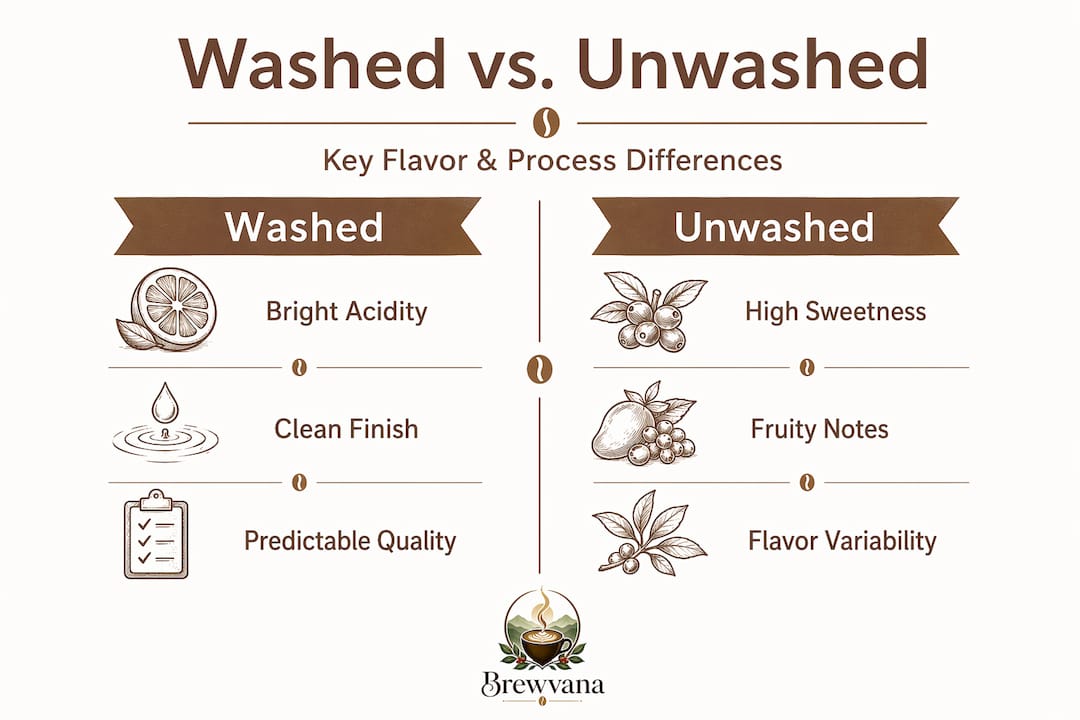
Studies on specialty coffee sensory evaluation consistently show that trained tasters score natural coffees higher for sweetness and body, while washed coffees score higher for clarity and acidity. Neither is objectively better. They serve different taste preferences and brew contexts.
Buying, roasting, and risk: Practical considerations for coffee enthusiasts
Flavor matters, but smart buying and roasting strategies make the difference between mediocre and exceptional coffee.
Here is the reality most buyers learn the hard way: natural coffees carry significantly more risk than washed lots. The extended drying period, with wet fruit sitting in open air, creates countless opportunities for mold, uneven fermentation, and defect development. A poorly managed natural lot can taste sour, medicinal, or barnyard-musty in ways that no roast level can fix.
Experienced roasters and importers handle this by requesting detailed processing data before committing to a purchase. This includes harvest date, fermentation approach, moisture management during drying, and defect counts per 300-gram sample. That data tells you how carefully the producer managed the risk window. Even with all that information in hand, arrival cupping, tasting the coffee immediately after it clears customs, remains the most reliable quality check.
Washed lots are not immune to problems either. Poor fermentation control during the water-tank stage can introduce harsh, sour notes. Under-fermented washed beans carry a grassy, papery quality that sticks around even through medium roasts. The difference is that well-managed washed processing is easier to execute consistently because the key variables, fermentation time, water temperature, and pH, are more controllable than an open-air drying bed.
Practical steps for buyers and home roasters:
- Ask your supplier for the harvest date. Coffee older than 12 months past harvest loses significant flavor complexity.
- Request the processing method and the specific fermentation approach used (dry, wet, anaerobic).
- Ask for defect count data. A count above 5 primary defects per 300 grams should raise questions.
- Check moisture content. Well-dried green coffee sits between 10 and 12 percent moisture. Outside that range signals drying problems.
- Cup the coffee on arrival before committing to a larger purchase. Even great-looking data cannot replace sensory confirmation.
- Start small with natural lots you haven’t sourced before. Buy a small sample before placing a full order.
- When ordering roasted coffee gifts or buying for others, default to washed beans for more predictable, crowd-pleasing flavor.
Pro Tip: When evaluating coffee options, look for roasters who publish processing and harvest information directly on the bag or product page. That transparency signals they sourced with the same rigor you’re applying.
Which bean is right for you? Choosing based on taste, risk, and brew method
You understand the risks and rewards. Now, here’s how to choose what’s best for your palate and brew style.
The clearest guide is your own flavor preference. If you love brightness, clarity, and wines that feel crisp and mineral-driven like a Chablis or Sancerre, washed beans are your baseline. If you gravitate toward richer, fruit-forward flavors, think natural wine, dried fruit, or berry desserts, naturals will satisfy in ways washed beans cannot.
Brew method narrows the choice further. Washed beans reward methods that emphasize clarity and acidity. Pour-over, Aeropress, and well-pulled espresso all extract the clean precision that washed processing creates. Natural beans thrive in immersion methods where the heavier body and fruit sweetness are assets rather than noise. French press, cold brew, and milk-based espresso drinks are ideal homes for a great natural.
Key considerations when choosing:
- Flavor goal: Clean and bright points to washed; fruity and rich points to natural
- Brew method: Pour-over and espresso favor washed; French press and cold brew favor natural
- Risk tolerance: Washed beans offer more predictable results; naturals reward careful sourcing
- Seasonality: Naturals are often available in limited harvests, so availability varies
- Roast preference: If you prefer lighter roasts, washed beans are the safer bet for expressive results
- Experience level: New to specialty coffee? Washed beans provide a clearer tasting framework
Because washed processing removes fruit so thoroughly before drying, the resulting flavor is highly reproducible lot to lot. That predictability is genuinely valuable when you need consistent results for espresso blending or brewing for a group with mixed preferences.
Pro Tip: Before buying a full bag of any natural coffee, order a sample or a smaller flight. Small-lot sampling lets you confirm the flavor lives up to the processing description before you invest.
A roaster’s perspective: Why washed vs unwashed isn’t just about flavor
Here’s what most articles gloss over: the washed versus natural conversation in specialty coffee is not just a flavor debate. It’s a sourcing discipline conversation, and treating it only as a taste preference oversimplifies what’s actually at stake.
Most online guides reduce the choice to “washed for clarity, natural for fruit.” That’s true as far as it goes. But a beautiful Ethiopian natural and a flawed Ethiopian natural can come from the same village, processed in the same season, and taste completely different because one producer managed their drying beds with obsessive care and the other didn’t. The processing method sets the flavor potential. Execution determines whether that potential is realized or wasted.
This is why we take the approach of requesting detailed workflow data before finalizing any sourcing decision. Harvest date, fermentation approach, moisture management through drying, and defect counts aren’t bureaucratic box-checking. They’re the evidence trail of how seriously a producer managed the risk window. A producer who tracks those variables closely is a producer you want to work with, regardless of whether they’re making washed or natural lots.
The uncomfortable truth is that some of the most celebrated naturals in the market are celebrated precisely because they’re rare examples of a risky process done exceptionally well. Most naturals aren’t that. Buyers who don’t do the sourcing homework end up with lots that taste like the idea of a great natural rather than the real thing.
We also think the roasting workflow conversation is underdeveloped in most processing guides. How you roast a natural versus a washed bean requires different approaches. Naturals need gentler development to avoid pushing the fruit character into fermented sourness. Washed beans can handle slightly more aggressive development without losing their clean profile. These aren’t minor details. They shape the final cup as much as the processing method itself.
Pro Tip: Always cup on arrival, even when the sourcing data looks perfect. Data tells you the producer was careful. Arrival cupping tells you whether care produced a result worth serving.
Experience premium coffee with Brewvana
If you’re ready to taste the difference yourself, Brewvana makes exploring washed and unwashed beans easy.

Start with a flavored coffees sample pack to experience how different processing methods interact with roast and flavor development side by side. If you want to go deeper into origin character, our single origin coffees showcase carefully sourced washed and natural lots where every detail from harvest date to fermentation method is part of the story. For days when convenience matters as much as quality, our instant coffee options bring that same sourcing standard into a format that fits any schedule. Every product ships roasted to order so what arrives in your hands is as fresh as it can possibly be.
Frequently asked questions
What is the main difference between washed and unwashed coffee beans?
Washed processing removes fruit before drying, while unwashed (natural) processing leaves the fruit intact during drying, which transfers fruit sugars and fermentation compounds directly into the seed and creates dramatically different flavor profiles.
Are washed coffee beans always better quality?
Not always. Washed beans generally produce cleaner, more predictable flavor, but quality depends entirely on processing management and defect control, and a poorly managed washed lot can be just as disappointing as a poorly managed natural.
Which brewing methods work best for washed or unwashed beans?
Washed beans suit clarity-focused methods like pour-over and espresso, while unwashed beans perform beautifully in cold brew and French press where their fruity body and sweetness are fully expressed.
Can flavor vary within washed or unwashed beans?
Yes, significantly. Fermentation time, harvest conditions, altitude, drying management, and defect counts all create variation even within a single processing method, which is why sourcing information matters as much as the method label.
Why are natural coffees considered riskier by buyers?
Natural coffees dry with wet fruit exposed to open air for weeks, creating conditions where mold and uneven fermentation can develop. That’s why buyers request harvest and processing data upfront and always confirm quality through arrival cupping before committing to larger purchases.