

Flavored coffee has been around far longer than most people realize, but what is flavored coffee infusion, exactly, and why does it taste so different from plain brewed coffee? Around 40% of coffee drinkers enjoy flavored varieties, which means this is not a fringe trend or a novelty, but a genuine part of daily coffee culture. Whether you’ve sipped a hazelnut latte without thinking twice about how that flavor got there, or you’re curious about crafting your own at home, understanding the infusion process changes how you choose, brew, and enjoy coffee entirely.
Table of Contents
- What is flavored coffee infusion? Understanding the basics
- Methods of flavor infusion: natural vs. artificial approaches
- How to flavor coffee at home: practical tips and common pitfalls
- Labeling, safety, and transparency in the infused coffee market
- Popular infused coffee flavors and pairing recommendations
- Why transparency and education matter more than ever in flavored coffee infusions
- Explore high-quality flavored coffee infusions with Brewvana
- Frequently asked questions
Key Takeaways
| Point | Details |
|---|---|
| Flavored coffee infusion defined | Infusion adds flavor to coffee beans or brew by absorbing flavor compounds before or after roasting. |
| Natural vs artificial methods | Natural infusions use real ingredients; artificial flavorings rely on chemical compounds or syrups. |
| Home flavoring tips | Use measured oils or spices and let beans rest to avoid overpowering and oily grind. |
| Transparency matters | Clear labeling helps consumers distinguish flavor methods and ensures safety and trust. |
| Popular flavors and pairings | Common flavors include vanilla, cinnamon and nuts, paired best with complementary brewing and foods. |
What is flavored coffee infusion? Understanding the basics
At its core, a flavored coffee infusion means introducing flavor compounds into coffee, either into the raw or roasted beans before brewing, or directly into brewed coffee itself. Infusion is the process of steeping a substance in a liquid to extract its flavor, allowing coffee beans to absorb those flavor compounds through their natural pores. Think of it like marinating meat. The beans don’t just get coated on the outside. Given enough time and the right conditions, the flavors work their way inward.
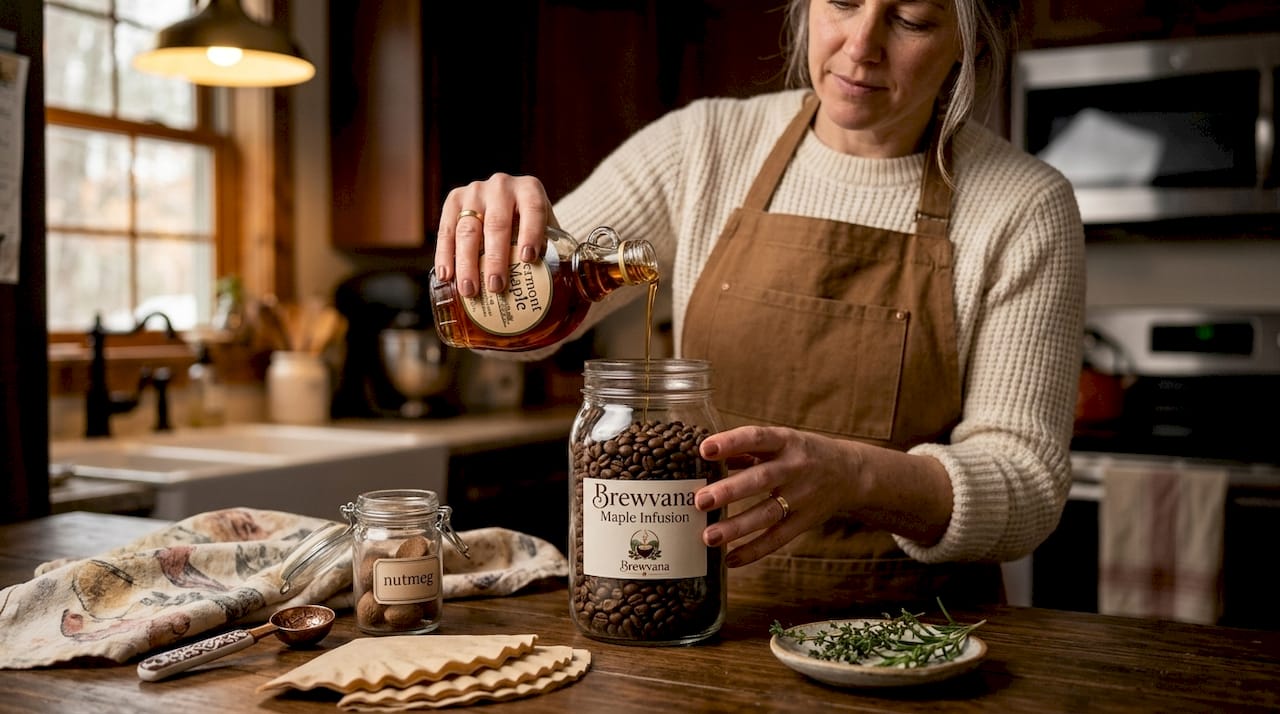
The science behind this is simple but worth knowing. Coffee beans are porous. They contain microscopic channels left behind from water loss during roasting. When flavor oils, extracts, or infusion liquids come into contact with the bean, osmosis and diffusion pull those aromatic molecules inside. The result is a bean that carries flavor from within, not just from a surface spray.
Common flavors used in this process include:
- Vanilla: One of the most universally loved, often used as a natural extract or oil
- Cinnamon: Adds warmth and spice without masking the coffee’s natural character
- Hazelnut: A classic pairing that complements medium roasts beautifully
- Cocoa or chocolate: Works especially well with dark roasts for a mocha-style profile
- Fruit oils: Citrus, raspberry, and cherry are popular for light roast infusions
- Peppermint: Used seasonally, often for cold brew or holiday blends
For a closer look at how these flavors translate in the cup, gourmet flavored coffee examples are a great starting point to understand which profiles suit your taste.
Methods of flavor infusion: natural vs. artificial approaches
Not all flavored coffee is made the same way. There are significant differences between natural infusions and artificial flavorings, and those differences affect taste, safety, and what you’re actually putting in your body. Natural infusions use real ingredients to enhance coffee flavor, while artificial flavorings mimic these flavors using chemical compounds.
One of the most interesting natural methods is co-fermentation. Co-fermented coffee is fermented alongside natural flavor ingredients, allowing microbial and chemical processing to embed flavor inside the bean before it is even roasted. This is different from spraying flavoring on after roasting. Co-fermentation creates flavor at a molecular level inside the bean’s structure, and the results are often more complex and layered. Producers have used everything from cinnamon sticks and dried fruit to botanical infusions during this stage.
Artificial methods, by contrast, typically involve spraying roasted beans with synthesized flavor compounds, or adding flavored syrups at the brewing stage. These methods are more affordable and produce consistent results at scale, which is why most commercially flavored coffees use them.
| Feature | Natural infusion | Artificial flavoring |
|---|---|---|
| Flavor source | Real ingredients, essential oils | Synthetic chemical compounds |
| Flavor complexity | Layered, nuanced | Strong, consistent, sometimes one-dimensional |
| Health considerations | Generally preferred | May include additives or allergens |
| Cost | Higher | Lower |
| Common uses | Specialty and craft coffees | Mass-market flavored coffees |
| Examples | Co-fermented vanilla bean, spice oils | Chemical vanilla compound, flavored syrup |
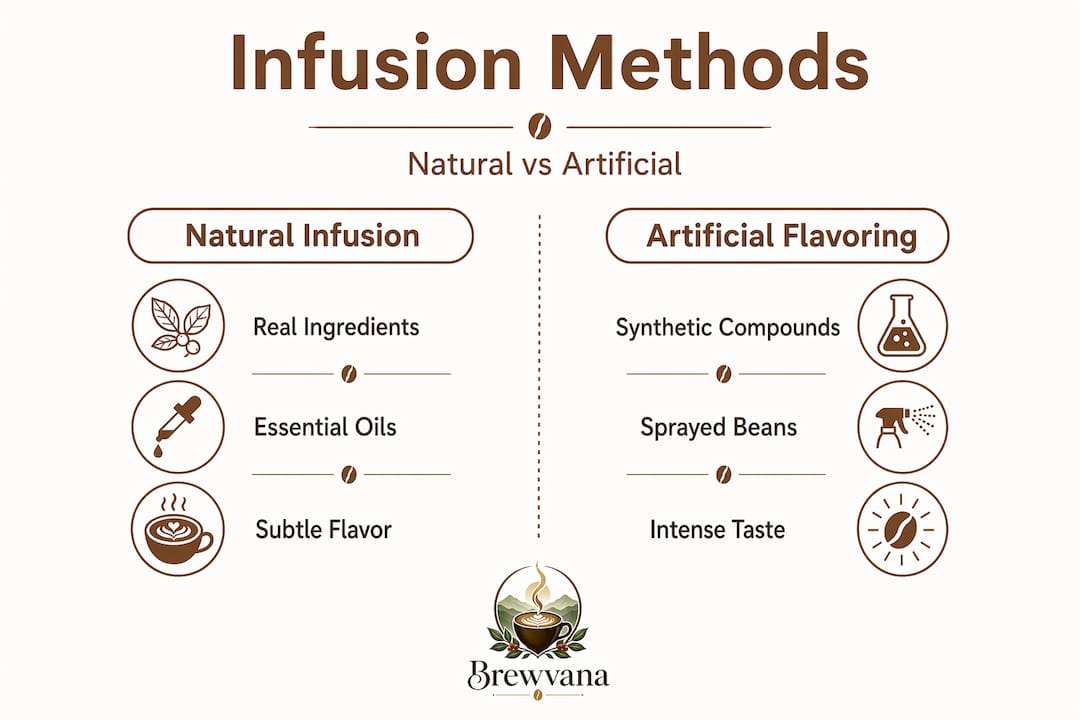
The natural route is preferred by most specialty coffee lovers, but artificial flavorings are not inherently bad. They just serve a different purpose. Understanding the method behind what’s in your cup gives you real buying power.
Pro Tip: When shopping for flavored coffee, look for labels that say “natural flavors” or list specific ingredients like “vanilla oil” or “cinnamon extract.” Vague terms like “artificial flavors” tell you very little about what was actually used. Exploring coffee bean processing methods can help you understand how bean treatment before roasting shapes the final flavor, too.
If you want to explore ready-made options, Brewvana’s flavored coffee collections feature naturally sourced profiles worth trying.
How to flavor coffee at home: practical tips and common pitfalls
Making your own flavored coffee at home is simpler than it sounds, and it’s one of the best ways to understand what infusion actually does. The key is precision. Too little flavoring and you won’t notice it. Too much and it overpowers the coffee entirely.
Here’s a practical method to get started:
- Choose your base: Use freshly roasted whole beans, ideally within two to three weeks of roast date. Stale beans absorb flavor poorly.
- Measure your flavoring oil: Use 1 to 3 teaspoons of flavoring oil per pound of coffee beans as a starting point. For ground spices like cinnamon, 1/4 teaspoon per cup of grounds works well.
- Coat evenly: Add the oil to your beans in a bowl or sealed container and toss until every bean has a thin, even coating. No pooling. No dry patches.
- Rest before grinding: After applying flavoring oils, beans should air dry for at least 30 minutes, ideally a few hours, to prevent oily grinder buildup and ensure proper flavor absorption.
- Grind just before brewing: Once the beans have rested, grind and brew as usual. Don’t store pre-ground flavored coffee for long since the aroma dissipates fast.
- Adjust and iterate: Your first batch is a starting point, not a finished product. Reduce oil if the flavor feels sharp; increase rest time if you want more depth.
Common mistakes worth avoiding: Adding too much vanilla extract (the alcohol base can make the coffee taste bitter), grinding oily beans immediately without resting (which clogs the grinder), and using low-quality flavor oils that contain fillers or artificial carriers.
Pro Tip: Try adding a whole cinnamon stick or a split vanilla bean directly to your cold brew concentrate for a slow, gentle infusion over 12 to 24 hours. The result is noticeably smoother than using extract, and you control every variable. Curious about how brew style affects flavor absorption? This breakdown of coffee pod flavor tips covers some useful principles that translate to home brewing too.
Labeling, safety, and transparency in the infused coffee market
This is where things get complicated. The flavored coffee market has a real labeling problem, and as a buyer you deserve to know about it.
Consumers increasingly demand clear labeling that distinguishes natural terroir flavors, the flavors that come from a bean’s origin and processing, from added infused flavors applied after the fact. Right now, labeling standards are inconsistent. A bag might say “notes of caramel” because the bean naturally tastes that way, or because caramel flavoring was sprayed on after roasting. You often can’t tell from the label alone.
Key transparency concerns every coffee buyer should know:
- “Natural flavors” is vague: Under FDA guidelines, natural flavors can include a wide range of sourced compounds, not all of which are obvious from the label
- Co-fermented vs. infused is not standardized: The industry lacks agreed definitions for these terms
- Artificial flavors aren’t always disclosed clearly: Some bags list them broadly without specifying chemical names
- Specialty coffee community standards vary: Different certifying bodies have different rules around what counts as a “flavored” coffee
“Lack of transparency around infusion methods confuses consumers and undermines trust in specialty coffee markets.” (Helena Coffee, 2024)
Safety is also worth taking seriously. Co-fermented coffees with unusual additives like tobacco require rigorous residue testing, such as nicotine screening, before they reach consumers. This is not hypothetical. As producers push creative boundaries with infusion ingredients, the responsibility to test and disclose becomes critical.
Understanding the importance of things like roast date transparency is part of the same mindset. If a brand is honest about when it roasted your beans, it’s more likely to be honest about what went into them.
Popular infused coffee flavors and pairing recommendations
Now for the fun part. Not all flavored coffee infusions are created equal, and matching the right flavor to the right brew method, and even the right food, makes a meaningful difference.
Popular natural oils for flavoring include cocoa, vanilla, nuts, and spices like cinnamon, and these pair differently depending on roast level and brewing style. Here’s how to think about it:
- Vanilla infusions: Pair beautifully with a medium roast and a French press brew. The slow extraction amplifies the creamy vanilla notes. Try alongside shortbread cookies or a light croissant.
- Hazelnut: Best with an espresso or drip brew. The nutty richness cuts through milk-based drinks wonderfully. Pairs well with dark chocolate.
- Cinnamon: Works in almost any brew method. Add ground cinnamon to your grounds before brewing for a lighter touch, or use a cinnamon-infused oil for deeper flavor. Pairs with apple-based pastries or oatmeal.
- Peppermint: Shines in cold brew, where the long steep amplifies the coolness of the mint. A natural with dark chocolate or after-dinner desserts.
- Pumpkin spice: Best in a latte or stovetop moka pot. The warmth of the spice blend complements a full-bodied roast and pairs with anything featuring nutmeg or clove.
- Chocolate or cocoa: Cold brew with a cocoa infusion is genuinely one of the best combinations in the flavored coffee world. Try it with a slice of banana bread.
Sample packs are one of the most useful tools for finding your flavor direction without committing to a full bag. Start narrow, find what works for your preferred brew style, then go deeper. For more inspiration on finding your ideal profile, this guide on unique flavored coffee tips covers some less obvious combinations worth exploring.
Why transparency and education matter more than ever in flavored coffee infusions
Here’s a position worth stating plainly: the flavored coffee industry has outpaced the consumer’s ability to evaluate it. New infusion techniques, co-fermentation experiments, and creative additives are arriving faster than labeling standards can keep up. That gap falls on you, the buyer, to navigate. And that’s not fair.
Understanding whether a flavor was added pre-roast, post-roast, or during fermentation is not just trivia. It tells you how deeply embedded the flavor is, how stable it will be, and whether you’re paying a premium for craft or just for chemistry. Industry experts highlight real transparency concerns around infusion methods that confuse consumers and chip away at trust in specialty coffee.
The practical upside to being educated here is real. You buy better. You avoid overpaying for artificially sprayed beans marketed as “naturally infused.” You ask better questions of roasters and retailers. Just as knowing the importance of roast date changed how many people shop for coffee, understanding infusion methods can do the same for flavored coffee choices.
Our take is that the brands worth trusting are the ones who volunteer this information rather than hiding it in fine print. Co-fermented or naturally infused? Tell us. Post-roast flavoring spray? Say so. That honesty doesn’t undermine your product. It actually builds the kind of loyalty that sustains a coffee business long-term.
Explore high-quality flavored coffee infusions with Brewvana
Knowing what’s in your cup starts with choosing a brand that tells you. If you’re ready to explore flavored coffee infusions with clear sourcing and real quality behind every bag, Brewvana is a natural next step.
Brewvana’s premium flavored coffee collection features naturally flavored options with transparent sourcing, so you know exactly what you’re brewing. Not sure where to begin? The flavored coffees sample pack is the easiest way to sample several flavor profiles without committing to a full bag. Every order is roasted fresh and shipped promptly, which means you get the flavor at its best, not weeks after peak freshness. Explore the full range across the Brewvana coffee collections and find a flavor that fits your daily ritual.
Frequently asked questions
What does flavored coffee infusion mean?
Flavored coffee infusion refers to the process of adding flavor compounds to coffee beans or brewed coffee to enhance or change the flavor profile. Infusion means steeping a substance in liquid to extract its flavors into coffee beans or brew, and this can happen before or after roasting.
What is the difference between natural infusions and artificial flavorings in coffee?
Natural infusions use recognizable ingredients like vanilla or cinnamon oils, while artificial flavorings rely on synthesized chemical compounds or flavored syrups to mimic those tastes. Natural options tend to be more complex; artificial ones are more consistent and cost-effective.
How can I flavor coffee beans at home safely and effectively?
Use 1 to 3 teaspoons of flavoring oil per pound of beans, coat them evenly, and let them air dry for at least 30 minutes before grinding to ensure proper flavor absorption without over-oiling your equipment.
Why is transparency important in flavored coffee products?
Consumers need clear labeling to distinguish naturally occurring flavors from those added after roasting, which helps them make informed choices about what they’re drinking and whether it matches their health preferences.
Are co-fermented and infused coffees the same?
No. Co-fermentation introduces flavor during the active fermentation process using natural ingredients, while infusion is a broader term covering any method of adding flavor, including spraying or soaking, which may happen at any stage of production.