

Altitude is the single most discussed variable in specialty coffee, and the role of altitude in coffee flavor comes down to one biological fact: cooler temperatures at higher elevations slow cherry maturation, allowing sugars and organic acids to accumulate over a longer development window. The result is a denser bean with brighter acidity, more complex aroma, and a flavor profile that low-altitude coffees simply cannot replicate. Regions like Ethiopia and Guatemala grow some of their finest lots above 1,800 meters, and the difference is unmistakable in the cup. This guide breaks down exactly why that happens, what it means for your palate, and how to use altitude as a practical buying tool.
How does altitude affect coffee cherry development?
The core mechanism is temperature. Higher altitudes slow cherry ripening because cooler air extends the time each cherry spends on the tree. That extended window is not dead time. The cherry is actively building sugars and organic acids that translate directly into flavor complexity in your cup. A cherry that ripens in six weeks at low altitude simply does not accumulate the same chemical depth as one that takes four to five months at high altitude.
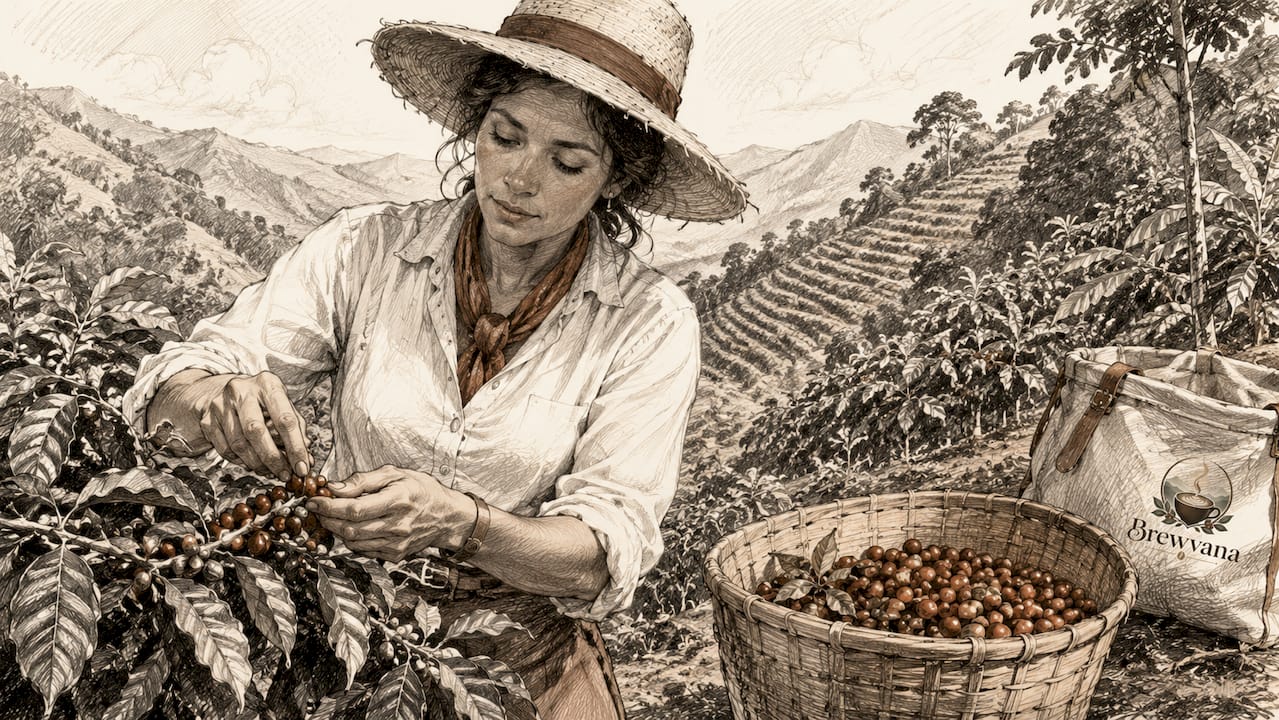
What happens inside the bean at high elevation
Three physical and chemical changes define high-altitude bean development:
- Sugar accumulation: Slow maturation gives the plant more time to transport and store sucrose inside the seed. Those sugars caramelize during roasting and produce sweetness and body.
- Organic acid development: Malic, citric, and tartaric acids build up during extended ripening. These are the compounds responsible for the bright, wine-like acidity in Ethiopian and Kenyan coffees.
- UV-triggered defense compounds: Increased UV radiation at altitude causes coffee plants to produce protective chemical compounds. Humans perceive those compounds as complex aromas and layered flavors in the final brew. Environmental stress becomes a sensory benefit.
Beyond chemistry, altitude also changes bean physics. High-altitude beans are denser and harder than their low-altitude counterparts. Density affects how heat moves through the bean during roasting. A skilled roaster can push a dense bean further into development without burning it, extracting more of those altitude-built flavors without scorching the delicate acids.
Pro Tip: When you see “SHB” (Strictly Hard Bean) or “SHG” (Strictly High Grown) on a coffee bag, that designation directly reflects altitude-driven bean density. Both labels indicate beans grown above 1,350 meters and are reliable shorthand for expecting brighter, more complex cups.
Flavor profiles: low vs. mid vs. high altitude coffee
Elevation offers a reliable shorthand for flavor expectations, though it is not a guarantee. The table below maps the three main altitude bands to their typical sensory characteristics.
| Altitude Range | Acidity | Body | Flavor Notes | Typical Regions |
|---|---|---|---|---|
| Below 900 m | Low | Full, round | Chocolate, nutty, earthy | Brazil lowlands, Sumatra |
| 900–1,500 m | Medium | Medium | Caramel, brown sugar, mild fruit | Colombia mid-slopes, Honduras |
| Above 1,500 m | Bright, vibrant | Light to medium | Floral, citrus, stone fruit, berry | Ethiopia, Guatemala, Kenya |
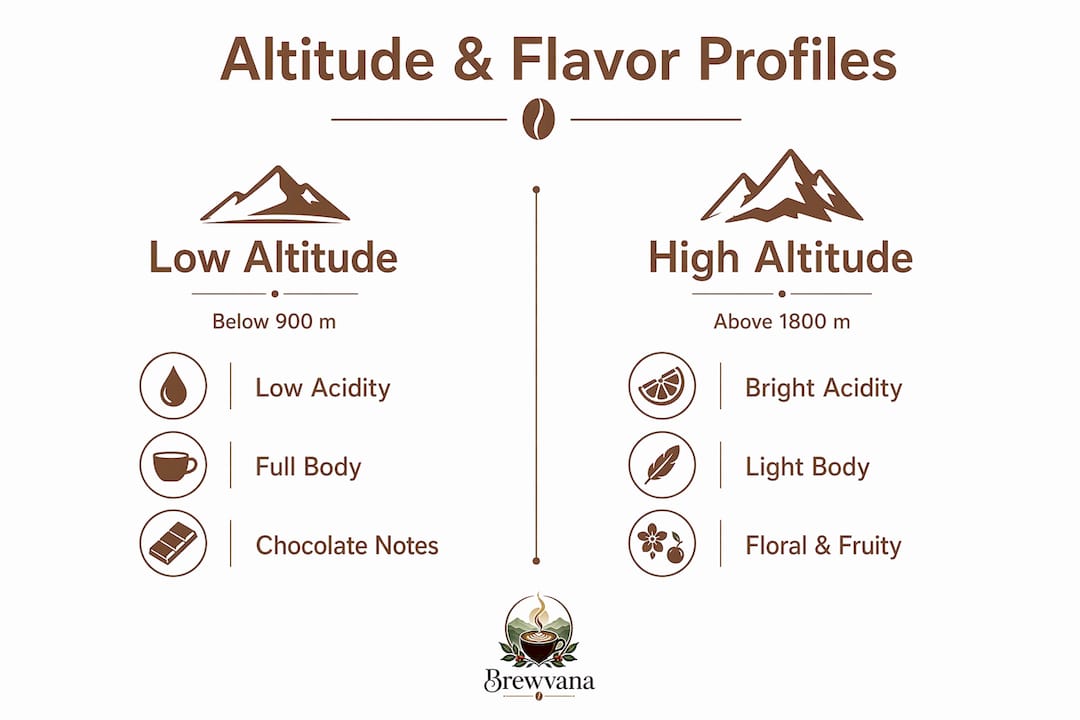
Low-altitude coffees are not inferior. They are different. Brazilian naturals grown below 900 meters produce the chocolatey, low-acid profile that most espresso blends are built around. That smoothness is a feature, not a flaw. The fuller body and muted acidity make them crowd-pleasers and excellent bases for milk drinks.
Mid-altitude coffees from regions like Colombia and Honduras hit a balance point. You get enough acidity to feel lively without the polarizing brightness of a high-grown Ethiopian. These are often the easiest coffees to recommend to someone transitioning from commercial blends to specialty.
High-altitude coffees above 1,800 meters deliver delicate acidity and tea-like clarity that can feel almost transparent in the cup. That profile thrills experienced tasters and confuses newcomers expecting a rich, heavy brew. The bright, acidic character of high-grown coffees is genuinely polarizing. Knowing that before you buy prevents disappointment.
Pro Tip: Altitude labeling on coffee packaging is your fastest flavor filter. If a bag lists meters above sea level (MASL), use the table above as your first-pass guide before reading tasting notes. The MASL number rarely lies.
Does altitude alone determine coffee quality?
Altitude is a strong flavor predictor, but not the only one. Coffee variety, soil composition, rainfall, and processing methods all interact with elevation to shape the final cup. A Gesha variety grown at 1,600 meters in Panama will taste radically different from a Robusta grown at the same elevation in Vietnam. Altitude sets the stage; everything else writes the script.
Here is how the key variables interact with elevation:
- Coffee variety: Arabica thrives at altitude and expresses the most flavor complexity there. Robusta grows better at lower elevations and produces a harsher, more bitter profile regardless of altitude.
- Soil and microclimate: Volcanic soils in Guatemala and Costa Rica add mineral complexity that pure altitude data cannot predict. Two farms at identical elevations can produce noticeably different cups because of soil pH and drainage.
- Processing method: A washed Ethiopian at 2,000 meters will taste cleaner and more floral than a natural-processed bean from the same farm. Processing methods can amplify or soften the acidity that altitude builds into the bean.
- Roast level: This is the most controllable variable after purchase. Dark roasts suppress altitude-related brightness by burning off the delicate acids and fruity compounds that slow maturation produced. A light or medium roast preserves those notes. If you buy a high-grown Ethiopian and roast it dark, you have spent premium money for a profile you could have achieved with a cheaper bean.
Understanding how roast levels interact with origin is the single most practical skill you can develop as a coffee buyer. Altitude gives you the raw material. Roast level determines how much of it survives into your cup.
How to buy and brew coffee based on altitude
Reading altitude information correctly turns a coffee bag into a flavor map. Most specialty roasters now print MASL on their packaging. Use it as your starting point, not the tasting notes, which are subjective and sometimes aspirational.
Matching altitude to your taste preference
Start with what you already enjoy. If you drink your coffee black and love bright, fruit-forward cups, target beans grown above 1,500 meters from Ethiopia, Kenya, or Guatemala. If you prefer smooth, chocolatey coffee that works well with milk, look for beans from Brazil or Sumatra grown below 1,000 meters. Mid-altitude Colombian or Honduran coffees are the right call if you want balance without commitment to either extreme.
Brewing tips to highlight altitude-driven flavor
How you brew matters as much as what you buy. These adjustments help you get the most from altitude-influenced beans:
- Water temperature: Use 195–205°F for high-altitude beans. Their density requires slightly higher heat to fully extract the complex acids and sugars.
- Grind size: Go slightly finer for light-roasted high-altitude coffees. Denser beans resist extraction, and a finer grind compensates.
- Extraction time: Extend pour-over brew time by 30 seconds for high-grown beans. The extra contact time pulls out the floral and fruity compounds that define the profile.
- Freshness: Buy roasted-to-order when possible. The volatile aromatic compounds that altitude builds into the bean are the first to dissipate after roasting. A stale high-altitude coffee loses its defining character fast.
Exploring single-origin coffees from different regions side by side is the fastest way to train your palate on altitude differences. Brew a Costa Rica and an Ethiopia in the same week using the same method. The contrast will teach you more than any article can.
Key takeaways
Altitude shapes coffee flavor through slower maturation, denser beans, and higher acid and sugar development, but roast level and processing method determine how much of that potential reaches your cup.
| Point | Details |
|---|---|
| Altitude slows maturation | Cooler temperatures extend ripening, building sugars and acids that create complex flavor. |
| Bean density signals quality | Denser high-altitude beans roast more evenly and yield more flavor without burning. |
| Flavor varies by elevation band | Below 900 m produces chocolate and nut notes; above 1,500 m delivers floral and fruit brightness. |
| Roast level can erase altitude gains | Dark roasts burn off the delicate acids that high-altitude slow ripening produces. |
| Use MASL as your flavor filter | Altitude labeling on packaging predicts flavor profile faster than tasting notes alone. |
Altitude is a starting point, not a guarantee
Here is what years of sourcing and tasting have taught us at Brewvana: altitude is the most reliable single variable for predicting flavor direction, but it is not a quality certificate. We have tasted stunning coffees from 900-meter farms in Brazil and disappointing ones from 2,000-meter farms in Ethiopia where poor processing undid everything the elevation built.
The bigger misconception we see is that high altitude automatically means better coffee. High-altitude flavor profiles are genuinely polarizing. Their bright acidity and light body are not universally appealing, and there is nothing wrong with preferring a smooth, low-acid cup. Chasing altitude for its own sake leads to buying coffee that does not match your palate, then blaming the bean.
Our honest recommendation: use altitude as a direction, not a destination. Pair it with knowledge of roast level, processing method, and variety, and you will make far better buying decisions. The goal is a cup you actually enjoy, not a cup with an impressive MASL number on the bag.
— Brewvana
Taste the difference altitude makes with Brewvana
Brewvana sources coffees specifically to show you what altitude does in the cup. The Ethiopia Natural Process is grown at high elevation and delivers the bright berry and floral complexity that defines high-grown African coffee. The Costa Rica Single Origin comes from mid-to-high elevation farms and hits that sweet spot of balanced acidity and caramel sweetness. Both are roasted to order, so the altitude-built aromatics arrive at your door intact.
Not sure where to start? The Single Origin Favorites Sample Pack lets you brew coffees from multiple elevations back to back, which is the fastest way to train your palate on what altitude actually tastes like.
FAQ
What is the role of altitude in coffee flavor?
Altitude slows cherry maturation through cooler temperatures, allowing sugars and organic acids to accumulate over a longer period. This produces denser beans with brighter acidity, more complex aroma, and greater flavor depth than low-altitude coffees.
What altitude produces the best-tasting coffee?
Coffees grown above 1,500 meters typically produce the most complex flavor profiles, with floral and fruity notes and vibrant acidity. However, “best” depends on personal preference, since many coffee drinkers prefer the smoother, chocolatey profile of lower-altitude beans.
Does a darker roast ruin high-altitude coffee?
Yes. Dark roasts suppress the delicate acids and fruity compounds that high-altitude slow maturation builds into the bean. A light or medium roast preserves the brightness and complexity that make high-grown coffee worth buying.
How does altitude affect coffee differently than it affects tea?
The role of altitude in tea flavor follows a similar logic: cooler temperatures slow leaf growth and concentrate flavor compounds. High-altitude teas like Darjeeling first flush develop muscatel and floral notes through the same slow-growth mechanism that produces complexity in high-grown coffee.
What does MASL mean on a coffee bag?
MASL stands for meters above sea level and indicates the elevation at which the coffee was grown. Use it as a quick flavor guide: below 900 MASL signals fuller body and lower acidity, while above 1,500 MASL points to brighter, more complex cups.