

Dry processed coffee, also called natural or unwashed coffee, is defined as a method in which whole coffee cherries are dried intact before the outer fruit layers are removed. The bean absorbs sugars and aromatic compounds directly from the surrounding fruit pulp during the drying period. That contact is what gives natural process coffees their signature fruity, wine-like flavors and heavy body. If you have ever tasted an Ethiopian coffee with blueberry notes or a Brazilian with a chocolatey sweetness, you have almost certainly had a dry processed coffee.
What is dry processed coffee and how does it work?
Dry processing is the oldest coffee processing method in the world. It originated in Ethiopia and Yemen, where water was scarce and sun was abundant. The dry coffee processing method involves drying the entire coffee cherry, skin, pulp, and all, in the sun for an extended period until the bean inside reaches the right moisture level. No water is used to strip the fruit away first, which is what separates it from washed or wet processing.
The result is a bean that carries the chemical fingerprint of the fruit it grew inside. Fruit sugars and organic compounds migrate into the bean during the long drying window. That transfer shapes everything from sweetness and body to the specific fruit notes you taste in the cup. Understanding this process is the foundation for appreciating why natural coffees taste so different from washed ones.
How is dry processed coffee made?
The dry process follows a clear sequence, but each step requires careful attention to avoid defects.
-
Harvest ripe cherries. Producers pick only fully ripe, red or yellow cherries. Unripe or overripe fruit introduces off-flavors that no amount of careful drying can fix. Many farms use selective hand-picking rather than strip-harvesting to control cherry quality.
-
Sort by flotation or manual selection. Cherries are placed in water tanks. Ripe, dense cherries sink. Defective, hollow, or overripe ones float and are removed. This step directly affects the consistency of the final cup.
-
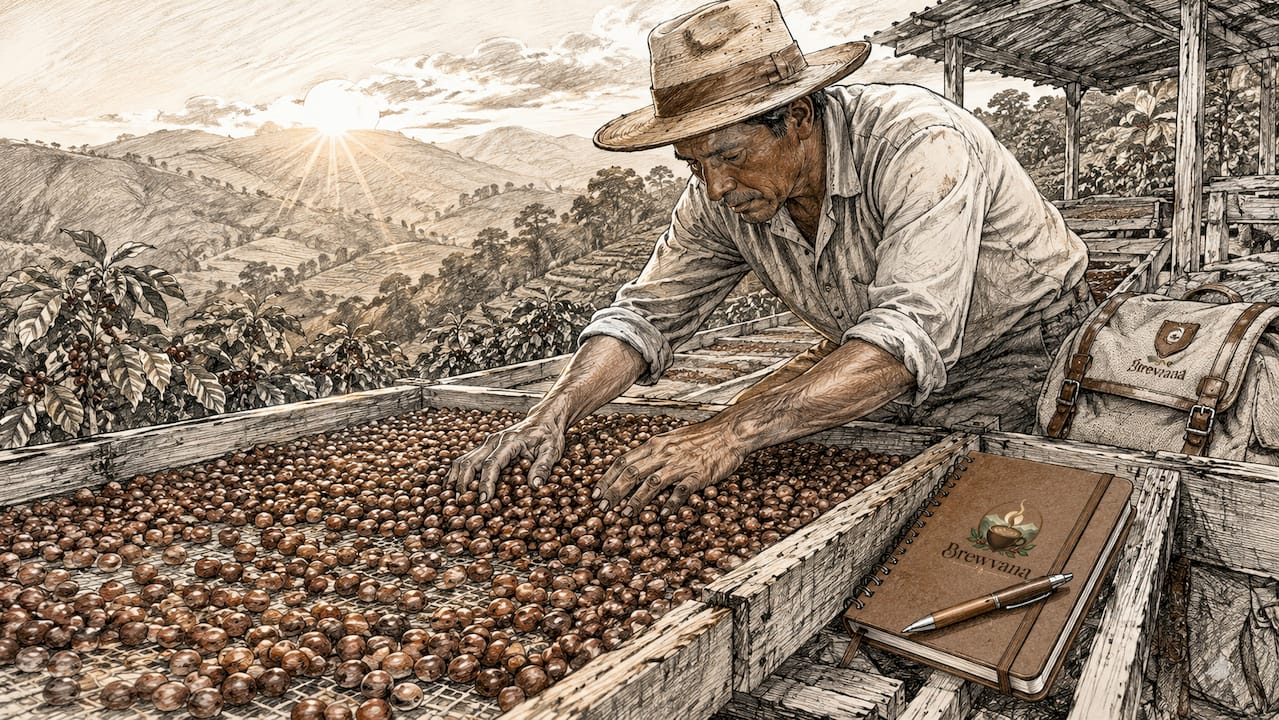
Spread on raised beds or patios. Cherries are laid out on African raised drying beds, concrete patios, or tarpaulins. Standard layer depth is 3–5 cm. Thicker layers trap heat and moisture, which accelerates fermentation and risks mold.
-
Turn regularly throughout the day. Cherries must be turned every 30–45 minutes during peak sun hours. Uneven turning causes the bottom layers to ferment while the top layers dry out, creating inconsistent flavor across a single batch.
-
Monitor moisture content closely. Drying typically takes 15–30 days or longer, depending on climate and altitude. The target is a moisture content of 10–12%. Processors use grain moisture meters rather than visual checks, because a cherry can look dry on the outside while still holding excess moisture inside.
-
Finish drying if needed. In humid or overcast conditions, Guardiola drums and other mechanical dryers are sometimes used to complete the drying cycle without compromising quality.
-
Mill the dried cherries. Once the target moisture is reached, the dried fruit husk is removed by a hulling machine, revealing the green bean inside.
Pro Tip: Never judge dryness by color or feel alone. A grain moisture meter is the only reliable way to confirm that beans have reached the 10–12% moisture target before storage.
What flavor and sensory characteristics define dry processed coffee?
Natural process coffees are defined by their fruit-forward intensity. Fruit skin and pulp remain in contact with the bean throughout the entire drying period, and that extended contact infuses the bean with sugars and aromatic compounds that washed coffees simply do not carry.
The flavor notes most associated with dry processed coffees include:
- Blueberry and strawberry — common in Ethiopian naturals, particularly from the Yirgacheffe and Sidama regions
- Tropical fruit — mango, papaya, and pineapple notes appear frequently in naturals from Brazil and Yemen
- Wine-like complexity — a fermented, grape-like quality that comes from controlled fruit breakdown during drying
- Dark chocolate and molasses — lower-grown naturals, especially from Brazil, often lean toward these deeper, sweeter notes
- Heavy body — natural process coffees consistently produce a thicker, more syrupy mouthfeel than washed coffees
The tasting notes in your cup are not added artificially. They develop because the bean absorbs real fruit compounds during drying. That is why two naturals from different origins can taste radically different from each other.
Varietal choice also matters. Dry processing suits Robusta particularly well because extended fruit contact softens its naturally harsh acidity. Arabica varieties from Ethiopia and Brazil tend to produce the most celebrated natural process results.
The risk side of natural processing is real. Inconsistent drying can produce acetic or butyric acids, which translate to vinegar-like or rancid flavors in the cup. This is why natural process coffee is often described as high-risk, high-reward.
Dry processing vs. wet processing: what are the key differences?
The core difference between the two methods is simple. Dry processing leaves the fruit on the bean during drying. Wet processing removes the fruit first, using water and mechanical depulping, before the bean is dried.
| Factor | Dry processing | Wet processing |
|---|---|---|
| Water use | Zero water used during drying | High water consumption for depulping and washing |
| Drying time | 15–30+ days | 1–3 weeks after fermentation and washing |
| Flavor profile | Fruity, sweet, wine-like, heavy body | Clean, bright, acidic, lighter body |
| Defect risk | Higher, requires constant monitoring | Lower, more controlled environment |
| Best climate | Dry, sunny, low humidity | Humid regions with reliable water access |
| Common origins | Ethiopia, Brazil, Yemen | Colombia, Kenya, Guatemala |
The difference between dry and wet coffee processing goes beyond flavor. Dry processing uses no water during the drying stage, making it the more resource-efficient choice in water-scarce regions like Ethiopia and Yemen. Wet processing demands significant water infrastructure and is better suited to regions with reliable rainfall and water access, such as Colombia and Kenya.
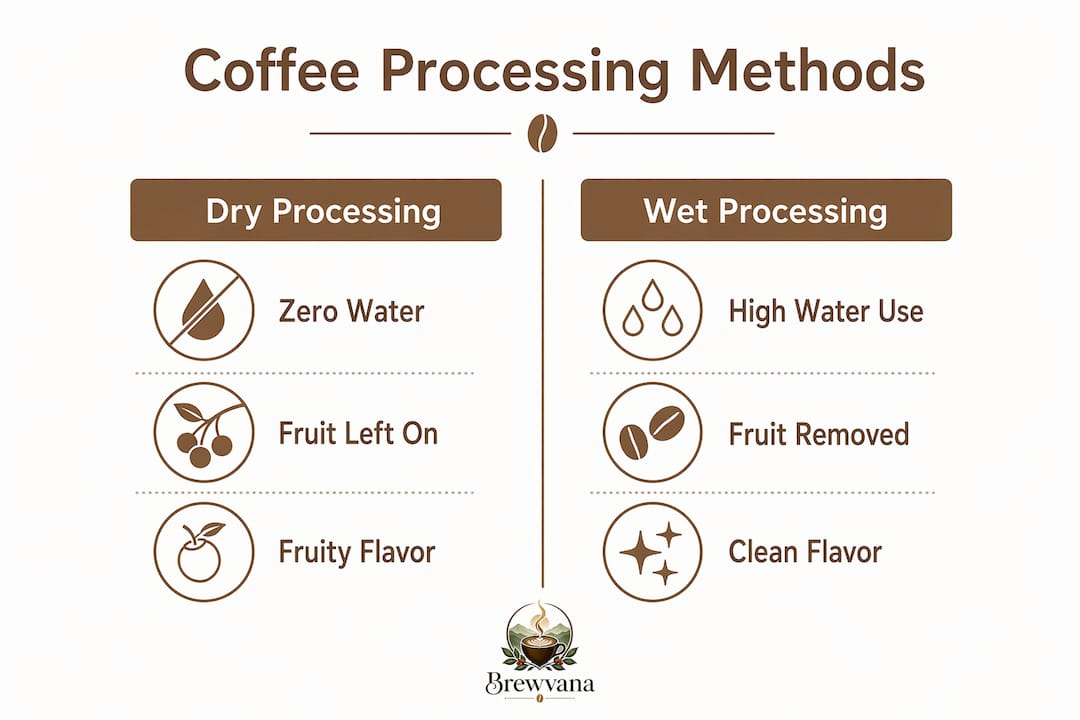
For consumers, the practical takeaway is this: if you prefer a clean, bright cup with defined acidity, washed coffees are your starting point. If you want sweetness, body, and fruit complexity, natural process is worth exploring.
Pro Tip: When buying single-origin coffee, check the processing method on the bag. Producers who list specific drying details, like raised bed drying or 21-day drying time, are signaling that they take natural processing seriously.
What are the best practices for quality in dry processed coffee?
Quality in natural process coffee is not accidental. It is the product of disciplined decisions made at every stage from the farm to the mill.
-
Start with ripe, uniform cherries. Sorting is not optional. A single underripe cherry in a batch can introduce grassy or astringent flavors that affect the entire lot.
-
Keep layer depth at 3–5 cm. Piling cherries too deep traps heat and moisture. That creates the conditions for mold and uneven fermentation, both of which destroy cup quality.
-
Turn cherries consistently. Fermentation management during drying is the single biggest variable a producer controls. Improper turning or excessive pile depth promotes off-flavors from acetic and butyric acids.
-
Use a grain moisture meter. Experienced producers rely on grain moisture meters to confirm the drying endpoint. Under 9% moisture risks brittle beans that crack during milling. Over 12% risks mold during storage.
-
Choose coffees from producers with a track record. As a coffee enthusiast, you can identify high-quality coffee beans by looking for transparency in processing details. Reputable producers list drying duration, bed type, and moisture targets on their spec sheets.
-
Avoid extended drying beyond what the climate requires. Longer is not always better. Over-dried cherries lose the delicate fruit compounds that make natural coffees special.
Pro Tip: If a natural process coffee tastes fermented in an unpleasant way, like vinegar or nail polish remover, that is a processing defect, not a feature. A well-made natural should taste like ripe fruit, not spoiled fruit.
Key takeaways
Dry processed coffee delivers its distinctive fruity, full-bodied flavor because the whole cherry dries intact, allowing the bean to absorb fruit sugars and compounds over 15–30 days.
| Point | Details |
|---|---|
| Core definition | Dry processing dries the whole cherry intact before removing the fruit husk. |
| Flavor impact | Extended fruit contact produces fruity, sweet, wine-like notes and a heavier body. |
| Moisture target | Beans must reach 10–12% moisture; grain moisture meters confirm this accurately. |
| Dry vs. wet | Dry processing uses no water and suits arid climates; wet processing uses water and suits humid regions. |
| Quality control | Consistent turning, correct layer depth, and ripe cherry selection prevent defects. |
Why dry processed coffee deserves more credit than it gets
Natural process coffee gets dismissed in some specialty circles as “too funky” or “too inconsistent.” That reputation is earned in some cases, but it misses the bigger picture. When dry processing is done well, it produces cups that no other method can replicate. The blueberry intensity of a well-made Ethiopian natural from Yirgacheffe is not a trick of roasting or blending. It is the direct result of a producer spending 25 days turning cherries by hand on raised beds in the highland sun.
At Brewvana, we have tasted naturals from Ethiopia, Brazil, and Yemen that changed the way we think about what coffee can be. The complexity is real, and so is the labor behind it. A bag of natural process coffee represents far more hands-on work than most consumers realize. That work should be reflected in how you choose and appreciate what you buy.
The honest challenge with natural process coffees is that quality varies more than with washed coffees. A poorly managed natural is genuinely unpleasant. But the answer is not to avoid naturals. The answer is to buy from producers and roasters who are transparent about their process. Look for specific drying details, not just the word “natural” on a label.
If you are new to coffee bean processing methods, start with a well-sourced Ethiopian natural. It is the clearest introduction to what dry processing can achieve at its best.
— Brewvana
Exceptional dry processed coffees, sourced and roasted by Brewvana
Natural process coffees reward curious coffee enthusiasts who want more from their cup.

Brewvana sources and roasts single-origin naturals from some of the world’s most celebrated growing regions. The Ethiopia Natural Process is a direct expression of what dry processing achieves at altitude, with the fruit-forward complexity that made Ethiopian naturals famous. For something different, the Costa Rica single origin and Peru single origin round out a range that lets you compare processing styles across origins. Every coffee ships roasted to order, so the flavors you read about in this guide are the flavors you actually taste in the cup.
FAQ
What is natural coffee processing?
Natural coffee processing, also called dry processing, is a method in which whole coffee cherries are dried in the sun with the fruit intact before the outer layers are removed. The bean absorbs fruit sugars and compounds during drying, which creates the fruity, sweet flavor profile associated with natural process coffees.
How long does dry processing take?
Dry processing typically takes 15–30 days or longer, depending on climate, altitude, and humidity. Cherries are spread in thin layers and turned regularly until the bean inside reaches a moisture content of 10–12%.
What does dry processed coffee taste like?
Dry processed coffee typically tastes fruity, sweet, and full-bodied, with notes like blueberry, strawberry, tropical fruit, or wine-like complexity. The exact flavor depends on the origin, variety, and how carefully the drying was managed.
Is dry processed coffee better than washed coffee?
Neither method is objectively better. Dry processing produces sweeter, fruitier, heavier-bodied cups, while wet processing produces cleaner, brighter, more acidic cups. The best choice depends on your personal flavor preference.
Why does dry processed coffee sometimes taste fermented?
An unpleasant fermented taste in natural process coffee is a processing defect caused by uncontrolled fermentation during drying. It results from improper turning, excessive pile depth, or inconsistent moisture management, which allows acetic or butyric acids to develop in the bean.