

A coffee blend is a mixture of beans from two or more origins, combined to produce a flavor profile that is more balanced, consistent, and complex than any single origin could deliver alone. Roasters treat blending as a formulation discipline, not a casual mix. The goal is to control cup qualities like acidity, body, sweetness, bitterness, and aroma while guaranteeing the same taste in every bag. Whether you’re pulling espresso with a Breville or brewing pour-over with a Hario V60, understanding what a coffee blend is will sharpen every cup you make.
What is a coffee blend and how does it differ from single-origin?
A coffee blend combines beans from multiple growing regions, while a single-origin coffee comes from one country, farm, or cooperative. That distinction shapes everything: flavor predictability, sourcing philosophy, and how the coffee performs across different brew methods.
Single-origin coffees are prized for showcasing terroir, the unique combination of soil, altitude, and climate that gives a Yirgacheffe from Ethiopia its floral brightness or a Huila from Colombia its stone-fruit sweetness. They tell a specific story about a specific place. Blends, by contrast, are engineered for a target flavor outcome. A roaster might pair a bright Kenyan with a full-bodied Sumatran to create something neither bean achieves on its own.
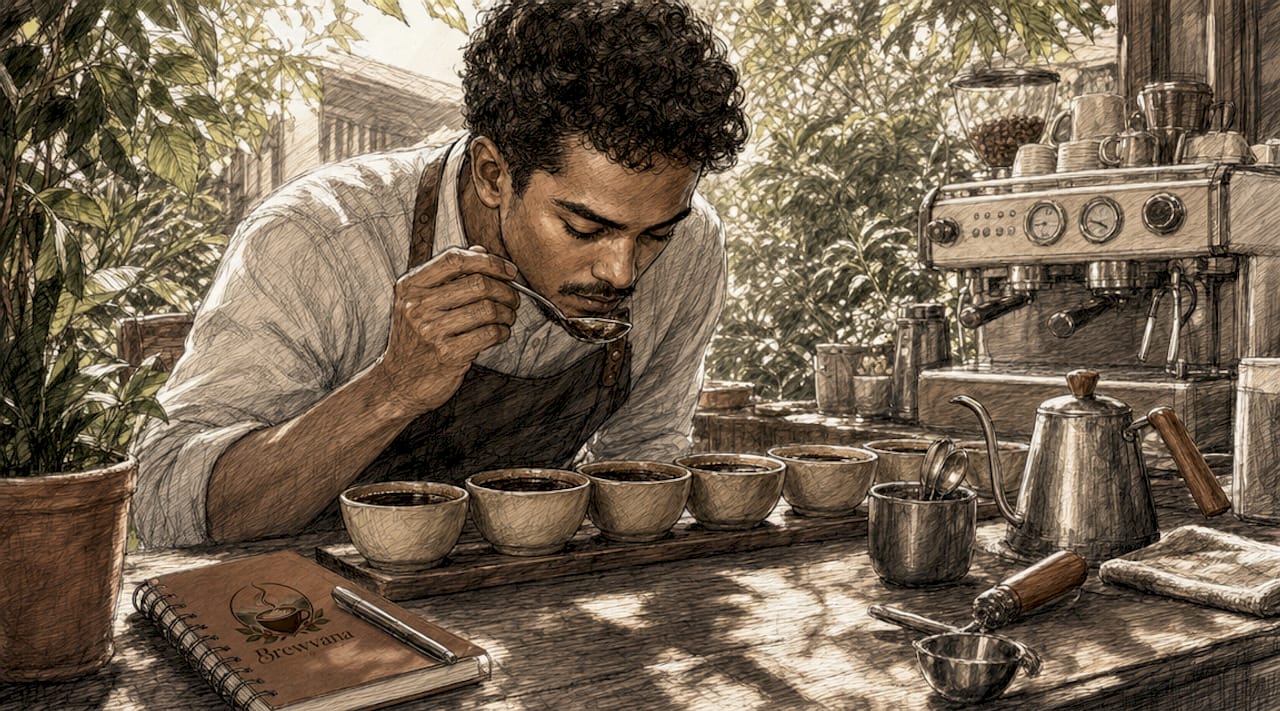
Here is a direct comparison of the two approaches:
| Feature | Coffee blend | Single-origin |
|---|---|---|
| Bean sources | Two or more origins | One farm, region, or country |
| Flavor goal | Balanced, consistent, repeatable | Unique, terroir-driven, variable |
| Batch consistency | High, managed across seasons | Lower, changes with each harvest |
| Best for | Espresso, milk drinks, everyday use | Black coffee, cupping, exploration |
| Price point | Often more accessible | Typically higher for specialty lots |
The practical advantage of a blend is consistency. Seasonal crop changes can shift a single-origin’s flavor noticeably from one harvest to the next. A skilled roaster compensates by adjusting blend ratios, keeping your morning cup tasting the same in January and July. That reliability is why most commercial espresso programs, from local cafés to global chains, are built around blends rather than single origins.
What are the common types of coffee blends?
The coffee industry recognizes several distinct blend styles, each designed for a specific flavor experience and brewing context. Knowing the difference helps you pick the right bag the first time.
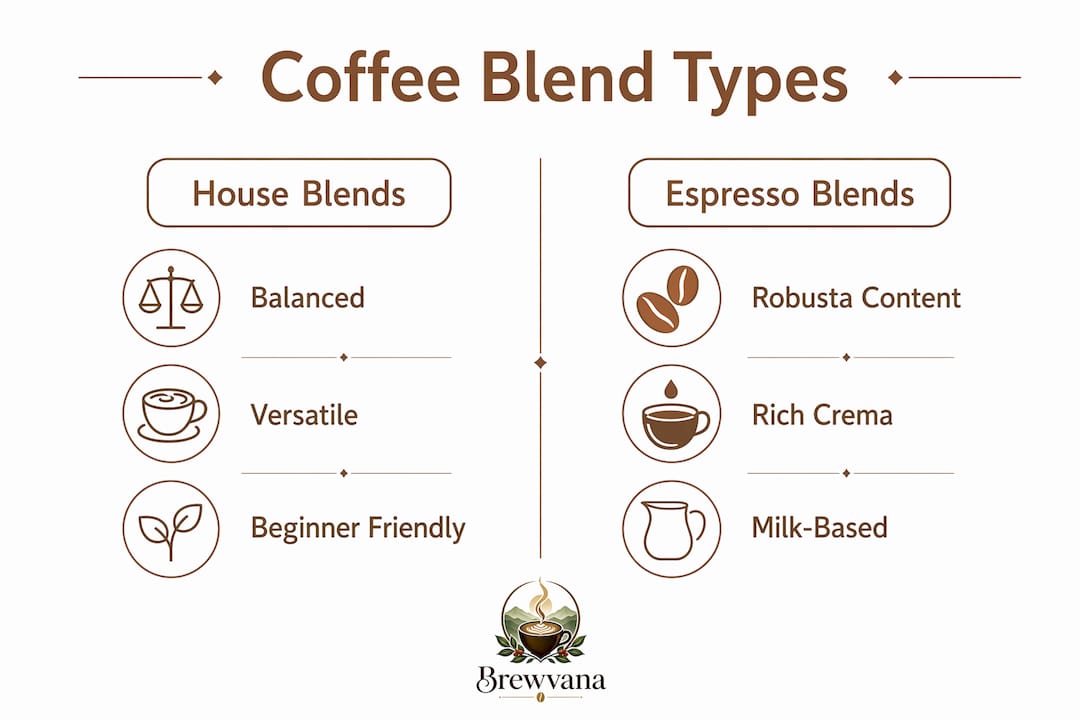
- Breakfast blends are light to medium roast, smooth, and low in bitterness. They are designed for drip brewers and French presses, delivering an approachable cup that works well with or without milk. Think clean, slightly sweet, and easy to drink in volume.
- Espresso blends are the most technically engineered category. They often include 10 to 30% Robusta for added body and crema production, with the remainder being Arabica for sweetness and complexity. The result is a rich, chocolatey shot that holds up under pressure and cuts through steamed milk.
- House blends are a roaster’s signature medium roast, typically the most versatile option in any lineup. They sit between breakfast and espresso blends in body and intensity, performing well across multiple brew methods. Brewvana’s house-style offerings follow this logic, designed to satisfy a wide range of preferences without demanding a specific brewer.
- Dark roast blends are bold, full-bodied, and low in perceived acidity. The extended roasting process reduces origin-specific flavors and amplifies roast character: dark chocolate, caramel, and smoky notes. They suit French press, cold brew, and anyone who prefers intensity over nuance.
Pro Tip: If you are new to specialty coffee, start with a house blend or breakfast blend. They are forgiving across grind sizes and brew ratios, making them the best coffee blend for beginners who are still dialing in their technique.
Understanding coffee roast levels is the fastest way to predict how a blend will taste before you open the bag.
How do roasters create coffee blends?
Blending is a craft that requires a working knowledge of green coffee inventory, sensory evaluation, and extraction science. Proper role assignment for each component is what separates a well-engineered blend from a forgettable one.
Roasters typically assign each bean in a blend one of three roles:
- Base bean: Provides the body, sweetness, and structural balance of the cup. A Brazilian natural-process Arabica is a classic base choice, contributing chocolate and nut notes with low acidity.
- Bridge bean: Adds complexity and structural depth without dominating. A washed Colombian often serves this role, smoothing transitions between the base and highlight components.
- Highlight bean: Contributes aromatics, brightness, or a distinctive flavor note. An Ethiopian Yirgacheffe in small proportion can lift an entire blend with floral or citrus character.
The second major decision is when to blend. Pre-roast blending mixes green beans before they enter the roaster, which is simpler and faster but gives less control. Post-roast blending roasts each component separately to its ideal profile, then combines them. Specialty roasters almost always prefer post-roast blending because a light-roast Ethiopian and a medium-roast Brazilian need different time and temperature curves to reach their best expression.
Balancing the final cup means adjusting five sensory variables: acidity, body, sweetness, bitterness, and aroma intensity. Changing one component by even 5% can shift the entire profile. This is why blending requires formulation thinking, not guesswork.
Pro Tip: If you want to experiment at home, buy two single-origin coffees with contrasting profiles, such as a bright washed Ethiopian and a heavy natural Brazilian, and mix them in a 70/30 ratio by weight before brewing. Adjust the ratio in 10% increments until you find your preferred balance.
Learning to identify high-quality beans before you blend is the single most effective way to raise your results.
How does your choice of blend affect brewing and flavor?
The blend you choose should match both your brew method and your flavor preferences. A mismatch between blend composition and brewing technique is one of the most common reasons a cup underperforms.
Espresso blends perform best in milk-based drinks because their chocolate and sweetness notes cut through dairy without disappearing. A light, high-acidity single-origin can taste sour or thin when steamed milk dilutes its delicate fruit notes. Blends engineered for espresso are built to survive that dilution.
Filter blends, by contrast, are generally 100% Arabica and optimized for clarity and balanced acidity. Brewing them as espresso often produces a flat, underwhelming shot because they lack the body and crema-building compounds that Robusta provides.
Here is how blend type maps to brewing method and expected tasting notes:
| Blend type | Best brew method | Expected tasting notes |
|---|---|---|
| Breakfast blend | Drip, pour-over, French press | Mild, nutty, lightly sweet |
| Espresso blend | Espresso machine, Moka pot | Chocolate, caramel, full body |
| House blend | Any method | Balanced, medium body, versatile |
| Dark roast blend | French press, cold brew | Smoky, dark chocolate, low acidity |
Blends compensate for individual bean weaknesses, which is why they often taste more consistent across different grind sizes and water temperatures than single origins. If your brewing setup is not perfectly calibrated, a well-designed blend is more forgiving. Understanding coffee tasting notes will help you read blend descriptions accurately and choose with confidence.
For cold brew specifically, dark roast and espresso blends deliver the richest concentrate because their lower acidity and higher body hold up well during long, cold extraction. You can explore cold brew bean selection in depth to match your blend to that method.
Key takeaways
A coffee blend is a formulated product combining beans from multiple origins to deliver a consistent, balanced flavor profile that no single origin can replicate on its own.
| Point | Details |
|---|---|
| Blend definition | Two or more bean origins combined to target specific flavor attributes and batch consistency. |
| Blend vs. single-origin | Blends prioritize repeatability and balance; single-origins highlight unique regional character. |
| Common blend types | Breakfast, espresso, house, and dark roast blends each serve distinct flavor and brewing purposes. |
| Roaster method | Roasters assign base, bridge, and highlight roles to each bean for a controlled sensory outcome. |
| Brew method match | Espresso blends suit milk drinks; filter blends suit pour-over and drip for clarity and acidity. |
Why blends deserve more credit than they get
The specialty coffee world has spent the last decade celebrating single-origin transparency, and rightly so. Traceability matters. But the conversation has created a quiet bias: blends are sometimes treated as the less sophisticated option, the thing you buy when you cannot afford the good stuff.
That framing is wrong, and it misses what skilled blending actually requires. Designing a blend that tastes identical across three consecutive harvests, sourced from farms in different hemispheres, is harder than selecting one exceptional lot and putting it in a bag. It demands sensory memory, green coffee knowledge, and the willingness to reformulate when a crop underperforms without the customer ever noticing.
At Brewvana, the blends we curate reflect that discipline. We look for roasters who treat their blend recipes the way a chef treats a signature dish: refined over time, built on specific relationships with growers, and adjusted only when the result genuinely improves. The 6 Bean Blend is a good example of what that commitment produces. Six components, each with a defined role, creating a cup that rewards attention without demanding it.
The practical advice is simple. Do not skip blends because they seem less artisanal. Try one from a roaster you trust, brew it three different ways, and pay attention to how the flavor shifts. That exercise will teach you more about coffee than reading any tasting note ever will.
— Brewvana
Discover Brewvana’s curated coffee blends

Brewvana sources and ships blends built for real brewing situations, whether you pull espresso every morning or prefer a slow pour-over on weekends. The full blends collection covers everything from smooth breakfast-style roasts to bold, high-caffeine options like the Max Caf Blend, which delivers intensity without sacrificing balance. Every bag ships roasted to order, so the flavor you read about in the tasting notes is the flavor you actually get in the cup. If you want a starting point, the Latin American Blend is one of the most versatile options in the lineup, performing well across espresso, drip, and French press with consistent, crowd-pleasing results.
FAQ
What is a coffee blend made of?
A coffee blend contains beans from two or more growing origins, combined in specific ratios to hit a target flavor profile. Most blends use Arabica as the primary component, with some espresso blends adding Robusta for body and crema.
What is the difference between a blend and single-origin coffee?
A blend combines beans from multiple regions for consistency and balance, while a single-origin coffee comes from one farm or region and highlights its unique terroir. Blends are more consistent across seasons; single-origins vary with each harvest.
Are coffee blends good for beginners?
Yes. Breakfast blends and house blends are the best coffee blends for beginners because they are forgiving across brew methods, balanced in flavor, and less sensitive to minor grind or temperature variations than high-acidity single origins.
Why do espresso blends sometimes contain Robusta?
Espresso blends include Robusta, typically 10 to 30% of the total, because Robusta produces more crema, adds body, and contributes a stronger caffeine hit. It also helps the blend hold its flavor when combined with steamed milk in lattes and cappuccinos.
Can you make your own coffee blend at home?
Yes. Start with two single-origin coffees with contrasting profiles, such as a bright Ethiopian and a heavy Brazilian, and mix them in a 70/30 ratio by weight before brewing. Adjust the ratio in small increments until the cup matches your preferred balance of acidity, body, and sweetness.