

The best way to store coffee beans is in an opaque, airtight container kept in a cool, dark, and dry place, because air, light, heat, and moisture rapidly destroy the volatile compounds that give coffee its aroma and flavor. Coffee bean storage best practices are not complicated, but most home brewers get at least one thing wrong. Whole beans reach peak freshness about one week after opening, and ground coffee fades even faster because the increased surface area accelerates oxidation. Get the fundamentals right, and every cup you brew will taste the way it was meant to.
1. Coffee bean storage best practices: start with the right container
The container you choose is the single most important storage decision you will make. An opaque, airtight vessel blocks the two biggest threats to freshness: oxygen and light. Clear glass jars look beautiful on a counter, but light exposure daily breaks down the oils and aromatic compounds that define your coffee’s character. Visual appeal does not compensate for the flavor you lose within days.
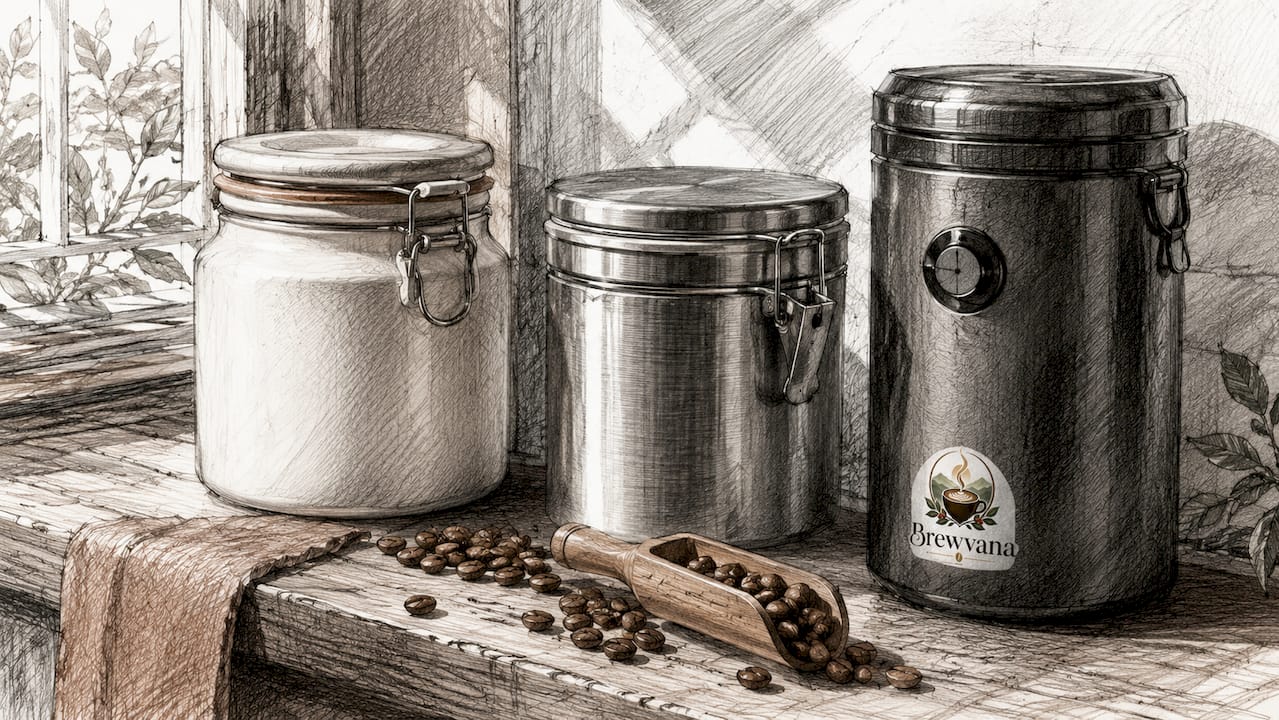
Ceramic canisters with rubber-sealed lids, stainless steel containers, and purpose-built coffee vaults all perform well for daily use. The key is a tight seal and zero light penetration. If you are transferring beans from their original bag, fill the container as close to the top as possible. Minimal headspace reduces the oxygen sitting above your beans and slows oxidation meaningfully.
2. The four enemies of coffee freshness
Four forces degrade coffee quality faster than most people realize: oxygen, light, heat, and moisture. Understanding what each one does helps you make smarter storage choices without overthinking it.
- Oxygen oxidizes the volatile flavor compounds in coffee, turning bright, complex aromas flat and stale within days of exposure.
- Light breaks down the delicate oils in roasted beans, especially ultraviolet light, which is why opaque containers outperform clear ones every time.
- Heat accelerates every chemical reaction that causes staling. A cabinet above your stove or near your oven is one of the worst places to store beans.
- Moisture causes beans to degrade rapidly and can introduce off-flavors. Even brief exposure to steam from a kettle is enough to start the process.
- Strong odors are an underrated threat. Coffee easily absorbs aromatic compounds from nearby spices, onions, or cleaning products, which ruins its delicate flavor profile.
Pro Tip: Store your coffee container at least two feet away from your stove, toaster, and any strong-smelling pantry items. The countertop next to the coffee maker feels convenient but is often the worst spot in the kitchen.
3. Why the original roaster bag is often the best option
Most specialty coffee arrives in a bag with a one-way valve, and that design is not accidental. The one-way valve allows CO2 released by freshly roasted beans to escape without letting oxygen in. This is a genuinely clever piece of engineering that many aftermarket containers cannot replicate.
If your roaster bag seals tightly after opening, press out the air, fold the top down, and clip it shut. Keep it in a dark cupboard and you have a storage solution that costs nothing extra. The mistake most people make is transferring beans into a clear glass jar because it looks nicer. That transfer often exposes beans to more air and light than leaving them in the original bag would have.
The one-way valve matters most in the first few days after roasting, when beans are actively off-gassing CO2. After that window closes, a well-sealed opaque container works just as well. Check the roast date on your bag to know exactly where you are in that window.
4. Freezing coffee beans: when it works and when it backfires
Freezing is one of the most debated topics in coffee storage, and the answer is nuanced. Done correctly, freezing extends shelf life up to three to four months without meaningful flavor loss. Done incorrectly, it introduces moisture and ruins an entire batch.
The rule is simple: portion before you freeze. Break bulk coffee into single-week servings, seal each portion in an airtight freezer bag with all the air pressed out, and freeze them flat. When you are ready to use a portion, take it out and let it come to room temperature before opening the bag. Opening a cold bag releases condensation directly onto your beans.
Repeated thawing and refreezing is the most common freezing mistake. Each cycle introduces moisture and degrades quality. Treat each frozen portion as single-use and you will get excellent results.
Pro Tip: Label each frozen portion with the roast date and the variety. After a few weeks in the freezer, every bag looks identical, and knowing what you are brewing matters.
5. Why refrigeration is a mistake
Refrigeration is the most common coffee storage error, and it is worth addressing directly. The fridge introduces three problems at once: moisture, temperature fluctuation, and odor absorption. Every time you open the refrigerator door, the temperature inside shifts. Those fluctuations cause condensation on beans, which accelerates staling and produces flat, off-tasting coffee.
The odor problem is equally serious. Coffee is porous and absorbs smells from its environment. Storing beans next to leftover fish, cheese, or yesterday’s garlic bread will transfer those flavors into your cup. The fridge feels like a logical choice because it is cool and dark, but the moisture and odor risks outweigh both of those benefits.
The freezer avoids most of these problems because the temperature stays stable and you are not opening it constantly. If you want cold storage, the freezer with properly portioned, sealed bags is the only version worth trying.
6. Comparison of storage containers and environments
Choosing the right container depends on how much coffee you drink, how long you need to store it, and what you are willing to spend. This table gives you a direct comparison of the most common options.
| Container type | Air exposure | Light exposure | Best for | Freshness window |
|---|---|---|---|---|
| Original roaster bag (one-way valve) | Low | Low (if opaque) | First 1 to 2 weeks after opening | Up to 2 weeks |
| Opaque ceramic or steel canister | Low | None | Daily use, 1 to 2 week supply | Up to 2 weeks |
| Clear glass jar | Medium | High | Not recommended for beans | Days only |
| Vacuum-sealed bag or container | Very low | Low to none | Medium-term storage, 2 to 4 weeks | Up to 4 weeks |
| Airtight freezer bag (frozen) | Very low | None | Long-term storage, bulk buying | Up to 4 months |
The pattern here is clear. Opaque and airtight wins every time. The clear glass jar is the worst performer despite being the most visually popular option. Vacuum-sealed containers from brands like Airscape or Fellow Atmos remove most of the oxygen from the container and are worth the investment if you buy coffee in larger quantities.
7. Buying habits that protect freshness from the start
The best storage container in the world cannot save coffee that was already stale when you bought it. Buying in small quantities intended for consumption within one to two weeks is one of the most effective freshness strategies available. It minimizes the total time beans spend exposed to air and keeps your supply cycling through quickly.
Check the roast date, not the expiration date. Roasters often print a best-by date that is six to twelve months out, which tells you nothing useful about peak flavor. A roast date tells you exactly how fresh your beans are. Beans are generally at their best between four days and three weeks after roasting. Anything older than a month is already past its prime for specialty brewing. Brewvana’s freshly roasted beans are roasted to order, which means you are starting the freshness clock at the right moment.
Pro Tip: If you brew espresso, buy no more than 250 grams at a time. Espresso is especially sensitive to freshness because the high-pressure extraction amplifies both good and bad flavors. A two-week supply is the maximum you should keep on hand.
8. Grinding just before brewing: the final freshness lever
Grinding immediately before brewing is the single most impactful habit you can build for better coffee. Pre-ground coffee loses its best flavors within days because grinding multiplies the surface area exposed to oxygen by hundreds of times. Whole beans, properly stored, hold their flavor for weeks. Ground coffee, even stored in an airtight container, is a shadow of what it could be within 48 hours.
A burr grinder from brands like Baratza, Fellow, or Comandante gives you consistent particle size and takes about 30 seconds per cup. The flavor difference compared to pre-ground is not subtle. If you have been storing whole beans correctly and still find your coffee tastes flat, switching to grinding fresh is the fastest fix available.
This also means you should avoid buying pre-ground coffee unless convenience is a hard requirement. If it is, buy in the smallest quantity available and use it within a week. For a deeper look at how bean freshness shows up before you even grind, there are reliable physical indicators worth knowing.
Key takeaways
Proper coffee bean storage requires an opaque, airtight container, a cool and dark location, small purchase quantities, and grinding just before brewing to preserve maximum flavor.
| Point | Details |
|---|---|
| Container choice is critical | Use opaque, airtight ceramic, steel, or vacuum-sealed containers. Avoid clear glass jars. |
| Four enemies to block | Protect beans from oxygen, light, heat, and moisture at every stage of storage. |
| Freeze correctly or not at all | Portion beans into weekly servings before freezing and never refreeze a thawed batch. |
| Skip the refrigerator | Condensation, odor absorption, and temperature swings make the fridge a poor storage choice. |
| Buy small and grind fresh | Purchase a one to two week supply and grind immediately before brewing for peak flavor. |
What we have learned from years of storing coffee
The most common mistake we see is over-engineering the storage setup while ignoring the basics. Someone buys a $60 vacuum canister, fills it with beans that were roasted six weeks ago, and wonders why the coffee still tastes dull. The container is not the problem. The beans are.
Freshness starts at the source. Buying recently roasted coffee in small batches matters more than any container upgrade. Once you have fresh beans, a simple opaque canister with a tight lid does the job for most home brewers. You do not need a vacuum pump or a nitrogen-flushed container for a two-week supply.
The other thing we have noticed is that grinding habits make a bigger difference than most people expect. Switching from pre-ground to whole bean and grinding fresh adds more flavor to your cup than switching from a $20 canister to a $100 one. Start with the habits before you invest in the hardware.
One genuinely useful upgrade: if you buy coffee in bulk or travel frequently, the freezer method with portioned bags works remarkably well. We have pulled beans from the freezer after eight weeks and brewed cups that tasted as good as the first day. The key is discipline around portioning and never opening a cold bag before it reaches room temperature.
— Brewvana
Fresh beans make every storage tip worth it

Every storage method in this article works best when you start with genuinely fresh coffee. At Brewvana, every bag is roasted to order, so the beans you receive are at the beginning of their freshness window, not the end. Browse the full coffee collection to find single-origin options, artisan blends, and sample packs that let you try multiple roasts without committing to a large quantity. If you are building a rotation of two or three different beans, small-batch ordering through Brewvana keeps each supply fresh and your brewing varied. Starting with quality beans that were roasted days ago, not months ago, is the foundation every storage practice in this article is built on.
FAQ
What is the best container for storing coffee beans?
An opaque, airtight container made from ceramic, stainless steel, or a vacuum-sealed vessel is the best option for daily use. Clear glass jars expose beans to light and accelerate flavor loss, even when kept in a cabinet.
Can you freeze coffee beans?
Yes, freezing works well when beans are portioned into single-week airtight servings before freezing. Never refreeze a thawed portion, as repeated temperature cycles introduce moisture and degrade quality.
How long do coffee beans stay fresh?
Whole beans stored in an airtight, opaque container stay fresh for up to two weeks after opening. Beans frozen in properly sealed portions can maintain quality for up to three to four months.
Should you store coffee beans in the refrigerator?
No. The refrigerator causes condensation, introduces odors from other foods, and creates temperature fluctuations that damage beans. The freezer is the only cold-storage option worth using, and only with proper portioning.
Does grinding coffee in advance affect freshness?
Grinding immediately before brewing preserves maximum aroma and flavor. Pre-ground coffee loses its best qualities within 48 hours because the increased surface area accelerates oxidation significantly faster than whole beans.