

Most coffee drinkers have spent years unknowingly drinking a shadow of what coffee can actually taste like. The beans in that supermarket bag? They were likely roasted weeks or even months before you brewed them. The result is a cup that tastes flat, bitter, or simply “fine” when it could be bright, complex, and genuinely exciting. Freshness is the single most overlooked factor in coffee flavor, and once you understand what’s actually happening inside the bean from roast to cup, you’ll never settle for stale again.
Table of Contents
- The flavor science: How roasting transforms coffee beans
- Why freshness matters: Oxygen, aroma, and taste degradation
- Source to sip: How roasting location and timing impact taste
- Maximizing your daily cup: Storing and brewing for peak freshness
- The overlooked truth: Why most coffee never reaches its full flavor potential
- Ready to experience the true taste of fresh coffee?
- Frequently asked questions
Key Takeaways
| Point | Details |
|---|---|
| Roasting releases flavor | Roasting coffee transforms raw beans and creates volatile aromatics that deliver vibrant flavor. |
| Freshness rapidly fades | Exposure to oxygen and time causes coffee to lose aroma, acidity, and complexity. |
| Origin and storage matter | Beans roasted close to origin and stored properly retain more vibrant taste. |
| Optimal brewing practices | Buy fresh, grind just before brewing, and store beans airtight for peak enjoyment. |
The flavor science: How roasting transforms coffee beans
With the importance of freshness established, let’s explore the scientific changes coffee beans undergo during roasting. Raw, green coffee beans are dense, grassy-smelling seeds with very little of the flavor we associate with a morning cup. Roasting is the dramatic process that changes everything, unlocking hundreds of distinct flavor compounds that make coffee one of the most aromatically complex beverages on earth.
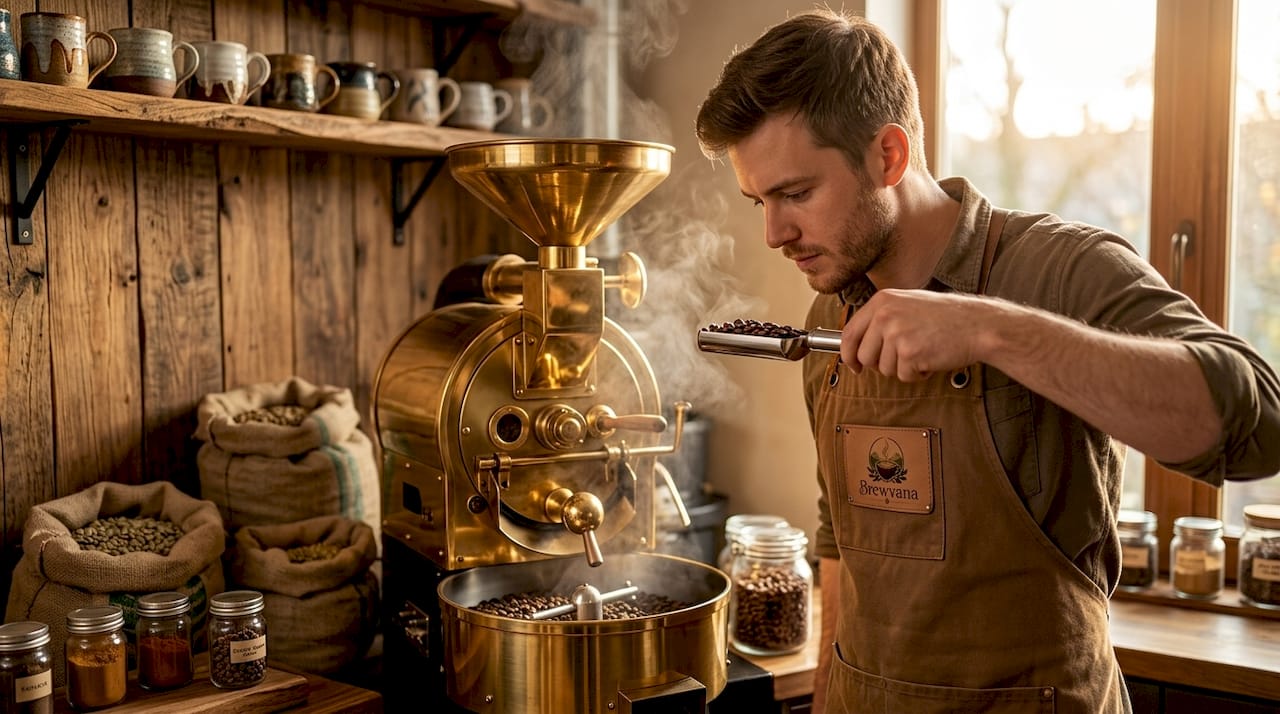
Two key chemical reactions drive this transformation. The first is the Maillard reaction, where heat causes amino acids and reducing sugars to combine, producing the brown color and savory, roasted depth we know and love. The second is caramelization, where sugars break down under heat to produce sweetness, nuttiness, and a range of fruity or floral notes depending on how far the roast progresses. These two reactions work together, creating hundreds of flavor precursors that would simply not exist in an unroasted bean.
What makes this process so time-sensitive is the production of volatile organic compounds, or VOCs. These are the fragrant, fleeting molecules responsible for the brightest and most nuanced parts of coffee’s flavor profile, think blueberry, jasmine, dark chocolate, or citrus. The problem is that they are incredibly unstable. Aromatic chemistry in roasted coffee confirms that roasting and post-roast handling directly impact volatile compounds and sensory perception. This means the clock starts the moment your beans leave the roaster.
Here’s a quick breakdown of what roasting actually produces:
- Pyrazines and furans: responsible for nutty, toasty, and caramel-like flavors
- Aldehydes and ketones: contribute to fruity, floral, and green notes in lighter roasts
- Organic acids: create the pleasant brightness and acidity in well-roasted beans
- Sulfur compounds: in small amounts, these add depth and complexity without harshness
Understanding the roast date and coffee flavor relationship is essential because all of these compounds begin degrading the moment roasting ends. A coffee roasted three days ago and a coffee roasted three months ago may look identical in the bag, but they taste worlds apart.
“The difference between freshly roasted and week-old coffee isn’t subtle. It’s like comparing a ripe peach picked this morning to one that sat on a truck for two weeks.”
Why freshness matters: Oxygen, aroma, and taste degradation
Now that you know why roasting creates amazing flavors, it’s critical to see how quickly those flavors can vanish if coffee isn’t fresh. Oxygen is the primary enemy. The moment roasted beans are exposed to air, a process called oxidation begins breaking down the volatile oils and aromatic compounds that give coffee its character. This isn’t slow degradation either. You can notice a meaningful flavor difference in beans left open to air within just a few days.
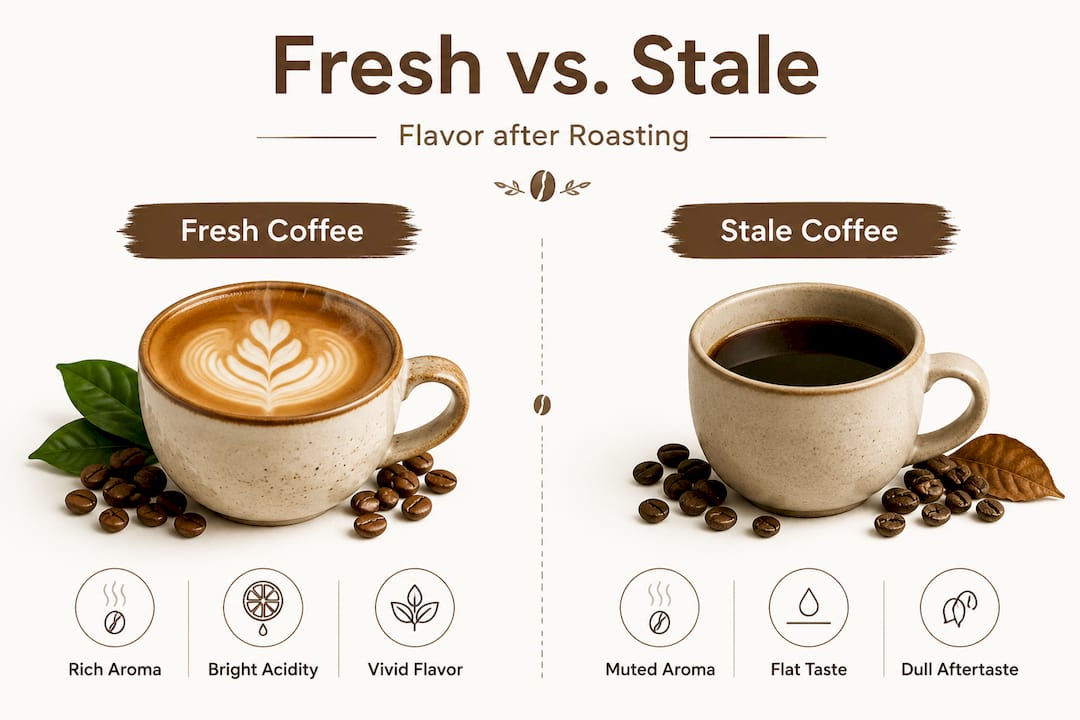
Grinding makes this even more dramatic. When you grind whole beans, you shatter each bean into hundreds of tiny particles, exponentially increasing the surface area exposed to oxygen. Coffee storage and freshness research highlights that grinding too soon after roasting can lead to a sour or metallic tang, while leaving beans exposed to oxygen strips away the volatile oils that drive aroma. This is why pre-ground coffee sold in standard packaging almost always tastes thinner and less interesting than whole beans ground just before brewing.
Here’s a clear comparison to show exactly what’s at stake:
| Quality attribute | Freshly roasted (within 14 days) | Stale (30+ days post-roast) |
|---|---|---|
| Aroma | Intense, layered, vibrant | Flat, faint, or musty |
| Acidity | Bright and pleasant | Dull or harsh |
| Sweetness | Naturally present | Largely absent |
| Complexity | Multiple distinct notes | One-dimensional bitterness |
| Aftertaste | Clean, lingering | Stale, dry, or metallic |
| Overall experience | Engaging and nuanced | Forgettable or unpleasant |
The good news is that this decline is preventable when you know what to look for. If you’re shopping for someone who loves great coffee, understanding how to choose truly fresh options is just as valuable, and learning how to order fresh roasted coffee gifts makes it easier to share this quality with others.
Pro Tip: Look for a “roasted on” date rather than a “best by” date on your coffee bag. A best-by date can hide how long ago the beans were actually roasted, while a roast date tells you exactly where you stand in the freshness window.
Source to sip: How roasting location and timing impact taste
Understanding how coffee loses its best flavors leads directly to the next question: does where and when your coffee is roasted make a difference? Absolutely, and significantly more than most people realize.
The typical commercial coffee supply chain looks something like this: green beans are harvested, exported from origin, shipped for weeks by sea, received by a roastery, roasted in large batches, warehoused, distributed to retailers, stocked on shelves, and finally purchased. By the time that bag reaches you, the beans could be weeks or months past their roast date. Every stage in that chain adds time, and time is flavor lost.
Contrast that with origin roasting for vibrancy, where beans roasted closer to the customer or the source spend dramatically less time aging before they reach your grinder. The result is a cup that carries the terroir and character the farmer cultivated, rather than a dulled version of it.
Here’s how the freshness timeline breaks down:
| Stage | Typical commercial timeline | Impact on flavor |
|---|---|---|
| Harvest to export | 1 to 4 weeks | Minimal if green beans are stored correctly |
| Shipping transit | 3 to 8 weeks | Green beans stable, but time accumulates |
| Roasting to retail shelf | 1 to 6 weeks | Significant flavor loss begins here |
| Retail shelf to purchase | 2 to 12 weeks | Major degradation, especially if stored poorly |
| Purchase to brewing | Variable | Every day matters once the bag is open |
Small-batch, roasted-to-order operations cut several of those stages entirely. Beans go from roaster to your door in days, not months. That’s the entire premise behind seeking out quality, freshness-focused sources rather than grabbing whatever bag looks appealing at the grocery store.
Key reasons why roasting location and supply chain efficiency matter:
- Less aging in transit: Shorter distances mean less time for staling to begin
- Better temperature control: Fewer warehouse handoffs reduce heat and humidity exposure
- Batch relevance: Small batches tied to current crop seasons reflect the bean’s peak quality
- Traceability: Knowing where and when your coffee was roasted removes the guesswork
For those who want a genuinely different experience, exploring specialty options like mushroom dark roast coffee shows how thoughtfully sourced and roasted beans can even support unique flavor profiles beyond the typical roast spectrum.
Maximizing your daily cup: Storing and brewing for peak freshness
Now that you know the journey and risks to flavor, let’s apply some smart strategies at home to get every possible nuance out of your freshly roasted beans. Buying great coffee is only half the battle. What you do with those beans once they arrive determines whether you actually taste what was intended.
Here are the most impactful steps you can take right now:
- Check the roast date before buying. Only purchase beans with a roast date visible on the bag. Aim for beans roasted within the last 14 days. Anything older than 30 days is likely already past its flavor peak.
- Store in an airtight container. Transfer beans to a sealed, opaque container immediately after opening the bag. Glass jars with rubber seals or specialized coffee canisters with CO2 valves both work well.
- Keep away from heat, light, and moisture. A cool, dark cabinet away from your stove or dishwasher is ideal. These factors accelerate oxidation and moisture damage faster than you’d expect.
- Grind only what you need. Volatile oils lost to oxygen begin escaping the moment you grind, so grinding fresh for each brew is one of the highest-impact habits you can build.
- Let newly roasted beans rest. Beans roasted within the last 48 hours are still off-gassing significant CO2, which can interfere with extraction and produce uneven, hollow-tasting shots or pour-overs. A two to four day rest period after roasting is ideal for most brew methods.
- Use filtered water. Tap water with chlorine or strong mineral content competes with delicate flavors. Even a simple pitcher filter makes a noticeable difference.
- Match grind size to brew method. A coarser grind for French press, medium for drip, and fine for espresso ensures proper extraction and lets the coffee’s natural complexity shine through rather than producing bitterness or sourness.
Additional enhancements worth trying:
- Rinse your paper filter with hot water before brewing to remove paper taste
- Pre-heat your mug and brewing equipment to maintain temperature consistency
- Experiment with bloom time on pour-overs, letting grounds saturate with a small amount of water for 30 to 45 seconds before full brewing
- Try tasting your coffee black at least once to understand its true flavor before adding milk or sweetener
Understanding the range of options available, including premium coffee pod types for those who prioritize convenience, can also help you make smarter choices about how freshness fits into different brewing formats.
Pro Tip: Buy smaller quantities more frequently rather than one large bag every month. Two bags of 250 grams each, ordered two weeks apart, keeps you consistently in the peak freshness window rather than racing through a large bag that’s going stale.
The overlooked truth: Why most coffee never reaches its full flavor potential
Here’s something the specialty coffee world rarely says plainly: buying “premium” or “artisan” labeled coffee does not guarantee a great cup. The label might reflect the quality of the green beans, but if those beans were roasted six weeks ago, warehoused in a distribution center, and then shipped slowly to your door, you’re still drinking stale coffee wrapped in beautiful packaging.
We’ve watched this pattern play out time and again. Someone pays a premium price for a bag with impressive tasting notes and award-winning credentials, brews it carefully, and feels confused when the result tastes flat or bitter. It’s not their technique. It’s not their equipment. It’s the freshness gap that was baked into the supply chain long before the bag reached them.
Volatile compounds that define flavor are extraordinarily sensitive to time and handling, and most commercial coffee logistics simply aren’t designed with those compounds in mind. They’re designed around cost, shelf life, and scale.
Even some specialty cafes operate with beans that are well past the two-week freshness peak. This isn’t a criticism so much as a structural reality. When you understand the timeline, though, you can ask better questions: When was this roasted? How was it stored? How long has it been on the shelf? Understanding the critical role of roast date in flavor quality changes how you shop, order, and evaluate every cup you drink.
The uncomfortable truth is that most flavor loss is preventable. The compounds are there in the bean. The potential is there at the roaster. It’s the gap between roasting and brewing, in time, in handling, in storage, where the magic disappears. Closing that gap is within your control the moment you decide freshness matters.
Ready to experience the true taste of fresh coffee?
Inspired to taste the difference for yourself? Here’s how to get started with the freshest options available.
At Brewvana, every order is roasted to fulfill, meaning your beans are roasted after you order and shipped directly to your door with minimal delay. Explore the full Brewvana coffee collection to find single-origin beans, artisan blends, and specialty options sourced with freshness at the center of every decision. Not sure where to start? The single origin sample pack is a perfect way to taste the range and discover which origin profiles resonate with your palate. Fresh coffee should be the standard, not the exception.
Frequently asked questions
How soon should you use coffee after roasting?
For peak flavor, use coffee beans between 2 and 14 days after roasting, when volatile compounds are highest and most intact.
What causes coffee to go stale?
Exposure to oxygen breaks down the volatile oils and aromatic compounds responsible for flavor and aroma, a process confirmed by research on oxygen and volatile oils in roasted beans.
Is there a difference between coffee roasted at origin and elsewhere?
Coffee roasted close to where it is grown is often fresher and more vibrant because origin-roasted coffee spends less time aging in transit before reaching your cup.
Does grinding coffee immediately after roasting affect taste?
Grinding too soon can lead to off-flavors because the beans are still off-gassing CO2; sour or metallic tang is a common result when beans haven’t had a few days to rest post-roast.