

You buy a beautiful bag of freshly roasted single-origin beans, brew your first cup, and it’s incredible. Two weeks later, that same bag tastes flat and lifeless. Storing roasted coffee beans freshness is not something most people think about until the damage is already done. The problem is not the beans. It’s almost always how they’re kept after you get them home. Oxygen, heat, moisture, and light work fast, and without the right approach, even the best roast in the world will taste like cardboard within days.
Table of Contents
- Key Takeaways
- Understanding roasted coffee bean freshness
- Ideal home storage conditions for coffee
- Choosing the right coffee storage container
- Freezing and refrigerating coffee beans
- Step-by-step guide to storing your beans
- What I’ve actually learned from years of storing coffee
- Get the freshness advantage from the start
- FAQ
Key Takeaways
| Point | Details |
|---|---|
| Roast date over best-by date | Buy beans roasted within the last 4 to 6 weeks for peak flavor and aroma. |
| Four enemies of freshness | Protect beans from oxygen, heat, moisture, and light to slow staling significantly. |
| Airtight and opaque containers | Use opaque, airtight containers or original valve bags to block light and air. |
| Freeze only in portions | If freezing long-term, use single-use vacuum-sealed bags and never refreeze thawed beans. |
| Grind just before brewing | Grinding immediately before brewing preserves volatile aromatics better than any container will. |
Understanding roasted coffee bean freshness
Before you can protect your beans, you need to know what “fresh” actually means. It’s not the same as “not expired.” A bag with a best-by date two years from now could still contain beans roasted eighteen months ago, and optimal freshness peaks roughly 10 to 14 days after roasting before declining steadily. The roast date is the number that matters. If there’s no roast date on the bag, that’s a red flag worth taking seriously.
Whole beans stay fresh far longer than ground coffee, and the science behind that is straightforward. When you grind coffee, you dramatically increase its surface area, which gives oxygen more places to attack. Ground coffee goes stale within minutes of grinding, which is why coffee pros consistently say to grind only what you’re about to brew. Pre-ground bags, regardless of how they’re sealed, are already working against you before you’ve opened them.
Fresh beans have visible oils on the surface, a rich aroma when you open the bag, and a satisfying snap when you bite one. These are practical indicators of quality you can check without any equipment. If the beans look dull, smell faint, or crumble without resistance, they’ve already lost most of what makes them worth buying. For more on what separates fresh from stale at the bean level, Brewvana’s guide on identifying high-quality beans breaks it down clearly.
Here’s something most people don’t hear about: the CO2 released right after roasting plays a key role in flavor. Beans emit carbon dioxide for several days post-roast, a process called degassing. Storing too airtight before this CO2 has released can cause containers to expand or packaging to burst. This is why freshly roasted bags often have a one-way valve built in. It lets CO2 escape without letting oxygen enter.
Pro Tip: If you buy beans directly from a roaster, ask when they were roasted. Aim to use them between 5 and 30 days post-roast for the best extraction and flavor.
Ideal home storage conditions for coffee
The four main enemies of fresh coffee are oxygen, heat, moisture, and light. Eliminating or minimizing each one is the core of every solid storage strategy. You don’t need expensive gadgets. You need the right location and a little awareness.
Temperature matters more than most home brewers realize. The ideal range for storing roasted coffee beans is 50 to 70°F. Most kitchens sit in this range when counters are away from heat sources, but the spots right above the stove, next to the oven, or on top of the refrigerator are consistently too warm. Beans near heat sources lose volatile compounds faster, which strips out nuance and leaves you with flat, one-dimensional coffee.
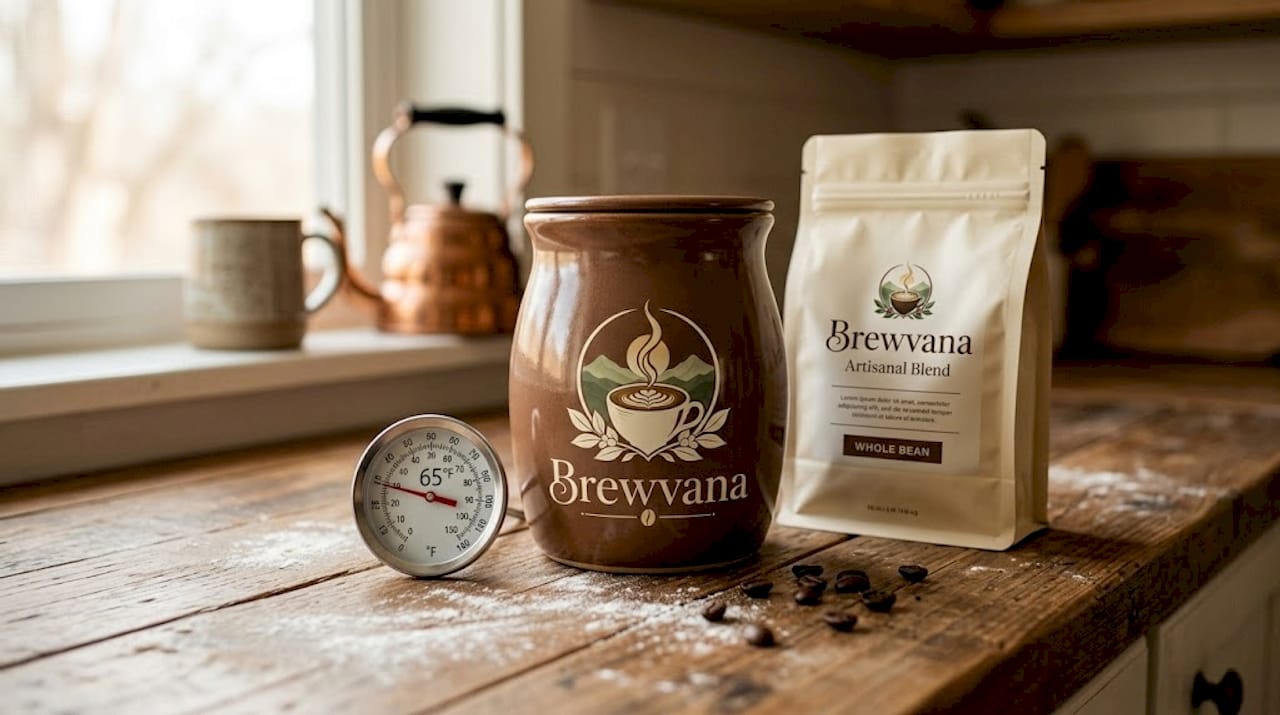
Light is another fast-acting degrader. UV exposure accelerates oil oxidation in beans, and even indirect sunlight on a windowsill does real damage over time. The fix is simple: keep beans somewhere dark, whether inside a cabinet, a pantry, or an opaque container stored away from windows.
The four conditions to control at home:
- Temperature: Store beans in a cool spot between 50 and 70°F, away from stoves, ovens, and sunny windows.
- Light: Use opaque containers or keep beans inside a closed cabinet to block UV exposure.
- Moisture: Avoid storing beans near the sink, dishwasher, or any source of steam. Even high kitchen humidity causes damage over time.
- Oxygen: Minimize how often you open the container and always reseal tightly after each use.
Pro Tip: A kitchen cabinet on an interior wall, away from heat appliances and out of direct light, is often the single best free storage upgrade you can make today.
Choosing the right coffee storage container
The container you choose determines how well your storage environment holds up over time. Not all options perform equally, and a few popular choices actually work against you.
| Container Type | Freshness Protection | Light Blocking | Best Use |
|---|---|---|---|
| Original bag with one-way valve | Excellent | Good if opaque | First choice for short-term |
| Ceramic canister with airtight lid | Very good | Excellent | Everyday countertop storage |
| Opaque plastic with airtight lid | Good | Excellent | Budget-friendly pantry option |
| Clear glass jar | Poor to moderate | None | Avoid unless kept in dark cabinet |
| Vacuum-sealed bag or canister | Excellent | Depends on material | Best for longer-term storage |
The original bag with a resealable top and one-way CO2 valve is genuinely hard to beat for short-term storage. Unopened original packaging with a one-way valve often outperforms a transfer to another container, as long as you keep it away from light and heat. When the bag runs out of resealable integrity after several opens, that’s the right time to transfer to a dedicated container.
Vacuum-sealed or ceramic containers with airtight lids are strong long-term options. Ceramic blocks light completely. Glass preserves flavor well but only if the jar lives inside a cupboard. Displaying your beans in a clear glass jar on the counter might look great on a coffee bar, but light exposure on clear glass accelerates oil oxidation and flavor loss faster than almost any other mistake you can make.
When transferring beans to a new container, minimize air exposure during the process. Work quickly, press out excess air if the container allows it, and seal immediately. Every second the beans sit open is an opportunity for oxygen to start its work.
Similar principles apply across other fresh food categories. The techniques used for keeping oils fresh closely mirror what works for coffee: dark storage, airtight seals, and temperature control all matter in the same ways.
Freezing and refrigerating coffee beans
This is where most home brewers go wrong, and where well-meaning advice often causes the most damage.
Refrigerators are not good coffee storage. Beans absorb moisture and odors from the fridge environment, which means your beans might pick up notes of last night’s leftovers. The humidity inside a fridge is also inconsistent and generally too high for coffee. Daily refrigeration is one of the most common coffee freshness mistakes, and it’s worth stopping if you do it.
Freezing is different. Done correctly, it can work. Done carelessly, it’s worse than doing nothing. The rules for freezing are strict:
- Divide beans into single-use portions before freezing. Each portion should be what you’ll use within one to two weeks.
- Use vacuum-sealed or tightly sealed freezer bags. Any air inside will cause freezer burn and moisture damage.
- Frozen beans preserve well for three to four months using airtight portioned bags.
- When you pull a portion out, let it reach room temperature completely before opening. This prevents condensation from forming directly on the beans.
- Never refreeze thawed coffee. Once it’s out, it’s out.
Freezing is a useful tool when you’ve bought too much or found an exceptional lot you want to preserve. It’s not an everyday solution. Think of it as emergency preservation, not a routine.
Pro Tip: Label your freezer bags with the roast date and portion date. When you pull a bag out two months later, you’ll know exactly what you’re working with.
Daily freezing is not recommended because the cycle of temperature change and moisture exposure degrades flavor faster than simply leaving beans at room temperature in a proper container.
Step-by-step guide to storing your beans
Follow these steps the day your beans arrive and you’ll set yourself up for the best possible cup from start to finish.
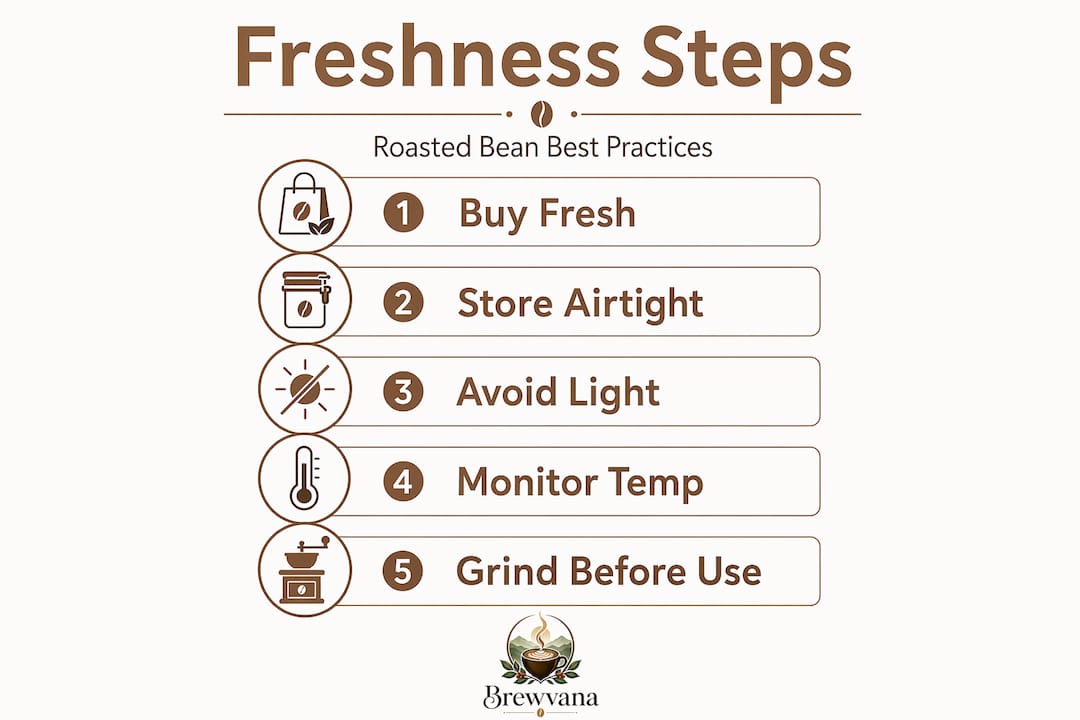
- Check the roast date. If the roast date is more than six weeks ago, plan to use those beans quickly. Buy beans roasted within the last month for the best flavor potential.
- Assess the packaging. If the original bag has a one-way valve and a resealable top, use it. Press out excess air each time you reseal.
- Choose your storage location. Pick a cabinet away from the stove and out of direct light. Interior walls and upper cabinets away from appliances work well.
- Transfer only when necessary. If the original bag is compromised or runs out of seal quality, move beans to an opaque airtight container. Do the transfer quickly.
- Monitor your supply. Track your consumption and buy in quantities you’ll finish within two to three weeks of opening. Freshness declines after opening regardless of how well you store the beans.
- Grind immediately before brewing. Grinding just before brewing retains volatile aromatics that any storage strategy will eventually lose. This single habit overrides most storage shortcomings.
| Stage | Best practice | Why it matters |
|---|---|---|
| Purchasing | Buy within 4 to 6 weeks of roast date | Freshness peaks early and declines steadily |
| After opening | Reseal tightly after every use | Oxygen exposure accelerates staling immediately |
| Storage location | Cool, dark, dry cabinet | Heat, light, and moisture are the primary degraders |
| Grinding | Grind per cup, not in batches | Oxidation begins within minutes of grinding |
| Long-term needs | Freeze in portioned, sealed bags | Prevents cumulative moisture and odor absorption |
Brewvana’s blog post on why roast date matters covers the roast timeline in detail if you want to go deeper on timing your purchases for maximum freshness.
What I’ve actually learned from years of storing coffee
I’ve spent a lot of time thinking about coffee storage, and the honest truth is that most home brewers are overcomplicating the wrong things and ignoring the right ones.
I see people invest in elaborate vacuum canisters, temperature-controlled storage pods, and nitrogen-flushed containers. Then they buy a bag that was roasted four months ago from a grocery store shelf and wonder why the result is mediocre. The container is not the problem. The sourcing is.
In my experience, the single most impactful habit is buying freshly roasted beans in quantities you’ll actually use within two weeks of opening. That’s it. Good beans, bought fresh, kept in a dark cabinet in the original bag or a simple opaque canister. That approach beats every gadget I’ve tried.
The second thing I’ve learned is that grinding fresh is not optional if you care about flavor. Oxidation begins almost immediately after grinding, and no amount of excellent storage compensates for grinding a week’s worth of coffee on Sunday and living off it through Saturday. The bag isn’t the problem. The grinder sitting on the counter not being used daily is.
I’ve also learned to stop moralizing about the freezer. Freezing is a legitimate tool when used correctly. I’ve frozen exceptional coffee I wanted to save, and it came out beautifully three months later. But I’ve also watched people freeze and thaw the same bag repeatedly and wonder why their coffee tastes like ice and nothing else.
The science behind all of this is genuinely interesting, and if you want to go deeper, Brewvana’s guide on why coffee goes stale is one of the more thorough breakdowns I’ve come across.
— Kimberly
Get the freshness advantage from the start
The best storage habits in the world can’t rescue beans that were already past their peak when you bought them. That’s where starting with freshly roasted coffee makes all the difference.

Brewvana roasts to order, which means the beans heading to your door are days fresh, not months old. Every bag arrives at the beginning of its freshness window, not the end. When you pair that with what you’ve learned here about proper containers, storage locations, and grinding habits, you’re working with coffee the way it was meant to be experienced. Explore Brewvana’s full fresh-roasted coffee collection and taste the difference that a proper roast date and great storage habits actually make.
FAQ
How long do roasted coffee beans stay fresh?
Roasted coffee beans reach peak flavor 10 to 14 days after roasting and hold good quality for up to 4 to 6 weeks. After opening, use within 1 to 2 weeks for the best taste.
Should I store coffee beans in the refrigerator?
No. Refrigerators expose beans to moisture and odors that degrade flavor and aroma. Room temperature storage in an airtight, opaque container is better for daily use.
What is the best container for storing coffee beans?
An opaque, airtight container such as a ceramic canister or the original bag with a one-way CO2 valve works best. Avoid clear glass jars kept in open light.
Can I freeze roasted coffee beans?
Yes, but only in single-use, vacuum-sealed portions for long-term storage of three to four months. Always let beans reach room temperature before opening to avoid condensation damage.
Does grinding affect coffee freshness?
Grinding dramatically increases oxidation speed. Ground coffee goes stale within minutes of grinding, so grind only what you’ll brew right away for the freshest cup possible.