

Fresh roasted coffee beans are defined by their retention of volatile aromatic compounds, CO2 gas, and surface oils that degrade rapidly after roasting. The signs of fresh roasted beans, known in specialty coffee as freshness indicators, are detectable through smell, sight, touch, and brewing behavior. Knowing these cues separates a transcendent cup from a flat, forgettable one. Brewvana has put together this guide to walk you through every reliable test, so you can shop, store, and brew with confidence every time.
1. Strong, complex aroma on opening the bag
Aroma is the single most immediate and reliable freshness indicator you have. Fresh beans produce a layered, vivid scent with notes of caramel, dark chocolate, fruit, or roasted nuts. Stale beans smell flat, papery, or faintly rancid because oxidation has broken down the aromatic oils responsible for those bright notes.
The difference is not subtle. Open a bag of beans roasted within the past two weeks and the aroma hits you before you even get the seal fully open. Open a bag that has been sitting on a shelf for three months and you get something closer to cardboard or old cooking oil.
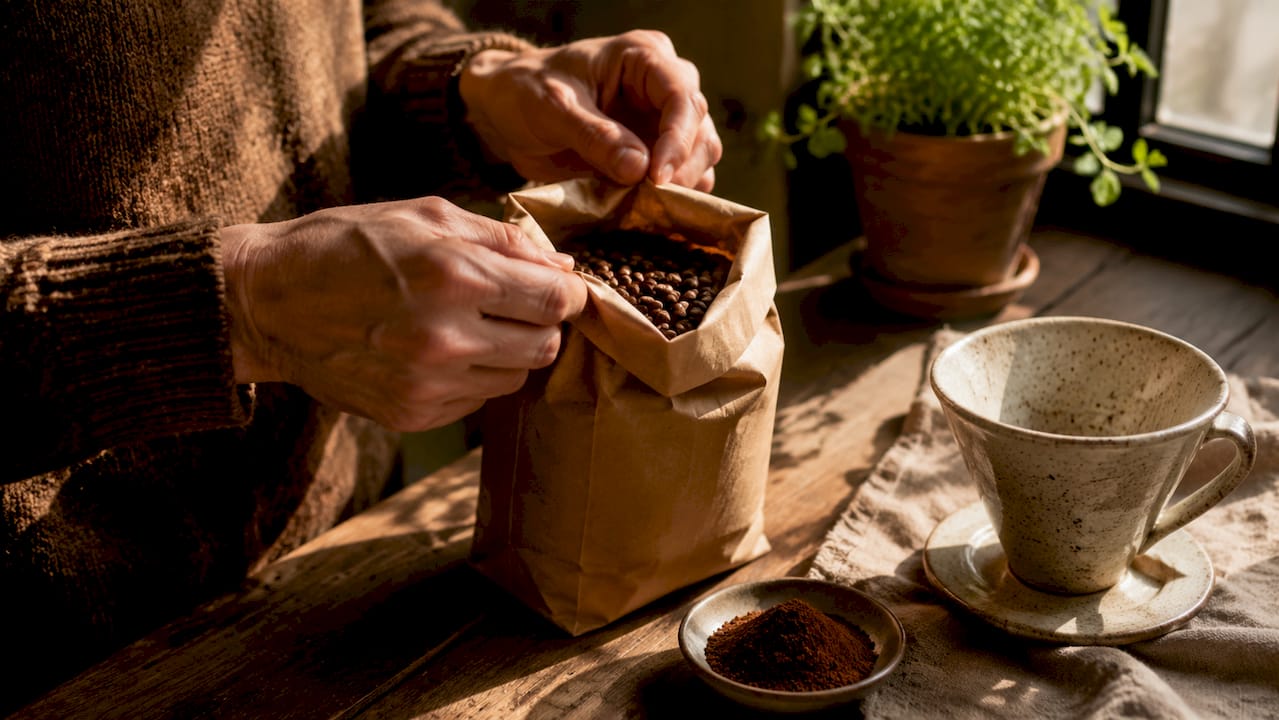
Pro Tip: Smell the beans before grinding. If the dry fragrance is weak or off-putting, the brewed cup will confirm your suspicion. Trust your nose before you waste beans.
2. Aroma that intensifies dramatically when ground
Grinding is a controlled freshness test you can perform at home. Grinding freshly roasted beans releases volatile aromatic compounds trapped inside the bean’s cellular structure, and the scent should fill your kitchen within seconds. Stale beans produce a muted, dull smell that fades almost immediately after grinding.
This happens because the volatile compounds responsible for fruity, floral, and chocolatey notes are highly unstable. They escape through oxidation over time, so by the time you grind a stale bean, most of the interesting chemistry is already gone. What remains smells generic and woody, not specific and bright.
The contrast between fresh and stale ground coffee is one of the clearest sensory tests available to any home brewer. If your grinder produces a scent that makes you want to brew immediately, your beans are fresh. If the smell is forgettable, the cup will be too.
3. Dry or slightly satiny surface, not sticky or greasy
Fresh coffee bean characteristics include a surface that looks healthy and intentional. Freshly roasted beans have a glossy shine but are not overly greasy. A dry or lightly satiny finish on light and medium roasts is normal and desirable. Dark roasts naturally display more surface oil because the roasting process pushes lipids to the exterior, but even those should not feel sticky or gummy.
Excessive oiliness on a light or medium roast is a red flag. It signals that the bean’s internal oils have migrated outward due to age or poor storage, not because of roast level. Sticky, gummy beans are oxidizing and will taste rancid or flat in the cup.
- Light roasts: dry surface, matte finish, minimal visible oil
- Medium roasts: slight sheen, never wet or tacky
- Dark roasts: visible surface oil is normal, but beans should not clump together or feel greasy on your fingers
Pro Tip: Rub a single bean between your fingers. A light, clean oil transfer is fine on a dark roast. If your fingers feel coated or the bean leaves a slick residue, the oils have gone rancid.
4. Firm beans that spring back under pressure
The tactile test is quick and underused. Fresh beans pressed between your fingers should have slight give and spring back with some resilience. Brittle or crumbly beans that fracture easily have lost moisture and structural integrity, both signs of staleness.
This matters because moisture loss in coffee beans correlates directly with flavor loss. As beans age, they dry out beyond their ideal moisture content, and the cellular structure that holds aromatic compounds becomes fragile. A bean that crumbles under light pressure has been aging for a while.
You do not need to crush the bean to test this. A firm squeeze between thumb and forefinger is enough. Fresh beans resist. Stale beans give way too easily or crack outright.
5. Uniform color with no visible mold or discoloration
Identifying fresh roasted coffee visually starts with color consistency. Fresh beans from a single roast batch should display a relatively uniform color across the lot, whether you are looking at a light honey brown or a deep mahogany. Significant variation within a single bag can indicate uneven roasting, which affects flavor extraction.
More critically, look for any white, green, or gray patches on the beans. Mold growth is a serious spoilage sign and can occur when beans are stored in humid conditions. Discoloration that looks chalky or dusty is not a roast artifact. It is a storage failure.
Beans should also be free of visible cracks beyond the natural center crease. Excessive cracking across the surface of the bean indicates over-roasting or significant age-related degradation.
6. A puffed or firm sealed bag before opening
Before you even open the bag, the packaging itself tells you something. Degassing produces CO2 that causes a sealed bag to puff up slightly. A bag that feels firm or slightly inflated when you squeeze it is a good sign that the beans inside are still actively releasing gas, which means they were roasted recently.
A completely flat, deflated bag that has no give at all may indicate that the beans have already finished degassing. This is not a definitive test on its own, since some bags vent CO2 through one-way valves before you receive them. But combined with other signs, a flat bag on a product without a valve is worth noting.
This is one of the simplest pre-purchase checks you can do when shopping in person. Squeeze the bag gently. A little firmness is a good sign.
7. A clear roast date within the past 7 to 30 days
A roast date is the most objective freshness indicator on any bag of coffee. A clear roast date within 7 to 30 days of purchase is the target window for peak flavor. Best-before dates are nearly useless because they can mask beans roasted six months ago with a shelf life of 12 months stamped on the label.
The roast date matters because coffee flavor is not static after roasting. It evolves through a predictable arc. Beans roasted fewer than three days ago are too gassy and can taste sour or hollow. Beans between days 4 and 21 post-roast are generally at their peak. Past day 42, flavor dulls progressively, losing sweet and acidic notes and becoming woody and generic.
| Roast age | Expected flavor profile |
|---|---|
| 0 to 3 days | Overly gassy, sour, underdeveloped |
| 4 to 21 days | Peak brightness, full aroma, complex flavor |
| 22 to 42 days | Acceptable, slightly muted, less complexity |
| 43 days and beyond | Flat, woody, generic, significant flavor loss |
8. One-way valve on the packaging
The presence of a one-way degassing valve on a coffee bag is a sign that the roaster takes freshness seriously. One-way valves release CO2 produced by freshly roasted beans while preventing oxygen from entering the bag. Without a valve, roasters must either wait days before sealing (losing freshness) or risk the bag bursting from gas pressure.
A bag with a one-way valve signals that the beans were sealed shortly after roasting. That is exactly what you want. Bags without valves that were sealed immediately after roasting will puff and potentially burst. Bags without valves that were sealed after a long wait were likely stale before they were even packaged.
Look for the small circular or rectangular valve on the front or back of the bag. Press it and you may even smell a burst of fresh coffee aroma escaping through it.
9. Vigorous bloom during pour-over brewing
The bloom test is the definitive brewing indicator of freshness. Fresh grounds form a dome and release vigorous bubbling when hot water hits them. Stale beans show no bubbling at all, with water flowing through the grounds like it is poured onto sand.
To perform the bloom test, use a pour-over method like a Hario V60 or Chemex. Add your ground coffee, then pour just enough hot water to saturate the grounds, roughly twice the weight of the coffee. Wait 30 to 45 seconds. Fresh beans will swell, bubble actively, and release a wave of aroma. The freshness peak between days 4 and 21 post-roast produces the most dramatic bloom response.
A strong, even bloom also signals better extraction. The CO2 escaping during bloom actually helps create a more uniform saturation of the grounds, which translates directly into a more balanced and flavorful cup. Weak or absent bloom means the gas is gone, the aromatics are depleted, and the extraction will be uneven. For a deeper look at using bloom as a sensory evaluation tool, Brewvana’s cupping at home guide walks through the full process.
Key takeaways
Fresh roasted coffee beans are identifiable through aroma, appearance, tactile firmness, packaging details, and brewing behavior, with the bloom test and roast date serving as the two most reliable combined indicators.
| Point | Details |
|---|---|
| Aroma is the first test | Strong, complex scent on opening signals retained volatile compounds and freshness. |
| Roast date beats best-before | Look for a roast date within 7 to 21 days for peak flavor and aroma. |
| Bloom confirms freshness | Vigorous bubbling during pour-over means CO2 is still present and beans are fresh. |
| Surface oiliness is a warning sign | Sticky or greasy beans on light and medium roasts indicate age, not quality. |
| Packaging design matters | One-way valve bags signal a roaster committed to delivering fresh beans. |
What I’ve learned from years of tasting fresh vs. stale coffee
Most coffee drinkers focus on grind size or water temperature and completely overlook the single biggest variable in their cup: how old their beans are. I have tasted thousands of cups across roast levels, origins, and brew methods, and nothing degrades a cup faster than stale beans. Not bad water. Not a cheap grinder. Stale beans.
The two tests I rely on every single time are aroma and bloom. If a bag smells vibrant and complex the moment I open it, I am already optimistic. If the bloom during pour-over is active and domed, I know the extraction is going to be clean. Those two cues together have never steered me wrong.
What I have also learned is that mechanical tests like the float test, where you drop beans in water and check if they sink, are unreliable for freshness assessment. Sensory evaluation through aroma, bloom, and taste is far more accurate. Your senses are calibrated tools. Use them.
My practical advice: buy from roasters who print a roast date, not just a best-before date. Store your beans in an airtight, opaque container away from heat and light. And grind only what you need, right before brewing. Grinding too early accelerates the loss of those volatile aromatics that make fresh coffee worth drinking in the first place. If you want to develop your palate faster, buy sample packs from different roasters and taste them side by side at different points in the freshness window. That calibration exercise is worth more than any guide you will read.
— KIngram
Get freshly roasted beans delivered to your door
If you have been working through stale supermarket coffee, the difference a truly fresh bag makes is immediate and undeniable. Brewvana sources and ships freshly roasted coffee with roast dates printed on every bag, so you always know exactly what you are getting. Every order is roasted to order, not sitting in a warehouse.

Whether you prefer the clarity of a single origin from Ethiopia or Colombia, or the balance of a carefully crafted artisan blend, Brewvana’s selection covers the full spectrum of roast levels and flavor profiles. Not sure where to start? The sample packs let you taste multiple roasts side by side, which is the fastest way to find your ideal freshness window and flavor preference.
FAQ
What are the main signs of fresh roasted beans?
The main signs are a strong, complex aroma on opening, vigorous bubbling during brewing called the bloom, a dry or lightly satiny surface, firm beans that do not crumble, and a roast date within the past 7 to 21 days printed on the bag.
How does the bloom test work?
Pour just enough hot water to saturate your grounds and wait 30 seconds. Fresh beans will swell and bubble actively as CO2 escapes. Stale beans show little to no bubbling and water passes straight through.
What does fresh coffee smell like?
Fresh coffee smells bright, specific, and complex, with notes like caramel, dark chocolate, fruit, or toasted nuts depending on the roast and origin. Stale coffee smells flat, papery, or faintly rancid.
Is a best-before date the same as a roast date?
No. A best-before date can mask beans roasted months ago. A roast date tells you exactly when the beans were roasted, which is the only number that matters for assessing freshness and peak flavor timing.
How long do roasted coffee beans stay fresh?
Roasted beans are at peak flavor between 4 and 21 days post-roast. After 42 days, flavor loss becomes significant, with sweet and acidic notes fading and the cup tasting woody and flat.