

If you’ve ever brewed a cup from beans you swore were fresh and tasted something flat, papery, or faintly bitter, you’ve already met the enemy. Understanding why coffee beans go stale is the first step to actually doing something about it. Most people blame oxygen, and oxygen is real culprit, but the full picture is more layered than that. Staleness comes from a cluster of chemical reactions, physical changes, and environmental variables that start the moment your beans leave the roaster. Here’s exactly what’s happening and how to fight it.
Table of Contents
- Key takeaways
- Why coffee beans go stale: the chemistry behind it
- Environmental factors that speed up staleness
- How roast level and packaging change the freshness window
- Practical tips for keeping your coffee fresh longer
- My take: what actually moves the needle on freshness
- Taste the difference with Brewvana’s fresh-roasted coffee
- FAQ
Key takeaways
| Point | Details |
|---|---|
| Staleness is multifactorial | Oxidation, CO2 loss, moisture, heat, and light all contribute to flavor degradation. |
| Grinding accelerates decay rapidly | Ground coffee can lose up to 84% of key aroma compounds within 60 minutes. |
| Packaging matters enormously | One-way valve bags and multi-layer barrier films slow oxidation far better than resealable pouches. |
| Storage environment is critical | Cool, dark, and dry conditions slow all the chemical reactions responsible for staling. |
| Roast date beats best-by date | Post-roast handling conditions often affect flavor quality more than the roast date printed on the bag. |
Why coffee beans go stale: the chemistry behind it
The short answer is that coffee is a chemically unstable product. It contains hundreds of volatile aromatic compounds, reactive lipids, and CO2, and from the moment roasting ends, those components begin breaking down.
Oxidation is the biggest single driver. Coffee oils and volatile aroma molecules react with oxygen in a process called autoxidation, which produces compounds that smell and taste rancid. Oxidation breaks down oils and aroma compounds quickly after roasting, and no airtight container stops it entirely. It only slows the clock.
CO2 degassing plays a surprising dual role. Right after roasting, beans release CO2 as a natural byproduct of the roasting process. For the first few days, this outgassing actually creates a protective buffer that pushes oxygen away from the bean’s surface. But once most of the CO2 has left, that protection disappears and oxidation accelerates. This is why coffee roasters recommend a short resting window of 5 to 14 days before drinking, and why there’s also a hard limit on how long you should wait.
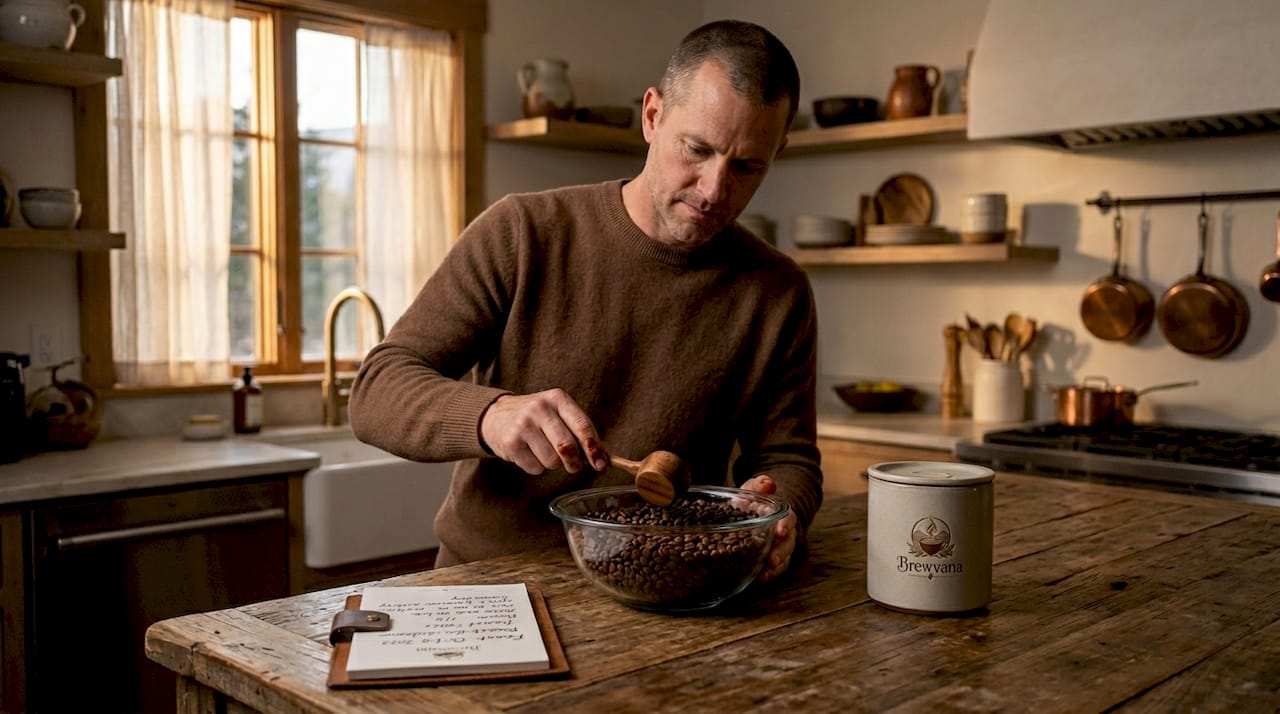
Volatile evaporation is quieter but just as damaging. The compounds responsible for bright, floral, and fruity notes literally evaporate from the bean over time. Once they’re gone, no brewing technique brings them back.
Grinding makes everything worse, fast. When you grind coffee, you shatter the bean’s cell structure, exponentially increasing surface area and giving oxygen hundreds of new access points. Ground coffee aroma drops ~84% within just 60 minutes after grinding. That is not a slow fade. That is a sprint.
Here’s a quick breakdown of the main staling mechanisms:
- Oxidation: Attacks lipids and volatiles, producing off-flavors like hexanal and nonenal
- CO2 loss: Removes the natural protective barrier around the bean
- Volatile evaporation: Strips the bright, complex notes that make good coffee interesting
- Melanoidin trapping: Darker roasts stale faster because melanoidin content accelerates the bonding of aroma compounds, locking them out of reach
- Irreversible reactions: Once aroma compounds are trapped or degraded, they cannot be recovered
Pro Tip: Grind only the amount you need, immediately before brewing. Even a 30-minute gap between grinding and brewing is enough to notice a real difference in cup brightness.
Environmental factors that speed up staleness
Understanding the chemistry is useful. Understanding what triggers it in your kitchen is where you actually protect your beans.
Oxygen is the most studied enemy. When oxygen contacts coffee lipids, it triggers autoxidation that produces compounds like hexanal. Lipid oxidation markers like hexanal don’t just create bad smells on their own. They compete with desirable aromas at the receptor level, effectively suppressing the good notes even when some are still present. Your coffee may still smell like coffee, but the vibrant character gets buried.
Moisture is underrated as a threat. Coffee is highly hygroscopic, meaning it readily absorbs water vapor from the air around it. Humidity and oxidizing atmospheres accelerate lipid oxidation, leading to rancid flavors. Beyond rancidity, enough moisture enables mold growth, which is a more serious problem than flat taste.
Heat is arguably the most aggressive accelerant. Chemical reaction rates generally double with every 10°C increase in temperature. That means a bag of coffee sitting on a shelf near your stove is staling at twice the rate compared to one kept in a cooler spot. Heat also causes gases inside the bean to expand and escape faster, speeding up CO2 loss.
Light does two things you don’t want. Direct sunlight degrades photosensitive compounds and, more practically, it heats the beans. Even indirect light contributes over time. This is exactly why specialty roasters package coffee in opaque bags rather than the clear canisters that look great on a kitchen counter.
The practical implication: the best storage for coffee beans is a cool, dry, dark location in an airtight container. Every one of those four conditions targets a specific staling mechanism.
How roast level and packaging change the freshness window
Not all coffee starts with the same shelf life. Two factors most people overlook are roast level and packaging engineering.
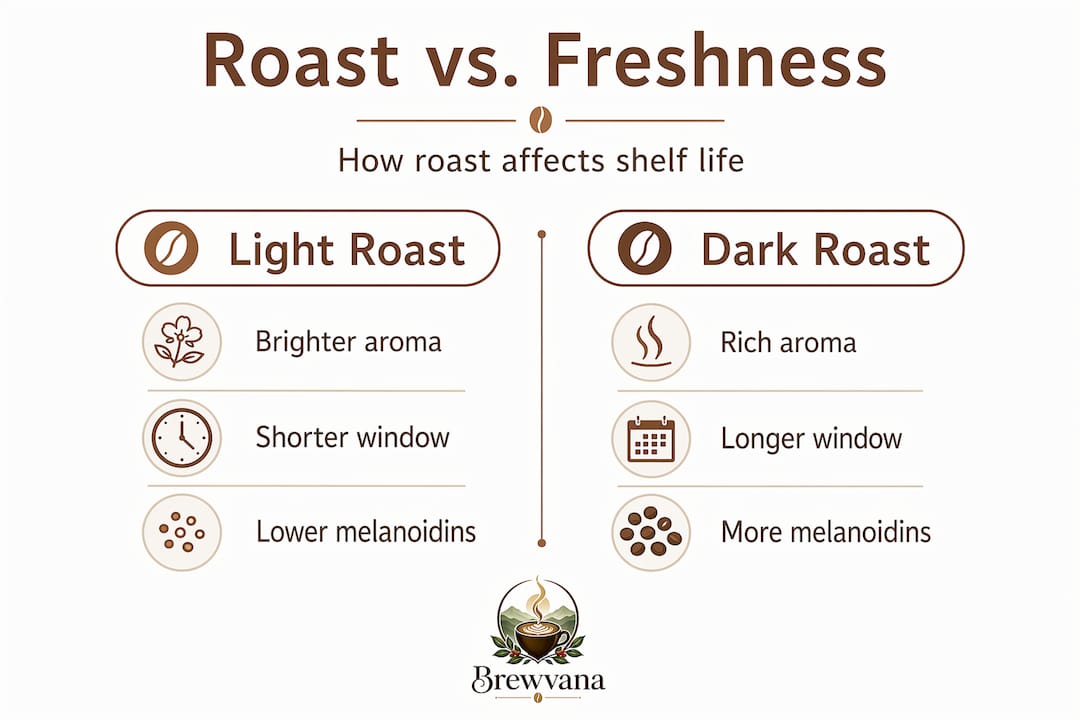
Roast level matters more than most realize. Darker roasts contain higher concentrations of melanoidins, compounds formed during extended roasting. Melanoidin content accelerates aroma trapping after roasting, binding volatile compounds and pulling them out of sensory reach faster than lighter roasts experience. This doesn’t make dark roast inferior, but it does mean you should consume it faster. Lighter roasts, which preserve more of the bean’s original aromatic precursors, often have a slightly longer window before the character fades noticeably.
Bean processing affects freshness potential too. The way a coffee is processed before roasting, whether washed, natural, or honey-processed, determines which aromatic precursors survive into the roasted bean. Handling conditions after roasting interact with those precursors and shape the bean’s volatile profile from the start. You can read more about how processing methods shape flavor across different profiles.
Packaging is one of the most effective staleness controls available. Here’s how common packaging methods compare:
| Packaging type | Oxygen protection | CO2 management | Practical freshness window |
|---|---|---|---|
| Standard resealable bag | Low | None | 1 to 2 weeks once opened |
| One-way valve bag | Medium to high | Allows CO2 out, blocks O2 in | 3 to 6 weeks sealed |
| Multi-layer barrier bag + valve | High | Optimized | 4 to 8 weeks sealed |
| Vacuum-sealed bag | High | Removes CO2 (resting required) | 6 to 12 weeks sealed |
Specialized packaging and degassing valves are specifically engineered to extend the post-roast window by managing both oxygen ingress and CO2 release simultaneously. When you’re buying specialty coffee, packaging quality is not cosmetic. It’s functional.
Pro Tip: When you open a valve bag, transfer the beans to a dedicated airtight container with a CO2 valve. This removes the guesswork of resealing a bag that’s already lost some of its barrier integrity.
Practical tips for keeping your coffee fresh longer
Science means nothing if you can’t act on it. Here’s how to apply everything above to your daily coffee routine.
-
Buy in smaller quantities. Aim to buy enough for one to two weeks of consumption. Buying a larger bag because it’s cheaper per ounce is a trade-off where you sacrifice freshness for price. For most hobbyists, that’s a bad trade.
-
Store whole beans, not pre-ground. Whole beans stale far more slowly than pre-ground coffee. The intact bean structure limits surface area and slows oxygen penetration significantly.
-
Use an airtight, opaque container. A ceramic or stainless steel canister with a tight seal beats a glass jar on the counter every time. Light and minor oxygen exposure add up.
-
Keep beans away from heat sources. The area near your coffee maker, stovetop, or oven is the worst storage location in most kitchens. A cabinet away from appliances is better.
-
Skip the refrigerator. This is one of the most common mistakes. Refrigerators introduce moisture and coffee readily absorbs surrounding food odors. Cool, dry conditions matter, but the fridge creates more problems than it solves.
-
Freeze only if you must, and do it right. Freezing in single-use portions with a vacuum-sealed bag is a legitimate way to extend life for beans you can’t consume quickly. But every freeze-thaw cycle introduces condensation risk. Portion once, freeze, and don’t refreeze.
-
Grind immediately before brewing. This is the single highest-impact change most people can make. Everything else buys you days. Grinding fresh buys you flavor in every cup.
Pro Tip: Check the roast date, not the best-by date, when buying beans. A bag roasted six weeks ago with four months left on the best-by label is already past its peak. Look for beans roasted within the last two weeks for the best experience.
My take: what actually moves the needle on freshness
I’ve spent years tasting coffee at different stages of freshness, and the pattern that surprises most people I talk to is how much grinding practice matters compared to everything else they obsess over.
People invest in $50 ceramic canisters and track roast dates obsessively, then grind their beans the night before brewing. That single habit undoes most of the careful storage work. Even sealed ground coffee stales quickly because irreversible reactions continue inside the particles regardless of how well the container is sealed.
The other myth I’d push back on is that vacuum sealing alone preserves ground coffee effectively for any real length of time. It helps. It does not save pre-ground coffee from meaningful degradation over days or weeks. The only two methods that actually slow ground coffee staling are vacuum sealing and freezing used together.
What I’ve learned is that environmental and handling conditions after roasting matter as much as the roast date itself. A beautifully roasted bean stored on a warm, sunny counter for three weeks will taste worse than a modestly roasted bean kept cool, dark, and airtight from day one. The roast date tells you the starting point. Your storage tells you where it ends up.
My honest advice: don’t chase perfection in every variable at once. Prioritize grinding fresh, buying less more often, and keeping your beans away from heat. Get those three right and you’ll notice more improvement than any container upgrade alone will provide.
— Kimberly
Taste the difference with Brewvana’s fresh-roasted coffee
If you’ve read this far, you clearly care about what ends up in your cup. That’s exactly the mindset Brewvana was built around.
At Brewvana, every bag ships freshly roasted to order, which means you’re not pulling beans off a warehouse shelf that have been sitting for weeks. Brewvana’s freshly roasted coffee selection includes single-origin options and artisan blends, all packaged with freshness in mind. If you want to see what a quality-focused roast actually tastes like, the Latin American Blend is a strong starting point. Vibrant, clean, and roasted specifically to land in your hands at peak flavor. Brewvana also donates a portion of every sale to local schools, so your morning cup supports more than just your taste preferences.
FAQ
Why do coffee beans go stale so quickly?
Coffee beans go stale because of oxidation, CO2 loss, volatile evaporation, and heat, all of which begin immediately after roasting. Staleness accelerates depending on storage conditions and whether beans have been ground.
How long do whole coffee beans stay fresh?
Whole beans stored in an airtight, opaque container in a cool, dry location typically stay fresh for three to four weeks after the roast date, though optimal flavor is usually in the first two weeks.
Does grinding coffee faster make it go stale?
Yes. Grinding increases oxygen exposure over 500 times compared to whole beans, and ground coffee can lose the majority of its key aroma compounds within 60 minutes.
Is it worth freezing coffee beans to keep them fresh?
Freezing can extend freshness if done correctly. Portion beans into single-use vacuum-sealed packets before freezing and never refreeze after thawing, since repeated freeze-thaw cycles introduce moisture and degrade quality.
Does roast level affect how fast coffee goes stale?
Yes. Darker roasts contain more melanoidins, which accelerate aroma compound trapping and can cause flavor to fade faster than lighter roasts. Darker roasts are best consumed sooner after the roast date.