

Coffee beans are oily because they contain natural lipids that migrate to the surface during roasting or as the beans age after roasting. These lipids, which comprise 10 to 15% of a coffee bean’s total composition, are not a defect. They are a direct signal of roast level, bean age, and brewing potential. Understanding why coffee beans are oily helps you make smarter choices about what you buy, how you store it, and what to expect in the cup.
Why coffee beans are oily: the science behind the sheen
The technical term for the oils responsible for that glossy surface is coffee lipids, and they exist inside every green coffee bean before roasting begins. During roasting, heat builds internal pressure inside the bean. When that pressure exceeds what the cell walls can contain, the walls fracture and lipids are forced to the surface. This is the primary reason dark roasts look wet or shiny straight out of the roaster.
Light roasts do not show this surface oil because the roasting process stops before enough pressure builds to break the cell structure. The oils stay locked inside. Medium roasts may show a faint sheen, especially after a few days off the roaster, as minor cell damage allows gradual oil seepage. The oily coffee bean causes you see with dark roasts are structural, not cosmetic.
This matters for flavor. Lipids carry aroma and flavor compounds that contribute directly to body, richness, and mouthfeel in the cup. The oil is not just a visual characteristic. It is a delivery system for the sensory experience you associate with a well-brewed dark roast.

How roast level determines surface oil
The relationship between roast degree and surface oil is one of the most reliable indicators in coffee. Here is how each stage behaves:
| Roast level | Surface oil appearance | Cause |
|---|---|---|
| Light roast | Dry, matte surface | Cell walls intact; oils remain inside |
| Medium roast | Slight sheen after 3 to 7 days | Partial cell damage; slow oil migration |
| Dark roast | Visibly wet or glossy immediately | Second crack fractures cell walls; rapid lipid release |
| Very dark (French, Italian) | Heavy oil coating | Extensive cell breakdown; maximum lipid exposure |
The second crack is the critical threshold. When roasting pushes past the first crack and into the second, the cellular structure of the bean collapses enough to push oils to the surface almost immediately after cooling. This is why a French roast looks slick within hours of leaving the drum, while a light Ethiopian single-origin looks completely dry. Understanding roast level differences gives you a reliable framework for predicting what you will see and taste.
Pro Tip: If a medium roast bean looks heavily oily within 24 hours of its roast date, that is a red flag. Fresh medium roasts should be mostly dry. Heavy early oiliness on a medium roast often signals the roaster pushed the profile darker than labeled.
Does bean variety and origin affect oiliness?
Not all beans become equally oily at the same roast level. Bean variety, growing altitude, and processing method all influence how much oil a bean contains and how quickly those oils reach the surface.
Key factors that affect coffee bean oil content and migration:
- Density: Denser beans, typically grown at higher altitudes, have tighter cell structures. Denser beans slow oil migration, so they may appear less oily than lower-density beans roasted to the same level.
- Variety: Robusta beans naturally contain more lipids than Arabica beans, which partly explains why Robusta-heavy espresso blends often look oilier.
- Processing method: Wet-processed (washed) beans tend to have a cleaner surface profile after roasting compared to natural-processed beans, which can retain more surface material that interacts with oils. Learning about processing method differences helps explain why two dark roasts from different origins can look and taste very different.
- Green bean moisture content: Beans with higher residual moisture before roasting respond differently to heat, affecting the rate and extent of cell wall breakdown.
This variability is why the coffee bean oil explanation is never one-size-fits-all. A dark-roasted Sumatra Mandheling will look dramatically oilier than a dark-roasted Kenyan AA, even if both hit the same internal temperature during roasting. The bean itself sets the ceiling for how oily the surface can become.
How storage and age change oiliness over time
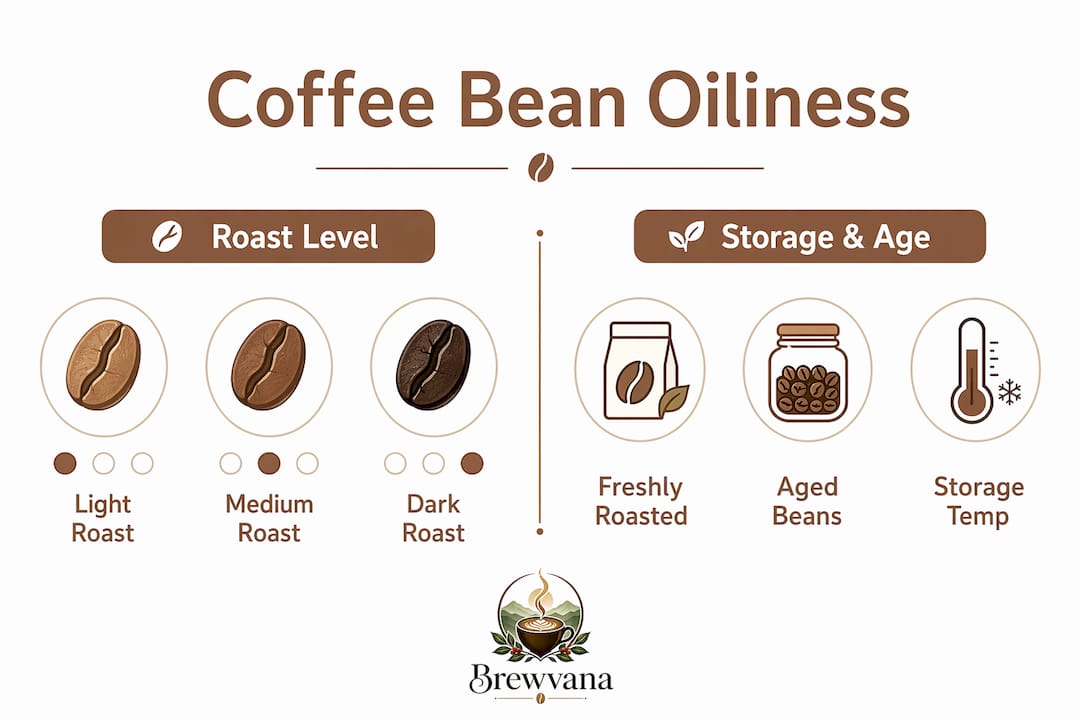
Storage is where oiliness gets complicated. A freshly roasted dark roast is oily for a good reason: the roasting process forced those lipids out. But a medium roast that becomes progressively oilier over weeks is telling a different story.
Medium roasts become oily over time due to oxidation, which correlates with stale beans and flat or rancid taste. This is the same chemical process that turns butter rancid or makes walnuts taste bitter after months in a pantry. Oils exposed to oxygen undergo degradation, and surface oils exposed to air lose aromatic compounds and develop off-flavors.
Temperature accelerates this process significantly. Higher temperatures speed up chemical migration of coffee oils, which is why storing beans near a stove or in a warm cabinet shortens their usable life. Packaging also plays a role. Certain packaging materials interact with coffee oils in ways that affect both taste and safety, which is why quality roasters use valve-sealed bags rather than simple zip-lock pouches.
| Storage condition | Effect on oiliness | Effect on flavor |
|---|---|---|
| Cool, dark, sealed container | Slows oil migration and oxidation | Preserves freshness and aroma |
| Warm or sunny location | Accelerates oil migration | Faster flavor degradation |
| Open container or poor seal | Rapid oxidation of surface oils | Stale, flat, or rancid taste |
| Freezer (sealed, airtight) | Significantly slows oxidation | Extends freshness if done correctly |
Pro Tip: Check the roast date, not just the best-by date. Proper guidance on storing roasted beans recommends consuming most roasts within 2 to 4 weeks of the roast date for peak flavor. A best-by date 12 months out tells you almost nothing useful about freshness.
How oily beans affect flavor and your equipment
The effects of oily coffee beans split into two categories: what happens in the cup and what happens to your gear.
In the cup, fresh surface oils are a positive. They carry volatile aromatic compounds that give dark roasts their characteristic chocolate, caramel, and smoky notes. The lipids also coat the palate in a way that creates the full body and mouthfeel associated with espresso and French press brewing. This is the core of the coffee bean oil benefits argument: the oil is doing real sensory work.
The problem starts when those oils oxidize. Here is the progression:
- Freshly roasted dark beans have surface oils rich in aromatic compounds. The cup tastes bold and complex.
- After 2 to 3 weeks without proper storage, surface oils begin oxidizing. Flavors flatten noticeably.
- Beyond 4 to 6 weeks in poor storage, oxidized oils produce off-flavors described as papery, rubbery, or rancid. The coffee smells stale before you even brew it.
- At this stage, the oily texture remains but the flavor benefit is gone. You are tasting degraded lipids, not fresh ones.
For equipment, oily beans create a specific maintenance challenge. Oily grounds stick and smear inside grinders, causing ground retention, motor strain, and flavor cross-contamination between sessions. A grinder used daily with dark oily beans without regular cleaning will transfer stale oil residue into every subsequent grind, including lighter roasts where you would never expect that flavor.
The fix is straightforward. Grind a small amount of dry, uncooked rice through your burr grinder weekly to absorb oil residue. Wipe down espresso machine group heads and portafilters after every session. If you use a blade grinder, the equipment handling challenges are even more pronounced because oil accumulates faster in the enclosed chamber.
Key takeaways
Coffee beans are oily because roasting breaks down cell walls and forces natural lipids to the surface, and this oiliness directly signals roast level, freshness, and flavor potential.
| Point | Details |
|---|---|
| Lipid content drives oiliness | Coffee beans contain 10 to 15% lipids, which surface during roasting or aging. |
| Roast level is the primary cause | Dark roasts trigger second crack cell breakdown, pushing oils out immediately after cooling. |
| Aging creates a different kind of oiliness | Medium roasts that turn oily over weeks signal oxidation and stale flavor, not freshness. |
| Storage conditions matter significantly | Heat and poor packaging accelerate oil migration and flavor degradation. |
| Equipment maintenance is non-negotiable | Oily beans leave residue in grinders and machines that affects flavor and performance. |
The oiliness signal most coffee drinkers misread
Here is what I have found after years of tasting and sourcing: most coffee drinkers treat oiliness as a binary. Either the beans are oily and therefore “strong” or they are dry and therefore “weak.” Neither reading is accurate, and both lead to bad purchasing decisions.
The more useful mental model is to think of oiliness as a timestamp combined with a roast indicator. A freshly roasted dark bean that is oily is telling you something positive: the roast was pushed far enough to develop those deep, caramelized flavors, and the oils are fresh enough to carry them. A medium roast that has turned oily after sitting in a warehouse for three months is telling you something negative: oxidation has already started degrading the flavor compounds you paid for.
I have tasted side-by-side comparisons of the same dark roast at one week and six weeks post-roast. The one-week version had oils that smelled like dark chocolate and toasted nuts. The six-week version smelled like a used fry pan. Same bean, same roast, completely different experience. The roast date is the single most underrated piece of information on any bag of coffee.
My honest recommendation: do not avoid oily beans. Learn to read them. Buy dark roasts from roasters who print the roast date, consume them within three weeks, and clean your grinder more often than you think you need to. The oil is not your enemy. Stale oil is.
— KIngram
Explore Brewvana’s freshly roasted coffees

At Brewvana, every bag is roasted to order, which means the oils on your dark roast beans are fresh when they arrive at your door. The full coffee collection includes single-origin options and artisan blends across light, medium, and dark roast profiles, so you can experience exactly how roast level shapes oiliness and flavor. Whether you want the bold, oil-rich intensity of a French roast or the cleaner profile of a washed light roast, Brewvana sources and roasts with the precision that makes the difference you can taste. Every purchase also supports local schools through Brewvana’s community giving program.
FAQ
Why are my coffee beans shiny?
Coffee beans appear shiny because natural lipids have migrated to the surface during roasting or aging. Dark roasts show this sheen immediately after cooling due to cell wall breakdown during the second crack phase.
Do all coffee beans have oil?
All coffee beans contain lipids, comprising roughly 10 to 15% of their composition. Whether those oils are visible on the surface depends on roast level, bean density, and how long the beans have been stored.
Are oily coffee beans better or worse?
Freshly roasted oily beans from a dark roast are a positive sign, as the oils carry flavor and aroma compounds. Oily beans that were originally a medium roast have likely oxidized, which signals stale flavor rather than quality.
Can oily coffee beans damage my grinder?
Yes. Oily grounds stick inside burr grinders, causing residue buildup, ground retention, and flavor contamination between sessions. Regular cleaning with a dry brush or rice grind prevents most of this damage.
How should I store oily coffee beans?
Store oily beans in a cool, dark location in an airtight, valve-sealed bag. Avoid heat sources and open containers, as higher temperatures and oxygen exposure accelerate oil oxidation and flavor loss.