

Microlot coffee is a small, traceable, intentionally separated lot of specialty coffee whose limited size and careful handling aim to preserve a unique cup profile. Think of it as the opposite of commodity coffee: instead of blending harvests from dozens of farms into one consistent product, a microlot isolates a specific plot, a specific harvest window, and a specific set of processing decisions. Typical sizes range from a few to several dozen bags, though definitions shift by source and jurisdiction. In the Democratic Republic of Congo, for example, the designation applies to exports in quantities less than five tonnes. The quality bar is usually anchored around a cup score of 87+ on the specialty scale, which is where premium pricing becomes economically viable for producers.
Table of Contents
- What is micro lot coffee, exactly?
- How microlots are created, from farm to roaster
- Who actually makes a microlot happen
- What characteristics should a real microlot have?
- Microlot vs. single-origin vs. blends: what actually matters for you
- Why microlots cost more and whether the premium is worth it
- How to spot a genuine microlot and the red flags to avoid
- How to brew microlot beans to get the most out of them
- What the industry says about the term’s variability
- Key Takeaways
- The case for taking microlots seriously
- Explore microlot-style coffees with Brewvana
- Useful sources and further reading
What is micro lot coffee, exactly?
The term “microlot” has no single global standard, which is both its strength and its weakness. At its best, it signals that a roaster can tell you the farm name, the specific plot, the harvest date, the processing method, and the cup score. At its worst, it’s a marketing label slapped on any small bag to justify a higher price. The practical definition most industry professionals use: a microlot is a coffee that was harvested separately, processed separately, and cupped to confirm quality before being sold as a distinct, traceable lot. Roasters frequently list these as limited single-roast batches, meaning once the lot sells out, it’s gone.
How microlots are created, from farm to roaster
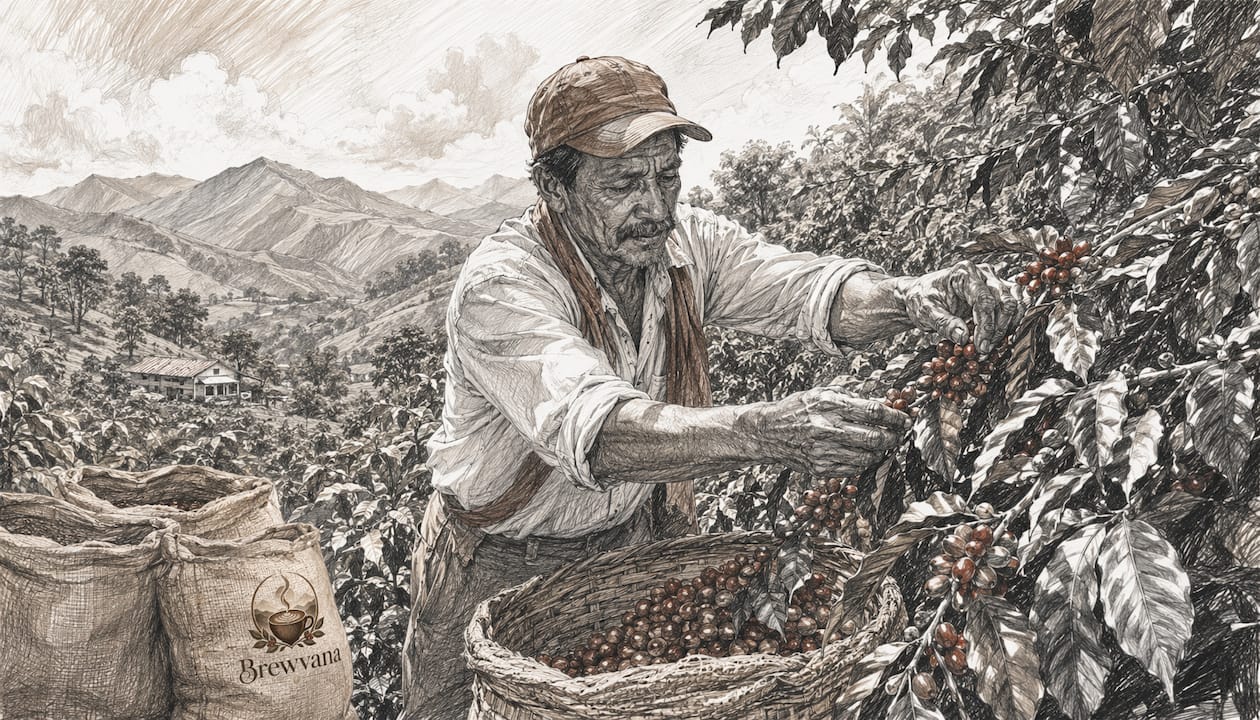
The process starts at the farm, where selective picking is the first critical decision. Only ripe cherries are harvested, often by hand, from a defined plot rather than an entire estate.
- Selective picking: Harvesters target a single plot or elevation band, keeping those cherries physically separate from the rest of the day’s harvest.
- Separate fermentation: Cherries go into dedicated fermentation tanks, not shared infrastructure. This is one of the clearest operational signals that a producer is serious about lot integrity.
- Specialized drying: Beans are spread on raised African drying beds, where they dry for 10–21 days depending on the processing method, with workers turning them regularly to hit a target moisture of 10–12%.
- Dedicated milling and sorting: After drying, the lot moves through its own milling and sorting sequence, never mixed with other lots.
- Cupping and selection: The roaster or green buyer cups the lot, often multiple times, before committing to purchase. This step is where a high cup-score threshold typically gets applied.
- Export and sale: The lot ships with full documentation attached, from plot coordinates to processing notes.
Pro Tip: When evaluating a microlot claim, ask whether the producer used dedicated fermentation tanks. Shared tanks are one of the most common points where lot separation breaks down, and any reputable roaster sourcing a true microlot should know the answer.
Understanding how processing methods shape flavor is the fastest way to read a microlot listing intelligently.
Who actually makes a microlot happen
A microlot is a collaboration, not a solo act. Four stakeholders each play a role that can make or break the lot’s integrity.
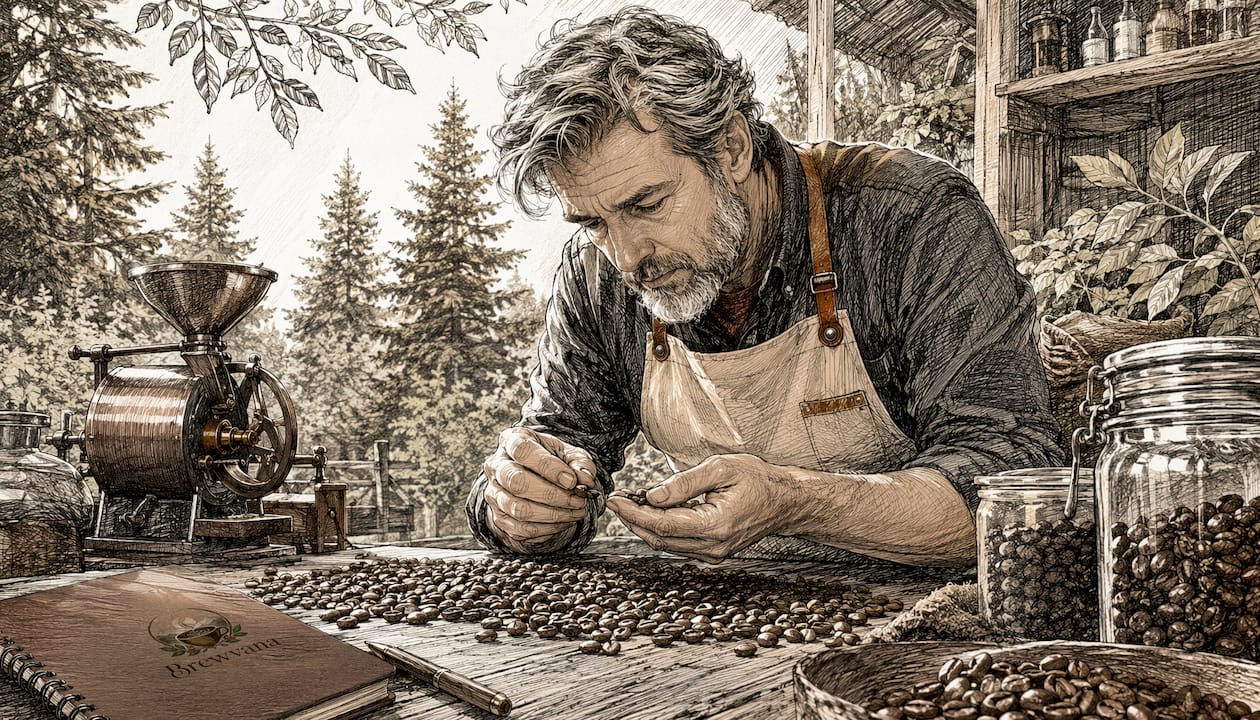
The farmer or harvesting team decides which plot gets separated and whether the extra labor is worth it. That decision usually comes down to whether a buyer has already signaled interest and a price that covers the added cost. The mill or processor manages fermentation and drying infrastructure; without dedicated equipment, lot separation is impossible regardless of intent. The exporter or trader handles documentation and logistics, keeping the lot’s identity intact across borders. The green buyer or roaster is often the catalyst: they visit farms, cup samples, and commit to a price before harvest, giving the farmer a reason to invest in separation.
The relationship between roaster and farmer is what separates a genuine microlot from a marketing exercise. A roaster who has cupped the same farm’s coffee across multiple harvests, given quality feedback, and paid a premium for improvement is building the kind of trust that produces consistently exceptional lots. A roaster who simply buys a small bag from a trader and labels it “microlot” is not.
What characteristics should a real microlot have?
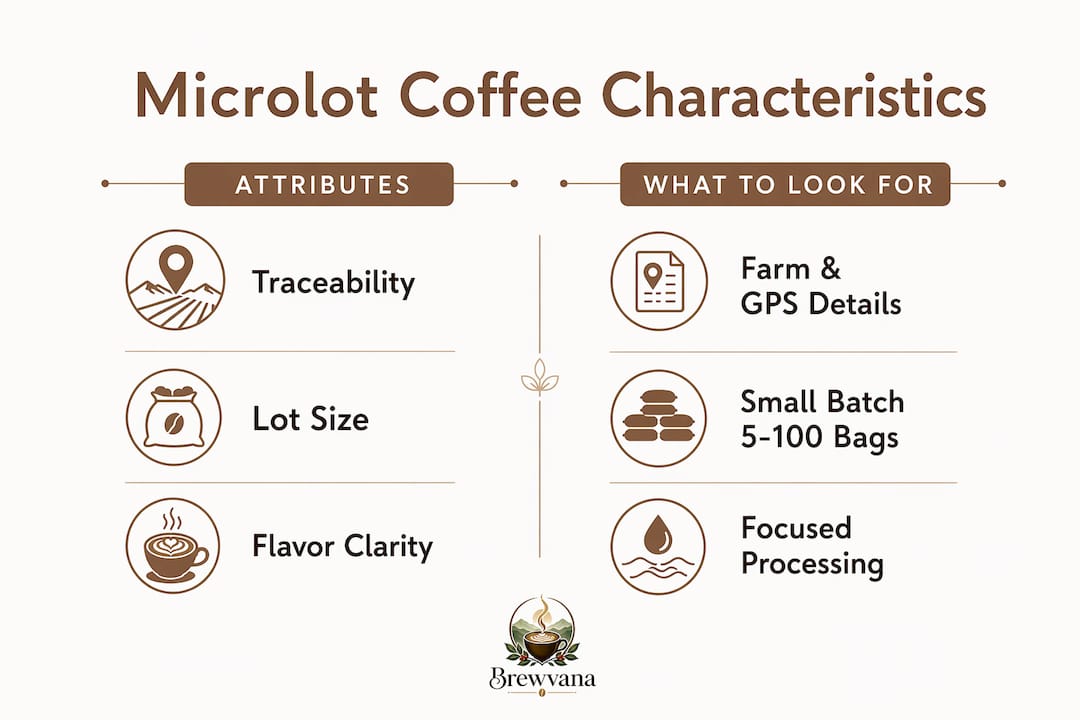
A legitimate microlot listing should carry most of these attributes. Missing several of them is a signal worth noticing.
- Explicit farm or plot name (not just a country or region)
- Harvest date or crop year
- Processing method (washed, natural, honey, anaerobic, etc.)
- Lot size or bag count (typically 5–100 bags of 60-kilo bags)
- Cup score or cupping notes (87+ is the common entry threshold)
- Separate processing steps documented (raised-bed drying, dedicated fermentation)
- Single variety or single-plot claim
- Roast date on the bag
On flavor: focused processing tends to produce clarity. A Kenya microlot dried on raised beds with a clean washed process might show bright blackcurrant and grapefruit with a juicy, tea-like finish — flavors that would blur into generic “fruity” in a blended lot. That specificity is the whole point.
| Attribute | What to look for |
|---|---|
| Traceability | Farm name, plot, GPS coordinates |
| Lot size | 5–100 bags (60-kilo); DRC rule: under 5 tonnes |
| Cup score | 87+ on the specialty scale |
| Processing detail | Raised beds, dedicated fermentation tanks noted |
| Roast batch | Single roast batch, roast date visible |
Microlot vs. single-origin vs. blends: what actually matters for you
These three categories are often confused, and the differences are real enough to affect what you buy and why.
| Category | Traceability | Lot size | Flavor consistency | Price | Availability |
|---|---|---|---|---|---|
| Microlot | Plot-level | Very small (a few to several dozen bags; DRC: under 5 tonnes) | Variable by harvest | Premium | Limited, seasonal |
| Single-origin | Farm or region | Medium to large | Moderate to high | Mid-range | Seasonal but broader |
| Blend | Multi-source | Large | High by design | Lower | Year-round |
Single-origin coffee, explored in depth through Brewvana’s single-origin guide, tells you the country or farm. A microlot goes further: it tells you the plot, the processing run, and the cup score. Blends are engineered for consistency across seasons, which is exactly what you want in an everyday cup but not what you’re after when you want to taste what a specific hillside in Ethiopia produced after an unusual dry season.
Choose a microlot when you want a limited-edition tasting experience. Choose single-origin varieties when you want reliable regional character. Choose a blend for your daily driver.
Why microlots cost more and whether the premium is worth it
The higher operational costs are real and specific:
- Separate fermentation tanks and drying beds require capital investment
- Hand sorting at the plot level is labor-intensive
- Smaller volumes mean higher per-bag logistics costs
- Cupping and selection add time and skilled-labor costs
- The roaster typically pays a direct-trade premium tied to cup score
A cup score of 87+ is where premium pricing becomes defensible; higher scores push premiums further. O’Coffee’s microlots, for example, cup at 87–89 points and run up to 40 sixty-kilo bags in size, which illustrates how tight the supply actually is.
The premium makes sense for special-occasion tasting, gifting, or exploring a specific terroir. It doesn’t make sense if you’re grinding through a pound a week without paying attention to what’s in the cup.
How to spot a genuine microlot and the red flags to avoid
Verification checklist:
- Specific plot or farm name (not just “Ethiopia Yirgacheffe”)
- Harvest date or lot number
- Processing method with detail (not just “natural”)
- Cup score or cupping notes from a named tasting
- Producer profile or photos
- Single roast batch indication and visible roast date
Red flags:
- “Small batch” with no farm name, no lot size, no cup score
- A large estate subdivided into a dozen “microlots” with identical processing notes
- No roast date on the bag
- Tasting notes so generic they could describe any coffee (“smooth, chocolatey, with a hint of fruit”)
- No mention of how the lot was separated or selected
Questions worth asking a roaster: How many bags were in this lot? What was the cup score? Did you cup this directly from the producer, or did you buy it through a trader? Can you share the producer profile? A roaster who sourced a genuine microlot will answer these without hesitation. One who can’t is selling you a label.
For more on evaluating sourcing claims, Brewvana’s sourcing guide covers what to look for beyond the marketing copy.
How to brew microlot beans to get the most out of them
Microlot beans reward attention. A few practical guidelines:
- Roast level: Lean toward light to medium-light. Lighter roasts preserve the terroir-driven and processing-driven flavors that justify the price. Natural-process microlots with heavy fruit fermentation can tolerate a touch more development, but going dark erases what you paid for.
- Grind: Grind fresh, immediately before brewing. Coarser for pour-over (around 800–1,000 microns), finer for espresso (around 200–400 microns).
- Water temperature: 195–205°F. Lower end for lighter roasts to avoid over-extraction of delicate acids.
- Pour-over: The best method for showcasing clarity and complexity. A Hario V60 or Chemex at a 1:15–1:16 coffee-to-water ratio lets the cup’s unique character come through without interference.
- Espresso: Works well for natural-process microlots with dense fruit and body. Expect a shorter extraction time and a sweeter, more syrupy result than a washed lot.
- Freshness: Roast date matters more here than with any other coffee. Buy from a roaster who lists it, and brew within 2–4 weeks of roast for peak expression.
Roast level choices affect microlot flavor more dramatically than they affect blends, so this is one case where reading the roaster’s recommendation is genuinely useful.
What the industry says about the term’s variability
The honest answer is that “microlot” means different things depending on who’s using it. Some traders use it to mean “unbulked” stock; others reserve it for specially selected, high-quality batches that went through intentional separation and cupping. There is no single global standard.
Experts recommend treating traceability and clear farmer–buyer collaboration as the most reliable authenticity signals, precisely because no regulatory body enforces a universal definition. The Sweet Maria’s Coffee Library goes further, noting that many “microlots” are simply subdivided larger lots with no intentional selection behind them. The 87+ cup-score threshold functions as a practical proxy: producers only absorb the extra cost of separation when the quality is high enough to command a price that covers it.
Key Takeaways
Microlot coffee is defined by plot-level traceability, intentional lot separation, and a cup score that justifies the premium — without those three elements, the label is marketing, not substance.
| Point | Details |
|---|---|
| Definition | A microlot is a small, traceable, separately processed specialty coffee lot, typically a few to several dozen bags; in some jurisdictions, the designation applies to quantities under five tonnes. |
| Quality threshold | Cup scores of 87+ are the standard entry point for genuine microlot pricing and selection. |
| Authenticity check | Look for farm name, harvest date, processing detail, lot size, and a visible roast date. |
| Red flag | Vague “small batch” claims with no cup score, no plot name, and generic tasting notes signal a marketing label. |
| Brewvana approach | Brewvana’s single-origin offerings and sample packs are the low-friction way to explore microlot-like flavor specificity. |
The case for taking microlots seriously
The skepticism around the term is warranted. “Microlot” has been stretched far enough that it sometimes means nothing more than “we didn’t buy much of this.” But that abuse doesn’t undermine the underlying idea, which is genuinely worth caring about.
When a microlot is real, it represents a producer who took on extra cost and risk to isolate something they believed was exceptional, and a roaster who agreed enough to pay for it before the harvest was even finished. That’s a different relationship than commodity trading, and it shows up in the cup in ways that are hard to fake. The flavor clarity in a well-processed Kenya or Ethiopia Natural isn’t an accident. It’s the result of decisions made at every step of the chain, from which cherries got picked to how long they dried.
The practical recommendation: don’t buy a full bag of an unfamiliar microlot at a premium price. Start with a sample pack or a small bag. If the flavor specificity is there, you’ll know immediately. If it tastes like any other coffee, you’ve learned something useful about that roaster’s sourcing claims without spending much to find out.
Explore microlot-style coffees with Brewvana
Brewvana’s single-origin lineup is the most direct way to experience the kind of flavor specificity that defines genuine microlot coffee. The Kenya Single Origin Coffee delivers the bright, complex character that Kenya’s high-altitude plots are known for. The Ethiopia Natural Process showcases what careful natural processing does to fruit-forward flavor. And the Costa Rica Single Origin offers clean, terroir-driven sweetness that rewards a good pour-over.
Every bag is roasted to order, so freshness isn’t a marketing claim — it’s built into the process. Brewvana also donates a portion of sales to local schools, so your purchase supports something beyond the cup. The lowest-friction starting point is the Single Origin Favorites Sample Pack, which lets you compare origins side by side before committing to a full bag.
Useful sources and further reading
- Perfect Daily Grind: Understanding Single Origin, Single Farm & Micro/Nano Lot Coffee — detailed breakdown of lot types with producer examples and size data
- Coffee Intelligence: The coffee industry must demand more from its definition of “micro lot” — critical analysis of how the term is used and abused, with jurisdictional examples
- Perfect Daily Grind: What Is a Micro Lot in Specialty Coffee? — practical explainer covering cost drivers, naming conventions, and processing requirements
- Sweet Maria’s Coffee Library: Micro-Lot — concise glossary entry with expert commentary on authenticity and marketing misuse
- BrewFYI: Micro-Lots and Single Origins — processing details including moisture targets, drying timelines, and traceability practices
- Gota: Microlot — focused entry on cup-score thresholds and their relationship to premium pricing