

If you’ve ever grabbed a coffee pod off the shelf and wondered whether it actually tastes better than the budget option next to it, you’re not alone. Gourmet coffee pods explained simply: they’re not just a marketing term. They represent a meaningfully different product, from the beans and roast to the packaging technology that keeps flavor intact until the moment you brew. Most people treat all pods as equal. They aren’t. This article breaks down exactly what separates gourmet pods from the rest, how freshness is preserved, what compatibility actually means, and how to find the varieties that match your taste.
Table of Contents
- Key takeaways
- Gourmet coffee pods explained: what actually separates them
- How packaging technology locks in flavor
- Machine compatibility and brewing considerations
- Popular gourmet pod varieties, brands, and pricing
- My honest take on choosing gourmet pods
- Explore Brewvana’s gourmet coffee pod selection
- FAQ
Key takeaways
| Point | Details |
|---|---|
| Gourmet means more than premium branding | Gourmet pods use higher-grade beans, specialized roasting, and better packaging to deliver real flavor differences. |
| Packaging technology matters enormously | Aluminum pods with nitrogen flushing preserve freshness far longer than plastic or compostable alternatives. |
| Compatibility is non-negotiable | Pod systems are not interchangeable; using the wrong pod risks poor extraction and machine damage. |
| Price reflects real differences | Specialty and super-premium pods range from $1.15 to $2.50 per pod, reflecting certifications and sourcing rigor. |
| Compostable claims need scrutiny | Most compostable pods require industrial facilities to break down, limiting their actual environmental benefit. |
Gourmet coffee pods explained: what actually separates them
So, what are coffee pods at their most basic level? A coffee pod is a pre-measured, single-serve portion of ground coffee sealed inside a filter or capsule, designed to work with a compatible brewing machine. Convenient, consistent, and quick. The gourmet distinction starts with what’s inside.
Regular pods often contain commodity-grade Robusta beans or undisclosed blends roasted for maximum shelf stability rather than optimal flavor. Gourmet pods, by contrast, are built around quality from the ground up. Here’s what that actually looks like:
- Bean grade and origin: Gourmet pods use 100% Arabica beans, often from single-origin sources with traceable farms and specific growing regions. A pod labeled “Ethiopian Yirgacheffe” should taste distinctly fruity and floral, not like generic dark roast.
- Roasting specificity: The roast profile is calibrated for pod brewing, which brews faster and under higher pressure than drip coffee. A gourmet roaster adjusts grind size and roast level to suit the machine format, not just the flavor profile.
- Grind consistency: Coarser grinds slow extraction; too fine causes over-extraction and bitterness. Gourmet pod producers control grind size with precision because it directly affects how flavor compounds release during brewing.
- Packaging and freshness: Gourmet pods use higher-barrier materials and advanced sealing methods. This is where the difference between a fresh, vibrant cup and a flat, stale one actually begins.
The materials question alone explains a lot. Most budget pods use basic plastic capsules, which allow trace oxygen to permeate over time. Gourmet pods typically use aluminum or multi-layer structures that block oxygen, light, and moisture more effectively. That difference has a measurable impact on what ends up in your cup.
How packaging technology locks in flavor
This is the part most coffee drinkers skip over, but it matters more than almost anything else on the label. Aluminum pods offer superior barriers against oxygen, moisture, and light compared to plastic and compostable alternatives, enabling a shelf life of 12 to 18 months versus just 6 to 9 months for plastic.
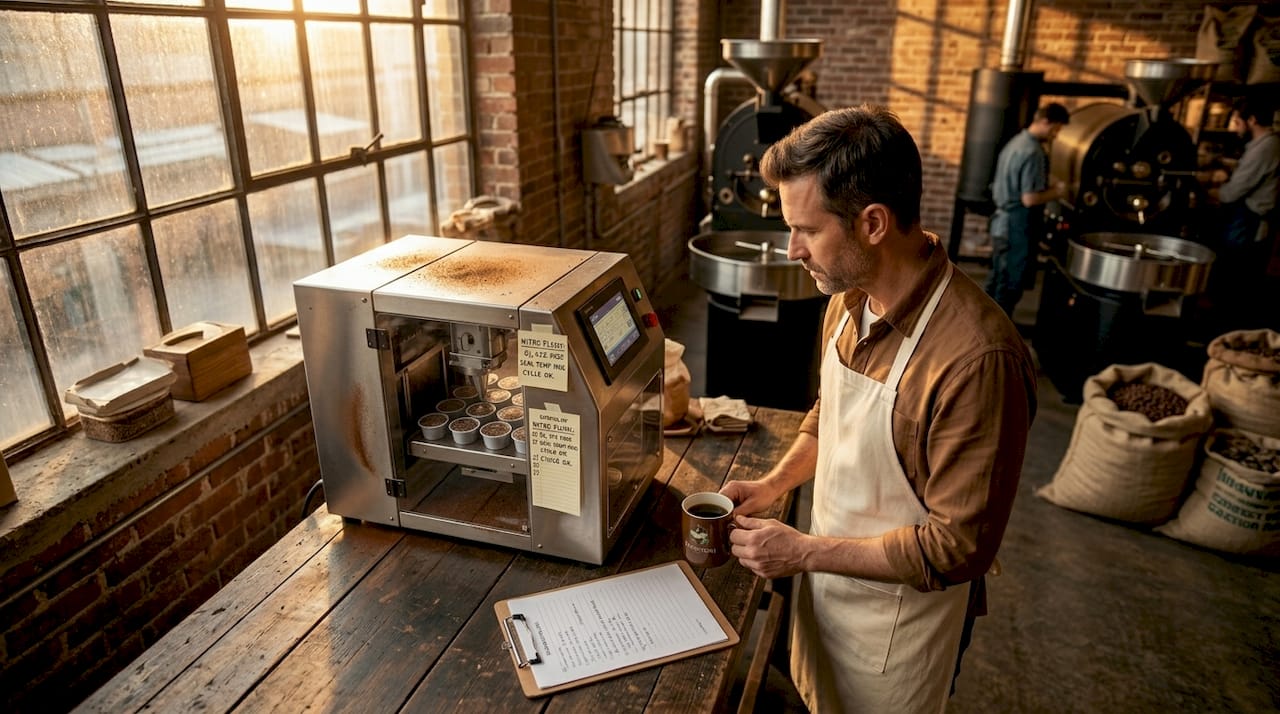
The key process that makes this possible is nitrogen flushing. After the ground coffee is loaded into the pod, the internal atmosphere is displaced with nitrogen gas. Nitrogen flushing reduces residual oxygen to below 2%, which extends shelf life from weeks to 6 to 12 months and maintains up to 83% freshness at 18 months in high-barrier aluminum pods. Nitrogen is inert and odorless, meaning it protects the coffee without introducing any off-flavors.
Aluminum vs. plastic vs. compostable pods
| Pod material | Oxygen barrier | Typical shelf life | Environmental note |
|---|---|---|---|
| Aluminum | Near zero | 12 to 18 months | Infinitely recyclable, but global recycling rates remain low |
| Plastic | Moderate | 6 to 9 months | Poor recyclability; most end up in landfill |
| Compostable | Low to moderate | 3 to 6 months | Requires industrial composting to break down properly |
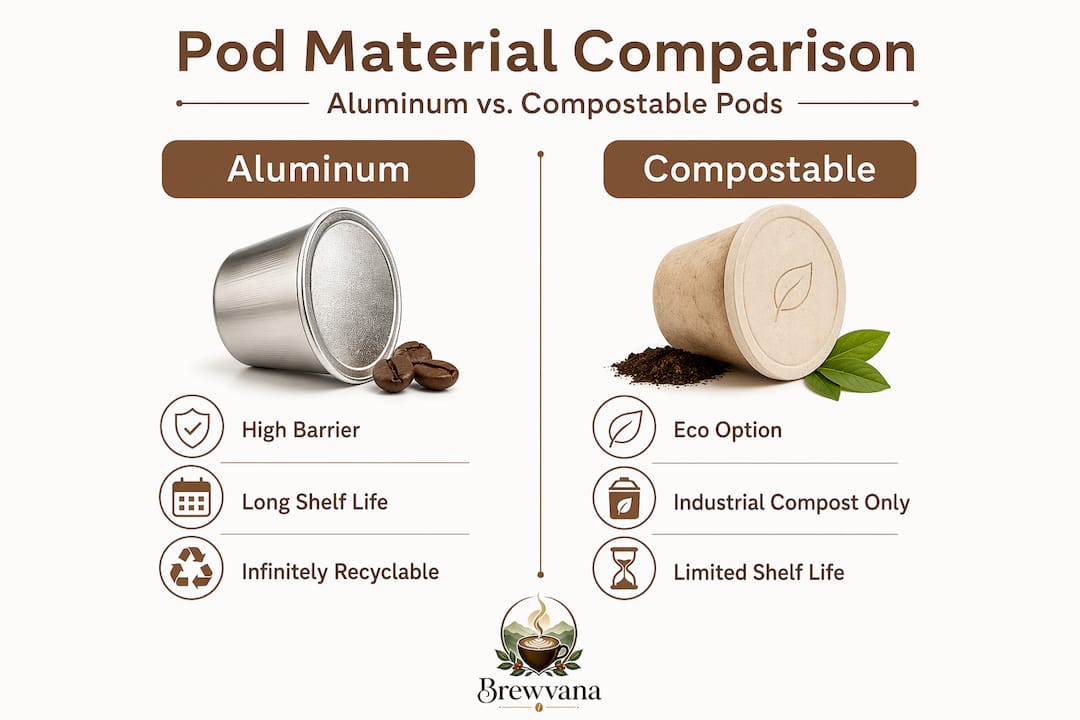
Compostable pods sound like an obvious win, and many gourmet brands have moved in that direction. The problem is that most compostable pods require industrial composting at 55 to 60°C to break down correctly. Toss them in your home compost bin or the trash, and they behave more or less like plastic. The certification and logistics gap between what’s labeled “compostable” and what actually composts is wide.
Pro Tip: If you’re buying compostable pods for environmental reasons, check whether your local municipality has industrial composting pickup. Without it, you may be paying more for a pod that offers less freshness protection and still ends up in a landfill.
Aluminum pods, while not perfect, are at least infinitely recyclable in theory. The practical challenge is that many consumers don’t use manufacturer take-back programs, which keeps real-world recycling rates low. For freshness and flavor, aluminum paired with nitrogen flushing is currently the gold standard in premium pod packaging.
Machine compatibility and brewing considerations
Here’s where a lot of people get burned. Not all pods fit all machines. Pod systems are non-interchangeable: E.S.E. pods use 44mm paper discs, K-Cups have a 51.5mm top diameter, Nespresso OriginalLine pods use 37mm capsules, and VertuoLine pods are 57mm. Using the wrong pod in the wrong machine doesn’t just give you bad coffee. It can jam the machine or damage the brewing mechanism.
The pod’s physical design also shapes the flavor in your cup. Nespresso OriginalLine machines use high-pressure extraction similar to espresso. K-Cup brewers use lower pressure and more water volume, producing a longer, lighter cup. A pod optimized for one system will behave very differently in the other, even if you somehow forced it to fit. K-Cup dimensions are precisely engineered for automated production, and any deviation causes jams and extraction problems.
When you’re shopping for the best gourmet coffee pods, match the pod to your machine first, then focus on flavor. Here are a few brewing tips that will get more out of your pods regardless of the system you use:
- Preheat your machine: Running a water-only cycle before brewing raises the internal temperature and produces more consistent extraction.
- Use filtered water: Tap water with high mineral content interferes with flavor. Most coffee flavor experts recommend water with total dissolved solids between 75 and 150 parts per million.
- Don’t ignore cup size settings: Brewing a Nespresso espresso pod on a lungo setting dilutes the flavor profile the roaster intended. Stick to the recommended volume.
- Store pods at room temperature: Heat and humidity degrade even the best packaging. A cabinet away from the stove is better than the countertop next to it.
Pro Tip: If your gourmet pod tastes weak or watery, the issue is almost always the water volume setting, not the pod itself. Reducing the brew size by even 20% can dramatically improve body and flavor.
Popular gourmet pod varieties, brands, and pricing
The market for premium coffee pod options has expanded considerably in the last few years, driven by consumer demand for better flavor, organic certifications, and traceable sourcing. Organic coffee pods retail between $0.70 and $2.50 per pod depending on the tier, with specialty and super-premium pods reaching the higher end of that range.
| Pod category | Price per pod (approx.) | Key features |
|---|---|---|
| Branded standard | $0.50 to $0.70 | Commodity blends, basic freshness protection |
| Branded organic | $0.70 to $1.10 | USDA Organic certified, Arabica blends |
| Specialty single-origin | $1.15 to $1.75 | Traceable farms, flavor-specific roast profiles |
| Super-premium | $1.75 to $2.50 | Micro-lot sourcing, limited release, artisan roasting |
A few things drive that price premium beyond the beans themselves. USDA Organic certification requires annual inspections and strict supply chain traceability through every step of growing, processing, and packaging. That administrative and logistical cost is real and it passes through to the consumer.
When it comes to flavors of gourmet coffee pods, the range is genuinely impressive. Ethiopian and Kenyan single-origins tend toward bright acidity and fruit-forward notes. Colombian and Brazilian origins offer a sweeter, nuttier profile with fuller body. Central American pods, especially from Guatemala or Costa Rica, often hit a balanced middle ground with chocolate and caramel notes. Beyond single origins, many gourmet brands produce flavored pods using natural extracts, including vanilla, hazelnut, and seasonal flavors.
What you’re paying for with a top premium coffee pod isn’t just taste. You’re paying for sourcing integrity, freshness preservation infrastructure, and the roaster’s expertise in calibrating the product for your specific machine format.
My honest take on choosing gourmet pods
I’ve tasted a lot of coffee pods over the years, and the most consistent lesson I’ve learned is this: freshness preservation beats origin story every time. A $2.50 pod from a famous micro-lot farm will taste dull and flat if it sat on a warehouse shelf for eight months in a plastic capsule. A $1.20 Arabica blend in a nitrogen-flushed aluminum pod, roasted to order, will almost always win the head-to-head comparison. That’s why I pay close attention to how the pod is packaged and when it was roasted, not just where the beans came from.
I’ve also grown genuinely skeptical of the greenwashing around compostable pods. The marketing is appealing. The reality, that most people don’t have access to industrial composting facilities, makes those claims largely hollow for most consumers. I’d rather see brands invest in proper aluminum recycling programs than pivot to “compostable” packaging that ends up in landfill anyway. Convenience is part of why we buy pods at all. The pod format should deliver flavor without a side of false guilt.
My practical advice: buy from roasters who are transparent about roast dates, use aluminum capsules with nitrogen flushing, and match your pod to your machine before anything else. If you care about freshly roasted flavor making it into your cup, those three things matter more than any label claim or origin story.
— Kimberly
Explore Brewvana’s gourmet coffee pod selection
If you’ve made it this far, you already know more about gourmet pods than most people who buy them. Now the fun part starts: tasting.
Brewvana offers a curated selection of freshly roasted coffee pods across single-origin, blended, and flavored formats, all packed with freshness in mind and shipped roasted-to-order. Not sure where to start? The sample packs are an easy way to work through several roast profiles and origins without committing to a full order. If you already have a favorite origin or flavor direction, the single-origin pods let you go deep on specific regions. And for everyday brewing at home, the 12-pack single-serve capsules deliver consistent gourmet quality at a format that fits your routine. Every purchase also supports a social mission: Brewvana donates a portion of sales to local schools.
FAQ
What makes a coffee pod “gourmet”?
Gourmet coffee pods use higher-grade beans, typically 100% Arabica or single-origin varieties, roasted specifically for the pod format and sealed with advanced packaging like nitrogen-flushed aluminum to preserve flavor.
How long do gourmet coffee pods stay fresh?
Aluminum pods with nitrogen flushing retain up to 83% freshness at 18 months. Plastic pod varieties typically last 6 to 9 months before noticeable flavor degradation.
Are compostable coffee pods actually better for the environment?
Not necessarily. Most compostable pods require industrial composting facilities at 55 to 60°C to break down properly. Without access to those facilities, they offer little environmental advantage over plastic.
How do I know if a coffee pod is compatible with my machine?
Check the pod format against your machine’s system. E.S.E., K-Cup, Nespresso OriginalLine, and VertuoLine all use different pod dimensions and are not interchangeable. Using the wrong pod can damage your machine.
Why do gourmet coffee pods cost more than regular ones?
Pricing reflects bean quality, sourcing traceability, roasting expertise, and packaging technology. Certified organic pods carry additional costs from annual USDA inspections and supply chain requirements, pushing specialty tiers to $1.15 to $2.50 per pod.