

Carbon neutral coffee roasting is the process of balancing or eliminating all greenhouse gas emissions generated during coffee roasting through energy efficiency, cleaner technology, and carbon offset initiatives. The industry term you will see on certifications is “net zero roasting,” though “carbon neutral coffee roasting” is the phrase most consumers search for and most roasters use in practice. Both terms describe the same goal: getting roasting emissions to zero on a net basis. Roasting accounts for up to 15% of the coffee industry’s total carbon footprint. That share is large enough to make roasting technology one of the most meaningful levers the industry has for cutting climate impact.
What is carbon neutral coffee roasting, and why does it matter?
Carbon neutral coffee roasting means that every kilogram of CO2 released during the roasting process is either prevented through cleaner technology or compensated through verified carbon offset projects. The result is a net emission of zero. This is not a vague marketing claim when it is backed by third-party certification. Standards like Gold Standard and Verra set the bar for what counts as a legitimate offset, and roasters who meet those standards can make the claim with credibility.
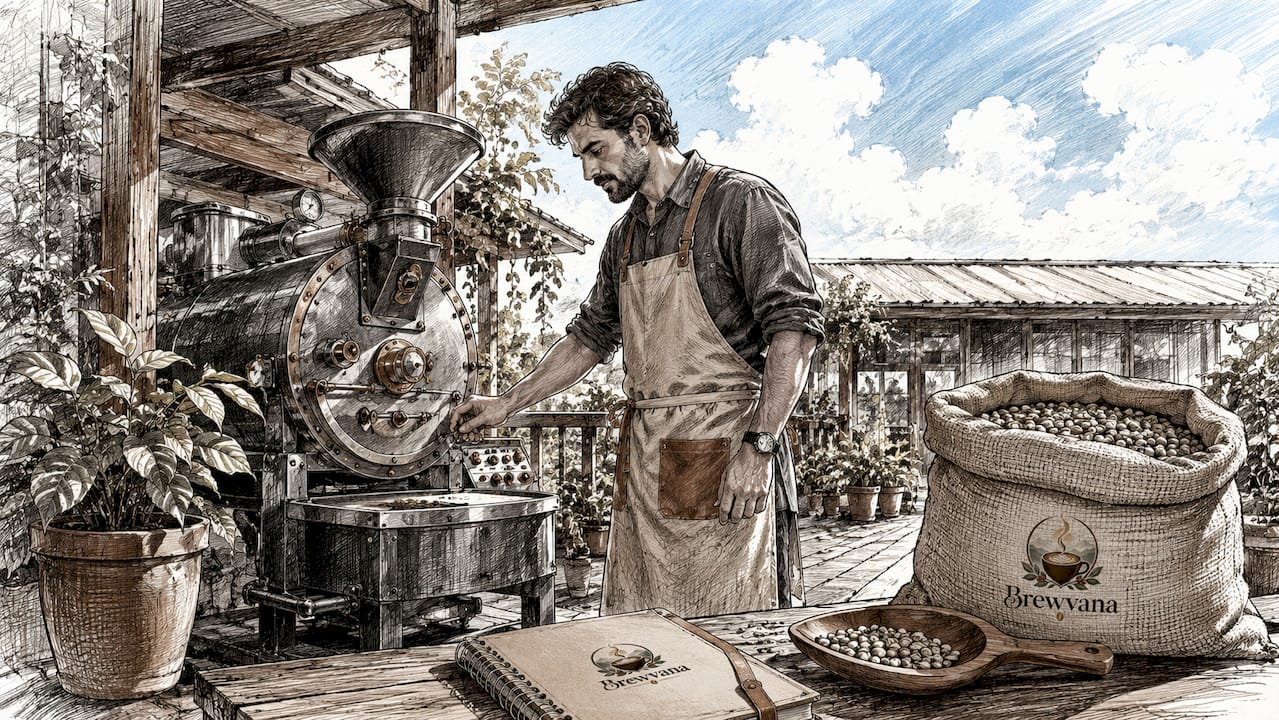
The roasting process generates emissions in two ways. First, burning natural gas or propane to heat the drum releases CO2 directly. Second, the roasting reaction itself drives off volatile organic compounds (VOCs) and particulate matter from the beans. Both streams require management for a roaster to claim carbon neutrality. Eco-conscious consumers deserve to know that “carbon neutral” on a bag means both streams are addressed, not just the easy one.
Choosing ethically sourced coffee beans is the first step most consumers take. Understanding what happens after the beans arrive at the roastery is the next one.
How does traditional coffee roasting generate carbon emissions?
Conventional drum roasters run almost entirely on natural gas. Gas combustion heats the drum to temperatures between 370°F and 540°F, and that combustion releases CO2 at every batch. The emissions do not stop there. As beans roast, they shed chaff and release VOCs, which most roasteries treat with afterburner systems that burn additional gas to destroy the compounds. The afterburner is an emissions source that rarely appears on sustainability marketing materials.
Light roasting reduces carbon emissions by 33% compared to dark roasting and by roughly 17% compared to medium roasting. Lighter roasts require less time and lower peak temperatures, which means less fuel burned per batch. That is a meaningful difference at scale, and it is one reason why light roast coffees carry a smaller carbon footprint than their darker counterparts.
| Roast level | Relative carbon footprint | Energy demand |
|---|---|---|
| Light | Lowest | Shortest roast time, lower peak temp |
| Medium | Moderate | Mid-range time and temperature |
| Dark | Highest | Longest roast time, highest peak temp |
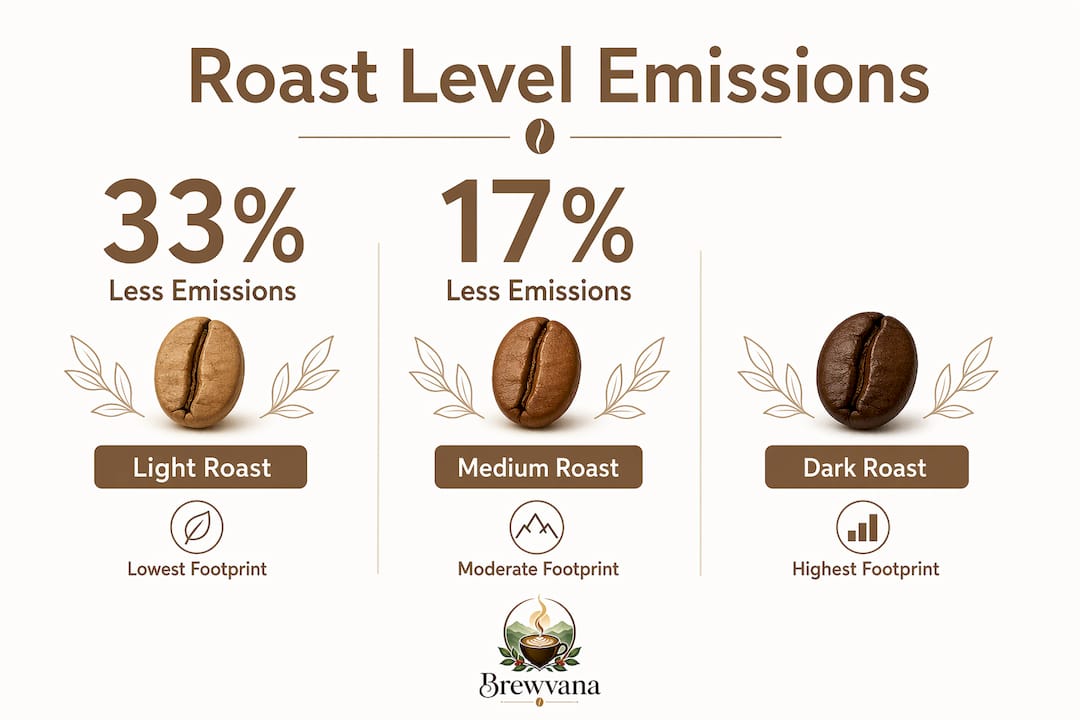
Pro Tip: If you want to reduce your personal coffee carbon footprint without changing brands, choosing a light roast over a dark roast is one of the simplest swaps you can make.
Roast level is not the only variable. Batch size, roaster age, and afterburner efficiency all affect total emissions. Older gas roasters with inefficient afterburners can produce significantly more VOC and particulate pollution per kilogram of coffee than modern equipment. The gap between a well-maintained modern gas roaster and a neglected older unit is substantial.
What technologies enable sustainable and carbon neutral roasting?
The most significant shift in green coffee roasting methods is the move from gas to electric. Electric roasting eliminates direct combustion emissions and reduces CO2 output by 87% compared to traditional gas roasting. That figure assumes the electricity comes from the grid, not a dedicated renewable source. When a roastery pairs electric roasting with solar or wind power, the reduction approaches 100%.
Ventless electric roasters go further by combining internal catalytic afterburners with closed-loop heat recovery. The catalytic afterburner destroys VOCs without burning additional gas. The closed loop recirculates treated air back into the roasting chamber, recovering heat that would otherwise be wasted. The result is lower emissions and more consistent roast profiles, because the thermal environment inside the roaster stays stable across batches.
Renewable energy integration is the second major lever. Options available to roasters today include:
- Solar panels mounted on roastery rooftops to offset grid electricity consumption
- Geothermal heat in regions where it is accessible, supplying low-carbon process heat directly
- Biofuels derived from agricultural waste, which can replace propane in some drum roaster configurations
- Renewable energy certificates (RECs), which allow roasters to match their grid consumption with verified renewable generation elsewhere
Adapting renewable energy to roasting still faces technological and economic challenges, particularly for small roasteries that cannot afford capital-intensive installations. RECs offer a lower-cost entry point, though they do not reduce on-site emissions directly.
Coffee chaff is a third opportunity that most roasters overlook. Chaff comprises about 1% of green coffee weight and is rich in carbon, making it ideal for composting or use as a soil amendment. Passive floor collection is not enough. Dedicated clean collection systems capture chaff efficiently and prevent it from becoming a waste stream that ends up in landfill, where it would release methane as it decomposes.
Pro Tip: If you visit a roastery and want to gauge its sustainability commitment, ask how it handles chaff. A roastery with a dedicated composting or chaff recycling program is taking sustainability seriously beyond the marketing.
How do carbon offsetting and certification work in coffee roasting?
Carbon offsetting is the practice of funding projects that remove or prevent greenhouse gas emissions elsewhere to compensate for emissions a roastery cannot yet eliminate. A roastery that has cut its direct emissions as far as current technology allows can purchase verified carbon credits to cover the remainder. That combination of reduction plus offset is what earns the “carbon neutral” label under most recognized frameworks.
Not all offset projects are equal. Third-party verified projects under Gold Standard and Verra provide transparent accounting and independent auditing. These frameworks require projects to demonstrate additionality, meaning the emissions reduction would not have happened without the funding. They also require permanence, meaning the carbon stored or avoided stays that way over time.
Consumers should watch for several warning signs when evaluating carbon neutral claims:
- No named certification body. A claim without Gold Standard, Verra, or an equivalent third-party verifier is unverified.
- Offset-only claims. A roastery that offsets without reducing direct emissions first is taking the easiest path, not the most credible one.
- Tree planting as the sole strategy. Protecting existing mature forests is often more impactful for biodiversity than planting new trees, because mature forests store far more carbon and support complex ecosystems.
- No public reporting. Credible programs publish annual emissions data and offset purchases so consumers can verify the numbers.
A carbon-first approach that ignores biodiversity can cause real harm. Offset projects that replace diverse native forest with monoculture tree plantations may sequester carbon on paper while destroying habitat. Shade tree diversity and native forest remnants in coffee agroforests contribute significantly to both climate resilience and biodiversity. The best offset projects protect those systems rather than replace them.
What should eco-conscious consumers know when choosing sustainable coffee?
Eco-conscious consumers hold more influence over sustainable coffee roasting than they often realize. Purchasing decisions signal demand to roasters, and roasters respond to demand. Here is how to make those decisions count.
- Look for named certifications. Gold Standard, Verra, and Rainforest Alliance all require third-party auditing. A bag that names one of these is more credible than one that uses the word “sustainable” without attribution.
- Choose lighter roasts when flavor allows. Light roasts carry a lower carbon footprint per batch. Brewvana’s roast levels guide explains the flavor differences so you can make an informed choice.
- Ask about energy sources. Roasters using electric equipment powered by renewables have the lowest direct emissions. This information is often on the roastery’s website or available by asking directly.
- Support transparency. Roasters that publish annual sustainability reports are accountable in a way that those making vague claims are not.
- Consider single-origin coffees. Single-origin sourcing often involves closer relationships with farms, which makes it easier to verify agroforestry and shade-growing practices that protect biodiversity.
Switching to carbon-neutral electric roasting can halve roasting energy costs compared to traditional gas roasting. That economic benefit matters because businesses sustain carbon neutrality only when it also improves roast quality or reduces costs. Sustainability that saves money gets adopted faster and lasts longer than sustainability that requires ongoing financial sacrifice. The economics of electric roasting are now favorable enough that small roasters can make the switch without betting the business on it.
The cost of specialty coffee often reflects these investments in cleaner technology and responsible sourcing. When you pay a premium for a verified carbon neutral coffee, a meaningful portion of that premium funds the infrastructure that makes the claim real.
Key Takeaways
Carbon neutral coffee roasting requires a combination of direct emission reductions, cleaner technology, and verified offset projects. Offset claims alone, without named certifications and transparent reporting, do not meet the standard.
| Point | Details |
|---|---|
| Roasting’s climate share | Roasting accounts for up to 15% of the coffee industry’s carbon footprint, making technology choices significant. |
| Electric roasting impact | Electric roasters cut CO2 output by 87% versus gas roasting, especially when paired with renewable energy. |
| Roast level matters | Light roasts generate 33% fewer emissions than dark roasts, offering an easy consumer-level choice. |
| Offset quality | Only Gold Standard and Verra-verified projects provide the transparency needed to back a carbon neutral claim. |
| Biodiversity risk | Offset projects must protect mature forests and agroforestry systems, not just plant monoculture trees. |
The uncomfortable truth about carbon neutral coffee claims
At Brewvana, we have spent a lot of time thinking about what “carbon neutral” actually means in practice, and the honest answer is that it is more complicated than most bags let on. The label can mean almost anything without a named certification body behind it. That bothers us, because it makes it harder for you to trust the coffees that genuinely earn the claim.
The part that rarely gets discussed is the tension between carbon neutrality and coffee quality. Lighter roasts are better for the climate, but not every origin shines at a light roast. Some coffees need the development that comes from a longer, hotter roast to express their best flavors. Forcing every coffee into a light roast profile for environmental reasons is a trade-off that most serious roasters are not willing to make, and we think that is the right call. The goal should be reducing emissions at every roast level, not just defaulting to light.
Small roasters face a real barrier with electric equipment. The upfront cost is significant, and not every roastery has the electrical infrastructure to support a high-draw commercial roaster. The economics are improving, but the transition takes time and capital that small operations often do not have on hand. We are optimistic that as electric roasting becomes more common, the costs will continue to fall and the infrastructure will follow.
What gives us genuine confidence is the direction of travel. The combination of better electric roasting technology, more accessible renewable energy, and stricter certification standards is moving the industry toward a place where carbon neutral claims will be harder to fake and easier to verify. That is good for consumers, good for roasters who do the work, and good for the climate.
— Brewvana
Brewvana’s approach to sustainably sourced coffee
At Brewvana, sustainability is not a badge. It is a sourcing standard. Every coffee in the collection is carefully selected for quality and traceability, so you know where your beans come from and how they were grown.
Brewvana’s single-origin coffees include options like the Ethiopia Natural Process and Costa Rica Single Origin, both sourced from farms with strong environmental practices. Each coffee is roasted to order, which means no sitting in a warehouse and no unnecessary energy spent on storage. The full coffee collection covers a range of roast levels, so you can choose the profile that fits both your taste and your values. Every purchase also supports Brewvana’s commitment to local schools, adding a social dimension to every cup you brew.
FAQ
What is carbon neutral coffee roasting?
Carbon neutral coffee roasting is the process of eliminating or offsetting all greenhouse gas emissions produced during roasting through cleaner technology, renewable energy, and verified carbon offset projects. The net result is zero emissions on a per-batch basis.
How much does roasting contribute to coffee’s carbon footprint?
Roasting accounts for up to 15% of the coffee industry’s total carbon footprint. That makes roasting technology one of the most direct points of intervention for reducing the climate impact of coffee production.
Does roast level affect carbon emissions?
Yes. Light roasting produces 33% fewer emissions than dark roasting because it requires less time and lower temperatures, which means less fuel consumed per batch.
How can I tell if a carbon neutral coffee claim is legitimate?
Look for a named third-party certification such as Gold Standard or Verra, and check whether the roastery publishes annual emissions data. Claims without a named verifier and public reporting are not independently confirmed.
Is carbon offsetting enough on its own?
Offsetting alone is not sufficient for a credible carbon neutral claim. The most credible approach combines direct emission reductions through cleaner technology with verified offsets to cover what cannot yet be eliminated. Complex carbon accounting requires consumer education and transparency to prevent greenwashing.