

Light roast coffee contains more caffeine per scoop than dark roast coffee, but the reason has nothing to do with roasting burning off caffeine. The real explanation comes down to bean density and how you measure your dose. This is the core of the caffeine by roast type debate, and once you understand it, every coffee label and brewing guide starts to make more sense. Knowing why light roast has more caffeine per volume, and nearly identical caffeine per gram, changes how you shop, brew, and think about your morning cup.
Why light roast has more caffeine per scoop
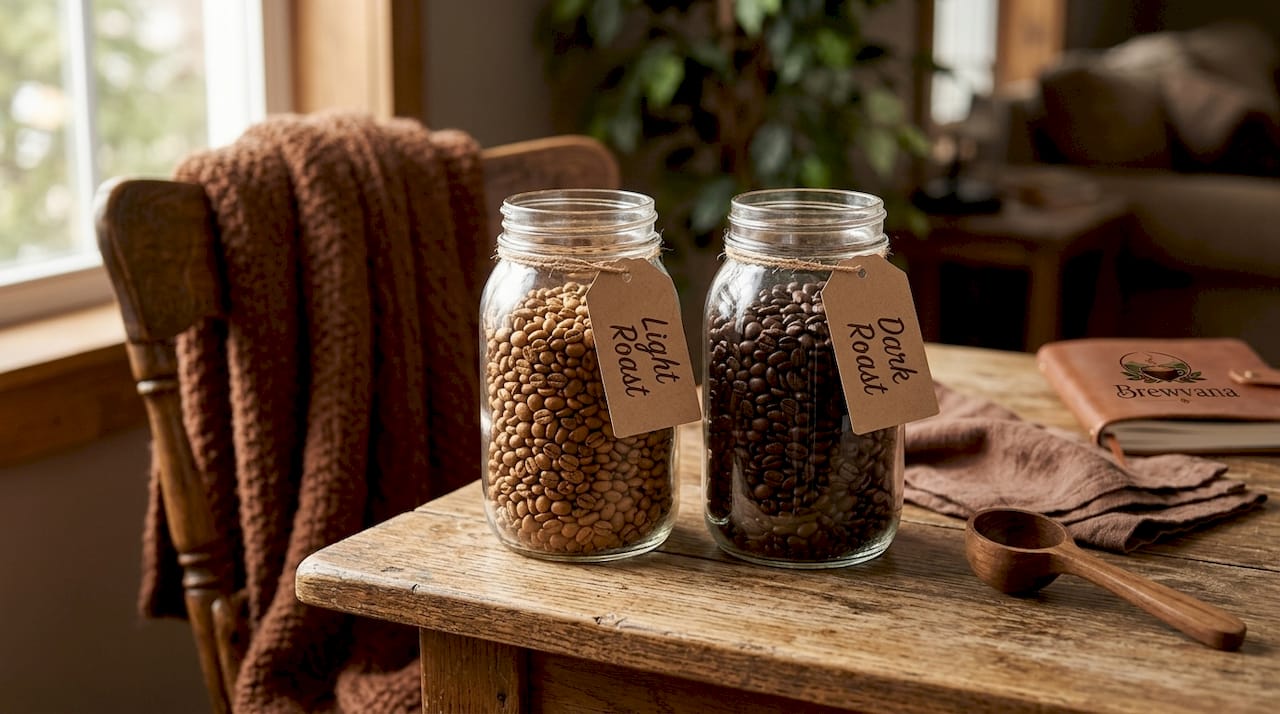
The answer starts with what heat does to a coffee bean physically. When beans roast, they absorb heat, expand, and lose moisture. A light roast stops early in that process, so the bean stays dense and compact. A dark roast continues longer, causing the bean to swell and shed more mass as water vapor and CO2 escape.
The result is a measurable density difference. Light roast beans are denser, so the same tablespoon or scoop holds more beans by weight than a scoop of puffed-up dark roast beans. More beans per scoop means more caffeine per scoop. This is the entire basis of the “light roast has more caffeine” claim, and it is accurate only when you measure by volume.
Flip the measurement to weight, and the picture changes. 20 grams of light roast and 20 grams of dark roast yield almost identical caffeine in the final cup. Caffeine does not disappear during roasting in any meaningful amount. The beans just get bigger and lighter, which distorts volume-based comparisons. This is why conflicting study outcomes on roast and caffeine exist. Researchers measuring by scoop reach different conclusions than those measuring by gram.
Pro Tip: Switch from scoops to a digital kitchen scale. Dose by grams, not volume, and your caffeine intake becomes consistent regardless of roast level.
Volume vs. weight: a direct comparison
| Measurement method | Light roast caffeine | Dark roast caffeine | Winner |
|---|---|---|---|
| By volume (1 tbsp scoop) | Higher | Lower | Light roast |
| By weight (20 grams) | Nearly identical | Nearly identical | Tied |
| Per fluid ounce of espresso | Moderate | Moderate | Tied |
| Per cup of drip coffee | Slightly higher | Slightly lower | Light roast (marginal) |
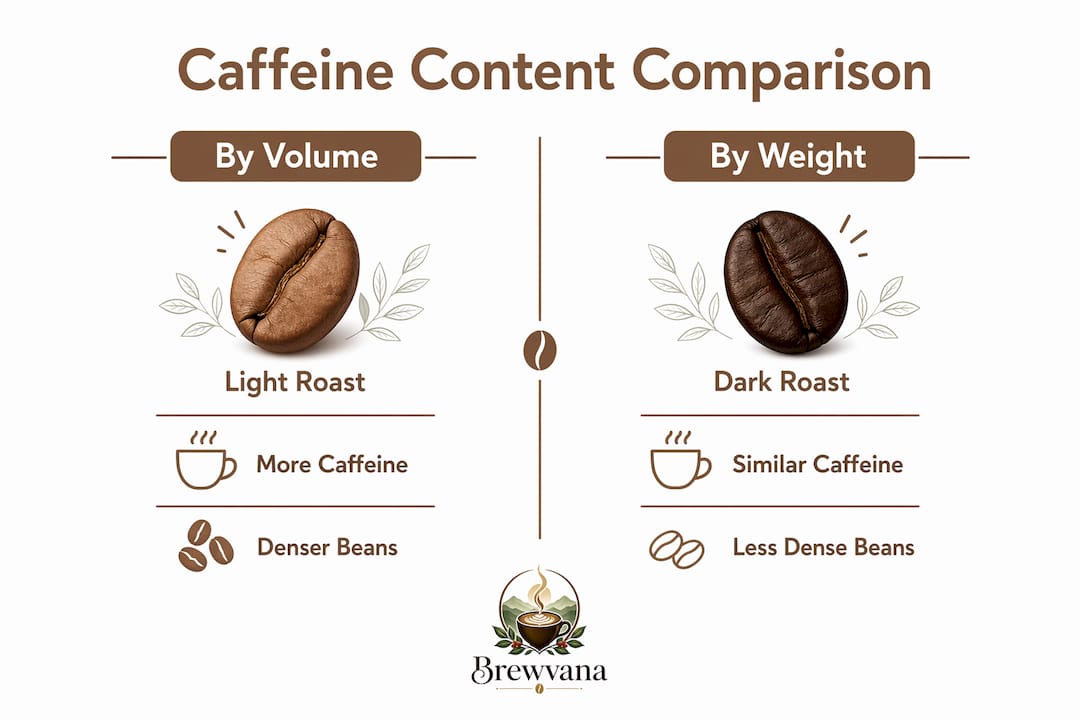
The table above shows why the debate persists. Both sides are correct depending on which column they are reading.
Does roasting actually destroy caffeine?
The short answer is no, and the science is clear on this. Caffeine is a highly stable compound that does not break down at the temperatures used in commercial roasting. Most roasting profiles peak between 400°F and 450°F (roughly 204°C to 232°C), and caffeine’s decomposition point sits well above that range. The heat simply does not get hot enough, for long enough, to burn off caffeine in any significant quantity.
The myth that dark roast “loses caffeine” in the roaster is one of the most persistent misconceptions in coffee culture. It likely comes from the fact that dark roast tastes bolder and more intense, which people associate with higher caffeine. In reality, that intensity is a flavor profile driven by Maillard reactions and caramelization, not a caffeine spike.
“Roasting affects flavor profiles far more noticeably than caffeine content. Choosing a roast level should prioritize taste preferences alongside caffeine needs.” — LetsBrew.net
What does change slightly during roasting is bean mass. Dark roast beans weigh less than light roast beans from the same starting batch because they have lost more water. So if you compare caffeine per bean, dark roast has marginally less. But per gram of ground coffee, the difference is negligible. The caffeine is still there. It just got spread across a larger, lighter bean.
This distinction matters because it reframes the entire light roast vs dark roast caffeine conversation. You are not choosing between a high-caffeine roast and a low-caffeine roast. You are choosing between two measurement scenarios that produce slightly different results depending on your dosing method.
What actually controls caffeine levels in your cup
Roast level is a minor variable in the caffeine equation. Bean variety and brewing method have far more influence on how much caffeine ends up in your cup.
Bean variety: Arabica vs. Robusta
The species of coffee bean matters enormously. Robusta beans contain nearly double the caffeine of Arabica beans, regardless of roast level. A dark roast Robusta will deliver more caffeine than a light roast Arabica every single time. Most specialty coffee sold by roasters like Brewvana uses Arabica beans for their cleaner flavor and complexity. If maximum caffeine is your goal, the bean origin and species matters more than whether you pick a light or dark roast. You can explore how bean variety affects flavor and caffeine in more detail to make smarter purchasing decisions.
Brewing method and extraction
Grind size, brew time, and method change caffeine extraction dramatically. Finer grinds expose more surface area, pulling more caffeine into the water. Longer brew times allow more extraction. Here is how common methods stack up by caffeine impact:
- Cold brew uses a long steep (12 to 24 hours) and produces a concentrate with high total caffeine, though it is typically diluted before drinking.
- Espresso has the highest caffeine concentration per ounce but is served in small volumes, so total caffeine per serving is moderate.
- Drip coffee brewed with a standard 1:15 coffee-to-water ratio delivers a reliable caffeine dose and is the most consistent method for daily intake.
- French press retains more oils and compounds than paper-filtered methods, which can slightly increase perceived strength, though caffeine levels are comparable to drip.
- AeroPress allows you to control both grind and steep time, making it one of the most adjustable methods for dialing in caffeine output.
Factors ranked by their actual influence on caffeine in your cup, from highest to lowest impact:
- Bean species (Robusta vs. Arabica)
- Brewing method and water contact time
- Grind size and surface area
- Dose amount (grams of coffee used)
- Roast level (minor, primarily a measurement artifact)
Roast level sits at the bottom of that list. If you are chasing a specific caffeine target, adjusting your dose or switching your brew method will get you there faster than switching roasts.
How to measure caffeine accurately in your brew
Accurate caffeine measurement starts before the grinder. The most reliable approach is to dose by digital scale rather than scoops. A kitchen scale accurate to 0.1 grams costs under $20 and removes the density variable entirely. Set a consistent dose, say 18 grams for a 12-ounce drip cup, and your caffeine output stays predictable across any roast level.
Here is a practical process for dialing in your caffeine intake:
- Weigh your dose. Use a digital scale every time. Start with 15 to 18 grams per 8 to 10 ounces of water for drip coffee.
- Pick your bean species first. If you want higher caffeine, look for Robusta blends or high-altitude Arabica varieties known for denser beans.
- Choose roast based on flavor. Since caffeine levels by roast type are nearly equal by weight, let your taste preference guide the roast choice.
- Adjust grind size for extraction. A finer grind increases caffeine extraction. If your brew tastes weak, grind finer before adding more coffee.
- Track your results. Note the dose, grind setting, and brew time. Consistency is the only way to know what you are actually drinking.
Pro Tip: If you want to compare caffeine in light roast coffee versus dark roast from the same origin, buy a sample pack with both roast levels from the same bean lot. Brew identical doses by weight and taste the difference. The caffeine will be nearly the same. The flavor will not.
Brewvana’s roast levels guide walks through how different roast profiles affect both flavor and density, which is useful context when you are building a consistent brewing routine. Understanding caffeine sensitivity is also worth reading if you are trying to calibrate your intake more precisely.
Key takeaways
Light roast coffee has more caffeine per scoop because denser beans pack more mass into the same volume, but when measured by weight, light and dark roast deliver nearly identical caffeine.
| Point | Details |
|---|---|
| Volume vs. weight measurement | Scooping by volume favors light roast; weighing by grams shows near-equal caffeine across roasts. |
| Caffeine stability during roasting | Caffeine does not degrade at roasting temperatures, so roast level does not burn off caffeine. |
| Bean species matters most | Robusta contains nearly double the caffeine of Arabica, making species a bigger variable than roast. |
| Brewing method is a major factor | Cold brew, espresso, and drip each extract caffeine differently; method and dose outweigh roast level. |
| Use a digital scale | Weighing your coffee dose is the most reliable way to control and predict caffeine intake. |
The myth that changed how I brew
By Kimberly
I spent years assuming my dark roast was the stronger choice. The flavor was bolder, the aroma more intense, and it felt like the serious option. When I finally started weighing my doses instead of scooping, I realized I had been dosing inconsistently for years. My “strong” dark roast cup was sometimes weaker than my light roast cup simply because the scoop held less by weight.
What actually shifted my thinking was comparing a Robusta-forward blend against a single-origin Ethiopian Arabica, both light roast, both weighed to the same gram. The Robusta delivered noticeably more caffeine. That one experiment made it obvious that the roast level conversation is almost a distraction. Bean species and dose are the real levers.
My honest recommendation: stop chasing caffeine through roast selection and start paying attention to what is in the bag. Read the origin notes. Check whether it is Arabica or Robusta. Weigh your dose. Then pick the roast that tastes best to you, because that is the one you will actually enjoy drinking every morning. Flavor preference and caffeine intake do not have to compete. When you measure correctly, you can have both.
— Kimberly
Find your perfect roast at Brewvana
Brewvana sources and roasts coffee to order, which means every bag arrives at peak freshness rather than sitting on a warehouse shelf for months. Whether you prefer the bright, complex notes of a light roast or the deep, chocolatey profile of a dark roast, Brewvana’s full coffee collection covers both ends of the spectrum with carefully selected Arabica and specialty blends. If you want to test the caffeine and flavor differences across roast levels firsthand, the sample packs let you brew side-by-side comparisons at home without committing to a full bag. Every purchase also supports local schools through Brewvana’s community giving program.
FAQ
Does light roast always have more caffeine than dark roast?
Light roast has more caffeine per scoop because denser beans pack more mass into the same volume. When measured by weight, light and dark roast deliver nearly identical caffeine.
Why does dark roast taste stronger if it has less caffeine?
Dark roast flavor intensity comes from longer roasting, which drives Maillard reactions and caramelization. Strength of flavor and caffeine content are not the same thing.
Is light roast coffee stronger in terms of caffeine?
Light roast is marginally stronger per volume scoop, but the difference is small and disappears when you dose by grams. Bean species and brewing method have a larger effect on caffeine than roast level.
What brewing method gives the most caffeine?
Cold brew concentrate and espresso both deliver high caffeine, though through different mechanisms. Cold brew uses long extraction time; espresso uses pressure and fine grind to concentrate caffeine per ounce.
Does Robusta or Arabica have more caffeine?
Robusta contains nearly double the caffeine of Arabica beans regardless of roast level, making bean species the single biggest variable in caffeine levels by roast type comparisons.