

Coffee bloom is defined as the rapid release of trapped carbon dioxide gas (CO₂) when hot water first contacts freshly ground coffee, producing a bubbly, swollen bed of grounds. This degassing reaction is called “the bloom” or “pre-infusion” in specialty coffee circles, and it directly controls how evenly water saturates your grounds. Skip it, and you risk sour, bitter, or flat results. Understand it, and every cup you brew gets measurably better. This guide breaks down the science, the sensory signals, and the exact technique to get it right at home.
What does coffee bloom mean, and why does it happen?
Coffee bloom is the CO₂ degassing event that occurs the moment hot water meets freshly roasted, ground coffee. The rapid CO₂ release creates visible bubbles and causes the coffee bed to puff upward, sometimes doubling in height within seconds. That swelling is not decorative. It is the coffee physically pushing gas out of its cell structure.
The CO₂ gets trapped during roasting. When green coffee beans are exposed to high heat, complex chemical reactions break down organic compounds and generate large volumes of carbon dioxide inside the bean’s cellular walls. The gas stays locked inside after roasting, slowly escaping over days and weeks. Grinding dramatically accelerates that escape by shattering the cell walls and exposing far more surface area.
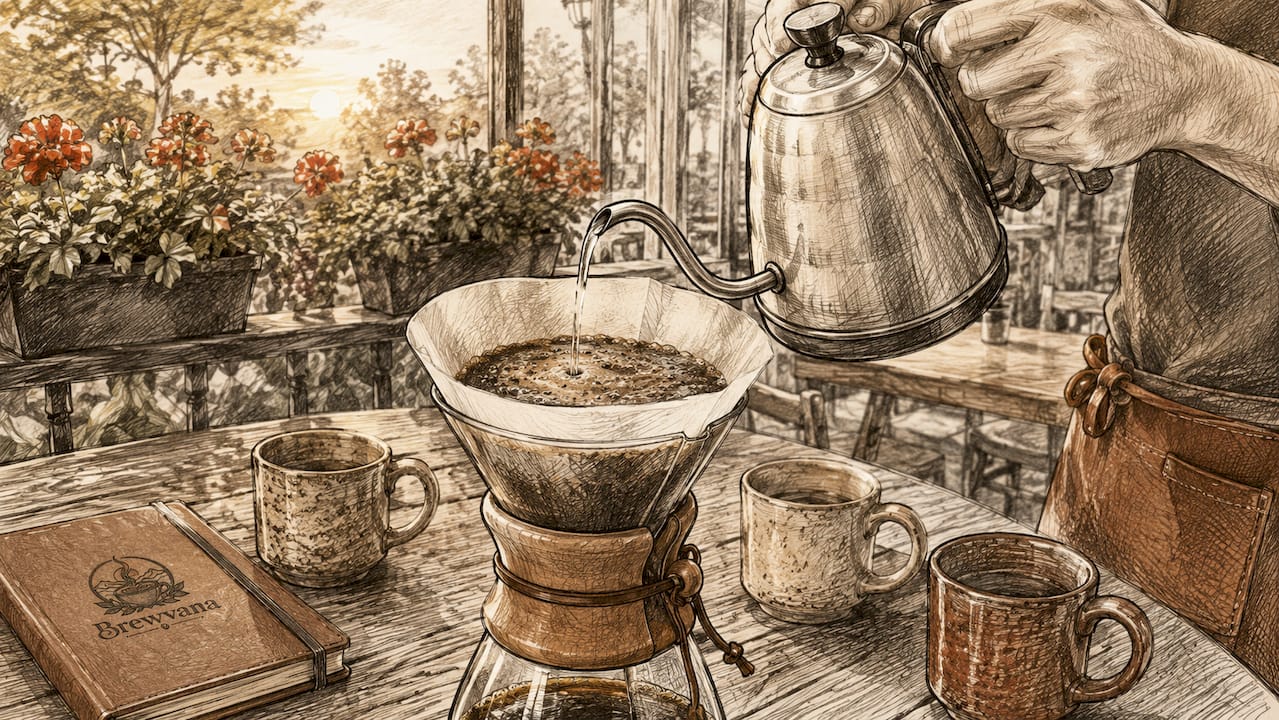
When hot water hits the grounds, it triggers the final, rapid phase of that release. The water acts as a catalyst, forcing the remaining CO₂ out in seconds rather than hours. That is the bloom you see.
One important distinction: bloom is not espresso crema. Bloom and crema are distinct phenomena. Bloom is a CO₂ gas release visible in pour-over and French press brewing. Crema is an oil-and-water emulsion created by the high pressure of espresso extraction. Confusing the two leads to misreading your brew quality.
What the science tells us about bloom timing
A proper bloom uses 2–3 times the coffee weight in water and rests for 30–45 seconds before the main pour begins. That ratio matters because too little water fails to wet all the grounds, while too much water starts extraction before the gas has fully escaped. The 30–45 second window gives CO₂ enough time to leave without letting the grounds cool significantly.
Pro Tip: Set a timer the moment you start your bloom pour. Eyeballing 30 seconds consistently is harder than it sounds, and even a 10-second difference changes your extraction.
How does bloom reveal coffee freshness and roast quality?
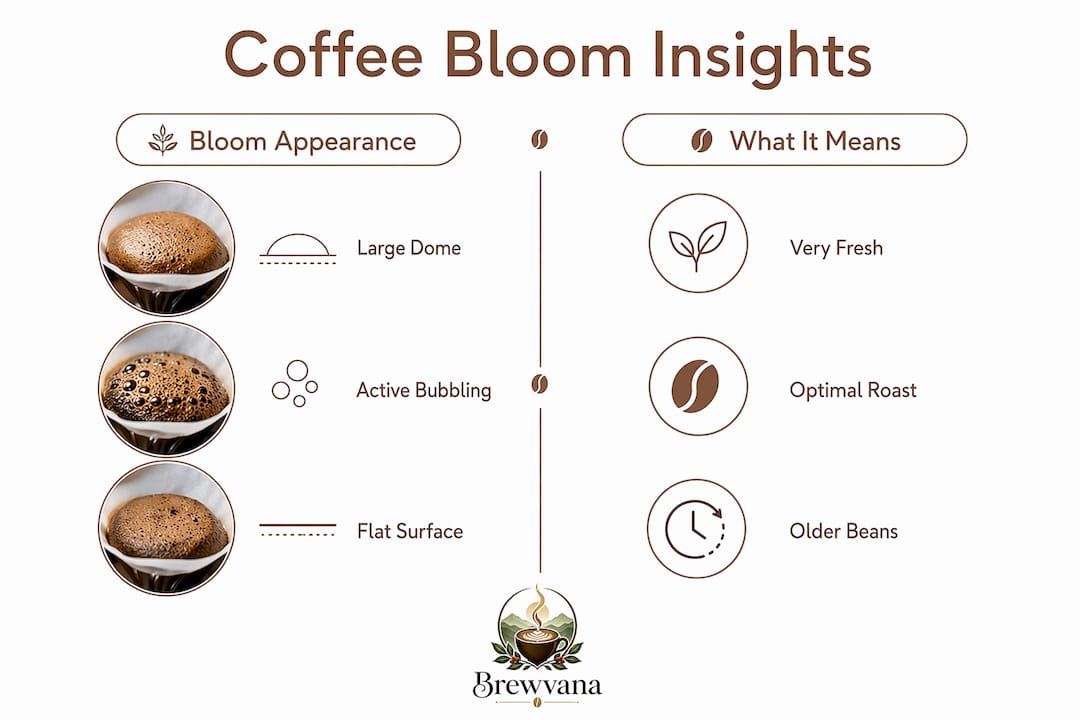
The bloom is the most honest freshness test you have at home. A vigorous, domed bloom with active bubbling signals that the beans are CO₂-rich and recently roasted. A weak or absent bloom suggests the beans have degassed significantly, either because they are old, were stored poorly, or were roasted weeks ago.
Roast level also shapes bloom behavior. Darker roasts produce more CO₂ during the roasting process and tend to bloom more aggressively than light roasts. A light roast from the same roast date will bloom less dramatically, but that does not mean it is stale. Understanding how roast levels affect flavor helps you set the right expectations for what your bloom should look like.
Here is a quick comparison to calibrate your expectations:
| Bloom appearance | What it likely means |
|---|---|
| Large dome, active bubbling, hissing sound | Very fresh beans, high CO₂, roasted within 1–2 weeks |
| Moderate rise, steady small bubbles | Fresh beans, 2–4 weeks post-roast, good extraction potential |
| Slight puff, minimal bubbling | Beans are 4–6 weeks old or stored in less-than-ideal conditions |
| Flat, no visible activity | Significantly degassed beans, likely stale or improperly stored |
Beyond the visual, the aroma during bloom is a pre-brew quality check most home brewers ignore. Bloom aromatics reveal roast quality before you commit to a full brew. A sweet, chocolatey, or fruity bloom smell predicts a clean cup. A harsh, acrid, or sulfurous smell during bloom warns of roast defects that will carry straight through to your mug.
Pro Tip: Lean in and smell your bloom actively. If the aroma makes you want to drink it immediately, you are on track. If it smells sharp or off, consider whether your beans need better storage practices or a fresher source.
How does bloom affect flavor in the cup?
Bloom is not a ritual. It is a functional step that directly controls extraction quality. CO₂ repels water. If you skip the bloom and pour straight through, the trapped gas creates a barrier between the water and the coffee solids. CO₂ causes uneven extraction by pushing water away from some grounds while others get over-saturated. The result is a cup that tastes simultaneously sour and bitter, two flavors that should not coexist in a well-brewed coffee.
Blooming solves this by clearing the gas before the main extraction begins. Once CO₂ has escaped, water flows evenly through the grounds and contacts every particle at roughly the same rate. That even contact is what produces balanced sweetness, clarity, and body in the final cup.
The methods where bloom matters most are:
- Pour-over brewing (Hario V60, Chemex, Kalita Wave): The bloom is a standard first step. The open-top design makes the swelling and bubbling clearly visible, giving you real-time feedback on bean freshness.
- French press: Adding bloom water first and waiting before the full pour improves saturation and reduces the flat, muddy quality that poorly extracted French press coffee is known for.
- AeroPress: A short bloom of 20–30 seconds before stirring and pressing improves flavor clarity, especially with light roasts.
- Drip machines: Most automatic drip machines skip bloom entirely, which is one reason manual brewing consistently produces cleaner cups from the same beans.
Skipping bloom causes channeling, where water finds the path of least resistance through the grounds rather than saturating them evenly. Channeling is one of the most common causes of weak, unbalanced coffee, and it is almost entirely preventable with a proper bloom.
How to bloom coffee correctly: timing, ratios, and adjustments
Getting the bloom right takes less than a minute, but the details matter. Follow these steps for any manual brewing method:
- Measure your bloom water. Use 2–3 times the weight of your dry coffee grounds. For 20 grams of coffee, pour 40–60 grams of water. This wets every ground without starting full extraction.
- Use water at the right temperature. Aim for 195–205°F (90–96°C). Water that is too cool will not trigger an active bloom and will slow extraction throughout the brew.
- Pour slowly and evenly. Start at the center and spiral outward to wet all the grounds. Avoid pouring directly onto the filter, which wastes bloom water without saturating the coffee.
- Wait 30–45 seconds. Watch the bed rise and bubble. The bloom is complete when the bubbling slows noticeably and the dome begins to settle.
- Adjust for bean age. Very fresh beans degas more aggressively and may need the full 45 seconds or slightly more water to fully release CO₂. Beans that are 4–6 weeks old bloom weakly and need only 30 seconds, mostly to wet the grounds before the main pour.
- Use your nose. Smell the bloom actively. Harsh bloom aromas signal roast defects that will affect the final cup. Sweet or fruity aromas confirm you are working with quality beans.
- Avoid these common mistakes. Pouring too fast during bloom disturbs the grounds and disrupts even saturation. Using stale beans and expecting a strong bloom sets you up for disappointment. And never skip the bloom on beans roasted within the past two weeks.
For beans roasted within the last 3–5 days, extend your bloom to 45–60 seconds. The CO₂ content is at its peak, and a longer rest gives the gas more time to escape before your main pour begins. You can learn more about identifying fresh roasted beans to calibrate your bloom expectations before you even start brewing.
Key takeaways
Coffee bloom is the single most overlooked variable in home brewing, and fixing it costs nothing but 45 seconds.
| Point | Details |
|---|---|
| Bloom definition | Bloom is the CO₂ release when hot water contacts freshly ground coffee, not a visual flourish. |
| Correct bloom ratio | Use 2–3 times the coffee weight in water and wait 30–45 seconds before the main pour. |
| Freshness indicator | A vigorous bloom signals fresh, CO₂-rich beans; a flat bloom signals degassed or stale coffee. |
| Flavor impact | Skipping bloom causes uneven extraction, producing sour and bitter flavors simultaneously. |
| Sensory check | Smell the bloom actively. Sweet aromas confirm quality; harsh smells warn of roast defects. |
Brewvana’s take on bloom as a brewing tool
The bloom changed how I think about coffee freshness more than any other single variable. Before I started paying attention to it, I was buying beans, grinding them, and brewing without a second thought. The bloom forced me to slow down and actually observe what the coffee was telling me.
The most underrated part of the blooming process is the aroma check. Most guides tell you to watch the bloom. I say smell it first. The difference between a bloom that smells like warm chocolate and one that smells sharp and acrid is the difference between a great bag of beans and a disappointing one. That 30-second window is the best quality control tool a home brewer has, and it costs nothing.
One misconception I see constantly: people assume a weak bloom means bad coffee. That is not always true. A well-stored, three-week-old single-origin bean from Ethiopia or Costa Rica may bloom modestly but still brew a spectacular cup. The bloom is a freshness signal, not a quality verdict. Use it as data, not a pass-fail test.
My honest advice: experiment with your bloom time. Try 30 seconds one day and 45 the next with the same beans. Taste the difference. You will feel the bloom shift from a routine step to an actual brewing decision, and that shift makes you a better brewer.
— Brewvana
Discover Brewvana’s freshly roasted coffees
If your bloom has been flat lately, the beans are the most likely culprit. Brewvana roasts to order, which means the coffee you receive is days old, not months. That freshness shows up immediately in the bloom: active, domed, and aromatic from the first pour.

The Ethiopia Natural Process and Costa Rica Single Origin are two of Brewvana’s strongest bloomers, both naturally high in CO₂ from careful roasting and fast shipping. For brewers who want to explore several roast profiles and see how bloom behavior changes across origins, the Single Origin Favorites Sample Pack is the most practical starting point. Every bag is roasted fresh, so the bloom you get is the bloom the bean was always capable of producing.
FAQ
What does coffee bloom mean in simple terms?
Coffee bloom is the release of carbon dioxide gas from freshly ground coffee when hot water is added. It appears as bubbles and swelling in the coffee bed and lasts 30–45 seconds.
Why does coffee bloom matter for flavor?
CO₂ repels water and causes uneven extraction if not released first. Blooming clears the gas so water contacts all grounds evenly, producing a balanced, sweeter cup without sourness or bitterness.
How long should the coffee bloom last?
The bloom should last 30–45 seconds for most beans. Very fresh beans roasted within the past week may benefit from up to 60 seconds, while older beans need only 30 seconds to wet the grounds.
Does a weak bloom mean bad coffee?
Not necessarily. A weak bloom indicates degassed beans, which may be older or lightly roasted, but the cup quality depends on many other factors including grind size, water temperature, and brewing method.
Is coffee bloom the same as espresso crema?
No. Bloom is a CO₂ gas release visible in pour-over and French press brewing. Crema is an oil-and-water emulsion produced by the high pressure of espresso machines. They look similar but are chemically different.