

Specialty instant coffee is defined as soluble coffee made from green coffee beans scoring 80 or above on the Specialty Coffee Association 100-point scale, with no more than 5 secondary defects per 350-gram sample. That standard places it in a completely different category from the commodity instant coffee most people grew up with. Modern production methods, particularly freeze-drying, preserve the fruit notes, brightness, and body that specialty roasters work so hard to develop. The result is a cup that delivers genuine origin character in under 60 seconds.
What is specialty instant coffee and how does it differ from regular instant?
Specialty instant coffee starts with the same rigorous sourcing that defines specialty coffee explained at the whole-bean level. The green coffee must score 80 or higher on the SCA scale, and exceptional microlots often reach 88 or above. That scoring threshold is not a marketing claim. It reflects measurable attributes: sweetness, acidity, body, aftertaste, and the absence of defects that would dull or distort flavor.
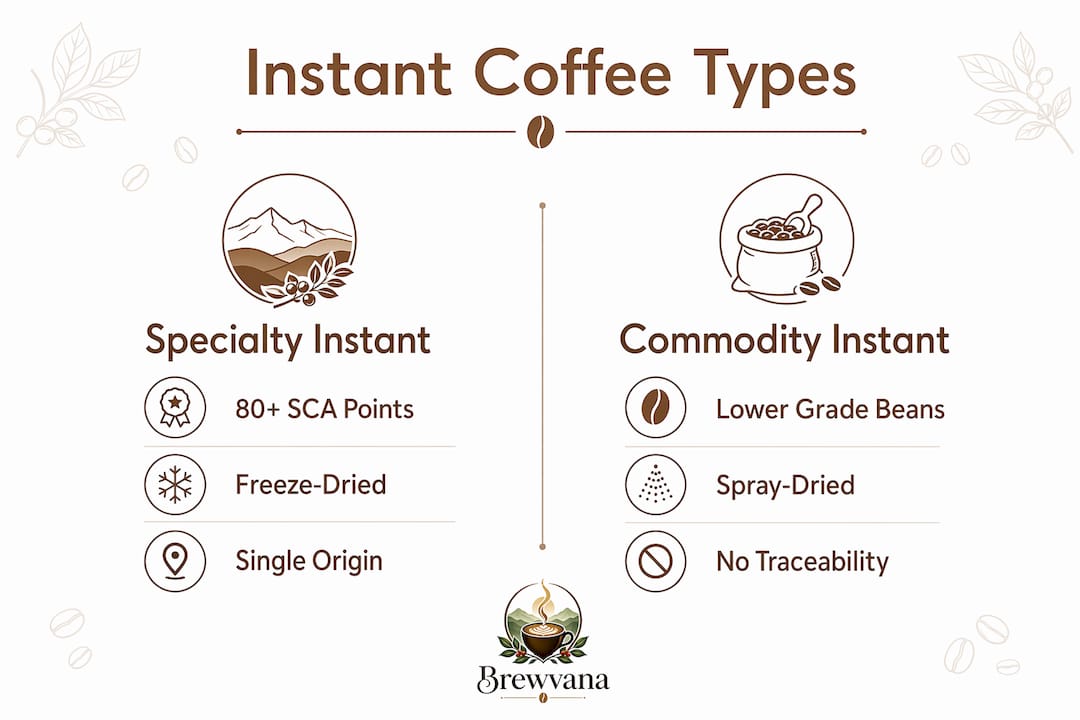
Commodity instant coffee, by contrast, uses lower-grade beans with no traceability requirements. The sourcing gap alone explains most of the flavor difference before processing even begins. Specialty roasters apply the same farm-level traceability to their instant products as they do to their whole-bean offerings, including single-origin sourcing tied to specific farms, varietals, and elevations.
The processing method is the second major dividing line. Commodity instant coffee is almost always spray-dried, meaning brewed coffee is blasted through hot air at high temperatures. That heat destroys most of the volatile aromatic compounds responsible for nuanced flavor. Specialty instant coffee uses freeze-drying instead, which freezes the brewed concentrate and then removes moisture through sublimation at low temperatures. The aromatics survive.
Pro Tip: When shopping for specialty instant, look for the words “freeze-dried” and “single origin” on the label. If neither appears, the product is almost certainly commodity-grade regardless of the price.
| Feature | Specialty instant | Commodity instant |
|---|---|---|
| Green coffee grade | 80+ SCA points | No minimum standard |
| Processing method | Freeze-drying | Spray-drying |
| Traceability | Farm or lot level | Blended, untraceable |
| Flavor profile | Fruit notes, brightness, body | Flat, bitter, generic |
| Defect threshold | ≤5 secondary defects per 350g | No limit |
How is specialty instant coffee made to preserve flavor?
The production process for specialty instant coffee mirrors whole-bean specialty production right up until the final dehydration step. Roasters select and roast single-origin lots with the same care they apply to their coffee bean processing for retail bags. Roast degree and batch control matter enormously here because the roast profile determines which flavor compounds survive the extraction and drying stages.
After roasting, the coffee is brewed into a concentrated liquid using carefully controlled extraction parameters. That concentrate is then chilled rapidly and placed in a vacuum chamber. The freeze-drying process sublimates the ice directly into vapor without passing through a liquid phase. This low-temperature sublimation is what preserves volatile compounds that would otherwise evaporate or degrade under heat.
Spray-drying, used for commodity instant, works differently. The liquid concentrate is sprayed into a chamber of very hot, dry air. The water evaporates instantly, leaving behind dry powder. The speed is efficient, but the heat strips away the delicate aromatics that define a specialty cup. The resulting powder tastes flat because it literally is flat.
Packaging plays a bigger role than most consumers realize. Specialty instant coffee is typically sealed in nitrogen-flushed, airtight packaging to prevent oxidation. Once opened, the crystals begin absorbing moisture and losing aromatics. The Specialty Coffee Association recognizes the industry’s focus on solubility science as a legitimate effort to bring this format up to the same quality standards as brewed specialty coffee.
Key factors that define specialty instant quality in production:
- Green coffee scoring: Minimum 80 SCA points, with top microlots reaching 88+
- Roast profiling: Light to medium roasts preserve acidity and origin character better than dark roasts
- Extraction control: Precise brew ratios and temperatures protect flavor compounds before drying
- Freeze-drying: Low-temperature sublimation retains aromatics that spray-drying destroys
- Nitrogen-flushed packaging: Prevents oxidation and extends freshness after sealing
Pro Tip: Check for a roast date or production date on the package. Specialty instant coffee is best consumed within 6–12 months of production for peak aroma and flavor.
How does specialty instant compare with freshly brewed specialty coffee?
Specialty instant coffee is not a replacement for a well-pulled espresso or a carefully brewed pour-over. It is a distinct format with its own strengths and real limitations. Understanding both helps you use it where it actually shines.
The flavor gap is real but smaller than most people expect. Blind taste tests by coffee professionals rate top specialty instant coffees above average drip coffee and comparable to a good pour-over on flavor alone. That result surprises people who assume instant coffee is automatically inferior. The fruit notes, brightness, and balanced body that define a quality origin can survive the freeze-drying process remarkably well.
Where specialty instant falls short is in texture and extraction complexity. Espresso produces crema from pressurized extraction of oils that dissolve into the shot. Specialty instant has no mechanism to replicate that. The mouthfeel is lighter, and the body is thinner than what you get from a French press or a well-dialed espresso machine. Some barista-style specialty instant products use higher concentrations and darker roasts to serve as a functional base for lattes and cappuccinos, but they remain a substitute, not a replica.
Where specialty instant genuinely excels:
- Travel and outdoor use: Packets weigh almost nothing and need only hot water
- Speed: Ready in under 60 seconds with no equipment cleanup
- Consistency: Every packet delivers the same extraction, unlike manual brewing
- Cold brew base: Specialty instant dissolves fully even in cold water, making it a fast cold brew option
- Culinary use: Baking, coffee rubs, cocktails, and sauces benefit from concentrated coffee flavor without added liquid volume
The honest comparison is this: specialty instant trades some texture and extraction complexity for near-perfect convenience. For most mornings, most travel situations, and most culinary applications, that trade is worth making.
What are the best ways to prepare specialty instant coffee?
Water temperature is the single most controllable variable in specialty instant preparation. Optimal preparation calls for water just below boiling, typically around 195–205°F, dissolved with 2–3 grams of specialty instant per 6–8 ounces of water. Boiling water can push bitterness in lighter roasts, so letting your kettle sit for 30 seconds after boiling makes a measurable difference.
Stir thoroughly until the crystals fully dissolve before tasting. Undissolved granules concentrate bitterness at the bottom of the cup. For a stronger, espresso-style base to use in milk drinks, reduce the water to 2–3 ounces and dissolve 3 grams of specialty instant. The result works well as a base for a latte or an iced coffee drink.
- Measure your dose. Use 2–3 grams per 6–8 ounces of water as your starting point.
- Heat water to just below boiling. Target 195–205°F for best flavor extraction.
- Add water to the cup first, then the instant coffee. This order promotes even dissolution.
- Stir for 20–30 seconds until no crystals remain visible.
- Taste and adjust. Add more water for a lighter cup or more coffee for intensity.
- For cold brew, dissolve in 2 ounces of hot water first, then pour over ice and add cold water.
Storage matters as much as preparation. Store specialty instant in an airtight container away from heat, light, and moisture. Consume within 6–12 months of production for the best aromatics. The crystals look stable, but volatile compounds degrade steadily once the seal is broken.
Specialty instant also works well beyond the cup. A teaspoon dissolved in brownie batter deepens chocolate flavor without adding liquid. Coffee cocktails like espresso martinis use concentrated specialty instant as a fast, consistent base. A dry rub for steak or ribs benefits from the same concentrated coffee character that makes the cup interesting.
Key Takeaways
Specialty instant coffee delivers genuine origin flavor through strict SCA grading, freeze-drying production, and traceable sourcing that commodity instant coffee cannot match.
| Point | Details |
|---|---|
| SCA quality standard | Specialty instant requires green coffee scoring 80+ points and ≤5 secondary defects per 350g. |
| Freeze-drying advantage | Low-temperature sublimation preserves volatile aromatics that spray-drying destroys with heat. |
| Flavor vs. brewed coffee | Top specialty instant rates above average drip coffee in professional blind taste tests. |
| Best preparation | Use 2–3 grams per 6–8 oz of water at 195–205°F and stir fully before tasting. |
| Storage for freshness | Keep in an airtight container and consume within 6–12 months of production. |
Brewvana’s take on specialty instant coffee in modern coffee culture
Specialty instant coffee occupies a position in coffee culture that most enthusiasts are still figuring out. At Brewvana, we have watched the conversation shift from dismissal to genuine curiosity over the past few years. That shift is earned.
The honest truth is that specialty instant will not replace the ritual of a carefully brewed pour-over for those of us who love the process as much as the cup. But that is not what it is for. Specialty instant is for the mornings when you are running late, the hotel room with no equipment, the camping trip where weight matters, and the Tuesday afternoon when you want something good without any effort. It fills those gaps better than any other format.
What I find most interesting is how specialty instant is changing the entry point for new coffee enthusiasts. Someone who tries a well-made freeze-dried single-origin cup for the first time often has their first real experience of what origin character means. They taste the brightness of an Ethiopian natural or the clean sweetness of a Colombian washed lot without needing a grinder, a scale, or a kettle with a gooseneck spout. That accessibility matters. It brings more people into specialty coffee, and that is good for the whole category.
The future of specialty instant is in format innovation and sourcing transparency. Producers who publish their SCA scores, name their farms, and disclose their roast dates are building the kind of trust that the category needs to grow. Brewvana’s approach to premium coffee sourcing reflects that same commitment to transparency, whether the product ends up in a bag of whole beans or a packet of freeze-dried crystals.
— Brewvana
Brewvana’s specialty instant coffee collection
Brewvana sources and offers specialty instant coffee for coffee lovers who want quality without compromise.
Brewvana’s specialty instant coffee is freeze-dried from carefully sourced, high-grade beans that meet the same standards as the whole-bean offerings. For something different, the instant mushroom coffee blends specialty-grade coffee with functional mushroom extracts for a cup that goes beyond caffeine. If you prefer something indulgent, the Dubai Chocolate flavored coffee delivers a medium roast with rich chocolate character in instant form. Every product ships fresh, and a portion of every sale supports local schools. Quality in the cup, good in the community.
FAQ
What qualifies coffee as “specialty grade”?
Specialty grade coffee scores 80 or above on the Specialty Coffee Association’s 100-point scale and contains no more than 5 secondary defects per 350-gram green sample. That standard applies to both whole-bean and specialty instant coffee.
Is specialty instant coffee actually good quality?
Yes. Professional blind taste tests rate top specialty instant coffees above average drip coffee and comparable to a good pour-over on flavor. The key is freeze-drying and high-grade sourcing, not the instant format itself.
How do I know if an instant coffee is specialty grade?
Look for “freeze-dried,” “single origin,” a named farm or region, an SCA score, and a roast or production date on the label. Commodity instant rarely lists any of these details.
Can I use specialty instant coffee in milk drinks?
Yes. Dissolve 3 grams in 2–3 ounces of hot water to create a concentrated base for lattes, cappuccinos, or iced coffee drinks. It will not produce crema, but the flavor holds up well in milk-based preparations.
How long does specialty instant coffee stay fresh?
Specialty instant coffee is best consumed within 6–12 months of production. Store it in an airtight container away from heat, light, and moisture to preserve aromatics after opening.