

Luxury coffee preparation methods are specialized brewing techniques that combine precise control over grind size, water temperature, extraction time, and sensory ritual to produce coffee of exceptional depth and clarity. Known in specialty coffee circles as “precision brewing,” these approaches treat each cup as a deliberate act rather than a routine task. The coffee omakase concept in Japan captures this philosophy perfectly: coffee prepared as a multi-course culinary experience, where atmosphere, glassware, and technique carry equal weight. For home connoisseurs, mastering these methods means understanding not just equipment, but the science and sensory intelligence behind every pour.
1. What are the top luxury coffee brewing methods?
The V60 pour-over, siphon, espresso, and Chemex represent the core of high-end coffee preparation, each demanding a different level of skill and rewarding you with a distinct flavor profile.
-
V60 Tetsu Kasuya 4:6 Method: Developed by World Brewers Cup champion Tetsu Kasuya, this technique uses a 1:15 coffee-to-water ratio split across five controlled pours. The first 40% of water governs acidity and sweetness; the final 60% controls strength. Total brew time runs 3:30 to 4:00 minutes. The method gives you surgical control over flavor balance, which is why it dominates competition brewing.
-
Siphon brewing: The siphon (also called vacuum pot brewing) uses vapor pressure to pull water up through coffee grounds and back down through a filter. The result is a clean, tea-like clarity with pronounced aromatic complexity. The theatrical process also functions as a sensory ritual that slows you down and sharpens attention.
-
Espresso with dual boiler machines: Dual-boiler espresso setups reduce warm-up times by 40% and provide simultaneous brewing and milk steaming with superior thermal stability. This matters because temperature consistency at the group head is the single biggest variable separating café-grade espresso from home attempts.
-
Chemex: The Chemex uses a proprietary thick paper filter that removes oils and fine particles, producing a cup of exceptional clarity and brightness. It suits light to medium roasts from origins like Ethiopia or Kenya, where floral and citrus notes deserve an unobstructed stage.
-
Manual pour-over with a gooseneck kettle: Beyond the V60, methods like the Kalita Wave and Origami dripper reward precise, slow pours. A gooseneck kettle gives you directional control that a standard kettle cannot match.
Pro Tip: Start with the 4:6 method before attempting siphon or espresso. It teaches you how individual variables affect flavor, which makes every subsequent method easier to master.
2. How water quality and temperature shape your cup
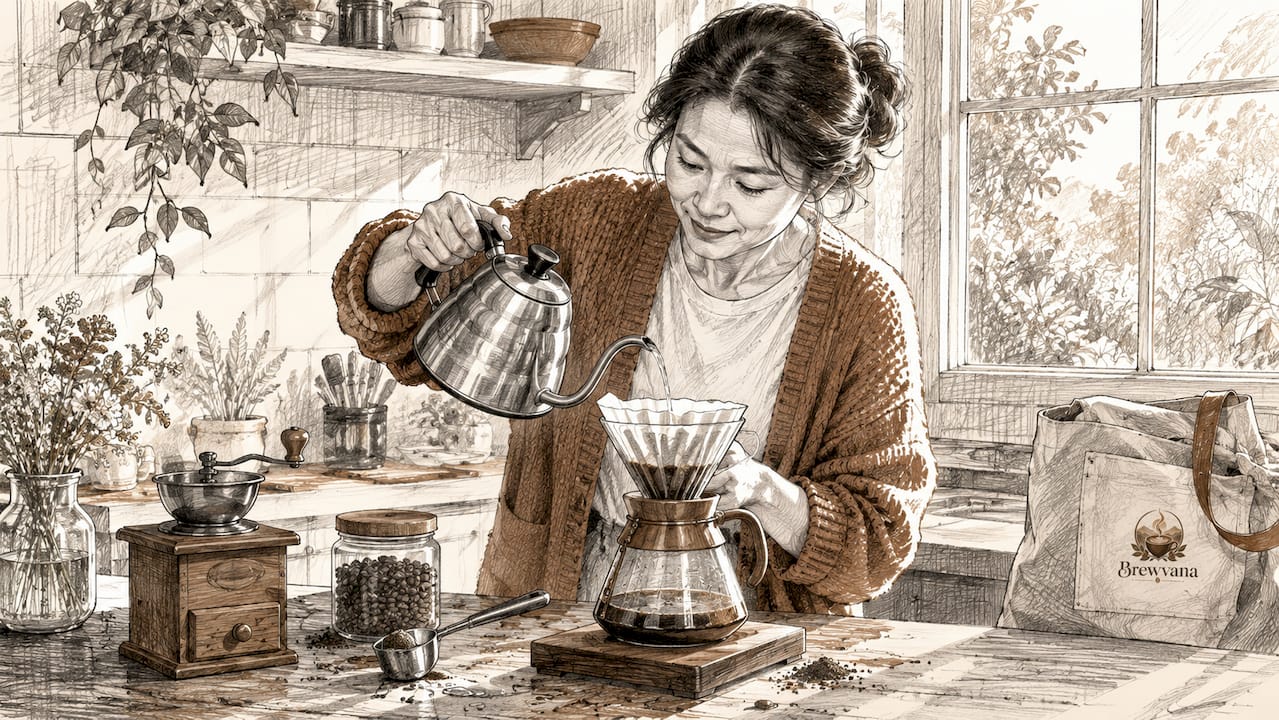
Water accounts for 98% of final coffee flavor, which means your water choice is not a secondary concern. It is the medium through which every flavor compound travels from bean to cup.
The optimal brewing temperature range is 195°F to 205°F (91°C to 96°C). Boiling water at 212°F scorches delicate coffee oils and drives bitterness into the cup. That 7 to 17 degree window is where extraction chemistry works in your favor, dissolving sweetness and acidity without triggering harsh compounds.
Mineral balance matters as much as temperature. Magnesium ions enhance the perception of sweetness and fruity acidity, while calcium contributes body and mouthfeel. Professionals use DIY mineral concentrates or specialty water packets to dial in the exact magnesium-to-calcium ratio for each origin. Using distilled water, by contrast, produces flat, lifeless coffee because there are no minerals to carry flavor compounds.
A temperature-controlled gooseneck kettle is non-negotiable for precision brewing. Models from Fellow, Brewista, and Hario allow you to set exact temperatures and hold them during the pour. This eliminates the guesswork of “let it cool for 30 seconds,” which varies by room temperature and kettle volume.
Pro Tip: If you want to experiment with water chemistry without buying mineral packets, try mixing filtered water with a small amount of Third Wave Water Classic Profile concentrate. It is one of the fastest ways to hear the difference water makes.
3. Why grinder quality determines extraction success
Grinder quality is the primary determinant of successful extraction, ranking above brewing method, bean origin, and even water temperature in its impact on cup quality. This is the insight most home brewers learn too late, after spending heavily on a premium brewer while keeping a blade grinder.
Blade grinders produce a chaotic mix of particle sizes. The fine powder over-extracts and turns bitter; the large chunks under-extract and taste sour. Both defects appear in the same cup simultaneously, creating a muddled, unresolvable flavor. A flat or conical burr grinder produces uniform particles that extract at the same rate, giving you a clean, balanced result.
- Choose flat or conical burrs. Flat burr grinders like the Baratza Vario or Eureka Mignon produce a more uniform particle distribution. Conical burrs, found in grinders like the Comandante C40 or 1Zpresso JX-Pro, retain slightly more fines but excel at clarity and sweetness.
- Match grind size to method. Espresso requires a fine, powdery grind. V60 and Chemex need medium-fine to medium. Siphon sits at medium. Changing methods without adjusting grind size is the most common cause of extraction failure.
- Grind immediately before brewing. Ground coffee loses volatile aromatics within 15 minutes of grinding. Pre-grinding the night before is not precision brewing. It is convenience at the cost of quality.
- Consider a manual grinder for the ritual. Manual burr grinding forces a sensory pause that enhances focus and appreciation. The Comandante C40 and Timemore C3 Pro are two manual grinders that match or exceed the output quality of electric grinders at twice their price.
Pro Tip: If you can only upgrade one piece of equipment, make it the grinder. A Comandante C40 paired with a basic V60 will outperform a mediocre grinder paired with a $500 brewer every single time.
4. Comparing luxury brewing methods: a side-by-side guide
Selecting the right method depends on the flavor profile you want, the beans you are working with, and how much time and equipment complexity you are willing to accept. The table below maps the most important variables across the five primary artisan coffee methods.
| Method | Flavor profile | Best roast level | Equipment complexity | Ideal origin |
|---|---|---|---|---|
| V60 4:6 pour-over | Bright, nuanced, layered | Light to medium | Low | Ethiopia, Kenya |
| Siphon | Clean, aromatic, tea-like | Light to medium-light | High | Panama, Colombia |
| Espresso (dual boiler) | Concentrated, rich, syrupy | Medium to dark | Very high | Brazil, Guatemala |
| Chemex | Clear, crisp, delicate | Light to medium | Low to medium | Ethiopia, Costa Rica |
| Kalita Wave | Balanced, smooth, forgiving | Medium | Low | Peru, Honduras |
A few observations worth noting from this comparison. Espresso demands the steepest learning curve and the highest equipment investment, but it also unlocks the widest range of drinks, from straight shots to milk-based preparations. The Chemex and V60 are the most accessible entry points for connoisseurs who want precision without complexity. Siphon brewing rewards patience and produces a cup that no other method replicates.
Understanding roast levels is critical before choosing a method. Light roasts carry origin-specific flavors that shine in clean-extraction methods like Chemex and V60. Dark roasts develop roast-driven flavors, chocolate and caramel, that hold up better under the pressure and heat of espresso. Matching roast to method is not optional in premium coffee making. It is the foundation of the decision.
One variable the table cannot capture is freshness. Freshly roasted beans require a resting period of at least 72 hours for CO2 degassing before brewing. Brewing too soon causes uneven extraction as escaping gas disrupts water contact with the grounds. This is why roast date matters more than roast level when sourcing beans for any of these methods.
All-in-one coffee machines limit flavor potential due to restricted thermal control compared to independent brew systems. Connoisseurs consistently prefer equipment with independent control of brew temperature, pre-infusion, and pressure. That preference is not snobbery. It is the practical recognition that control produces repeatability, and repeatability produces mastery.
Key takeaways
Luxury coffee preparation succeeds when grind consistency, water mineral balance, and temperature precision work together across a method matched to the bean’s roast and origin.
| Point | Details |
|---|---|
| Grinder first, brewer second | Invest in a quality burr grinder before upgrading any other equipment for the biggest flavor gain. |
| Water is 98% of the cup | Mineral balance and temperature (195°F to 205°F) shape flavor more than most brewers realize. |
| Match method to roast | Light roasts belong in Chemex and V60; dark roasts perform best under espresso pressure. |
| Rest beans before brewing | Allow at least 72 hours post-roast for CO2 degassing to achieve even, clean extraction. |
| Ritual amplifies quality | Manual grinding and deliberate preparation improve sensory focus and the final result. |
Brewvana’s take on building a luxury coffee practice
The most common mistake I see among serious home brewers is treating equipment as the destination rather than the vehicle. A $1,200 espresso machine sitting next to a blade grinder is a waste of potential. The ritual of precision brewing, the weighing, the timing, the deliberate pour, is not theater. It is the mechanism by which you learn what each variable actually does.
My honest recommendation: start with a V60 and a quality conical burr grinder. Spend the first month on the 4:6 method with a single origin light roast from a traceable source. Change one variable per session and taste the difference. That practice builds the sensory vocabulary that makes every subsequent upgrade meaningful rather than speculative.
The coffee bean processing method also deserves attention before you settle on a brewing approach. Natural process beans carry fruit-forward sweetness that transforms in a Chemex. Washed process beans deliver clarity and acidity that the 4:6 method amplifies beautifully. Knowing what you are working with before you brew is the difference between a good cup and a great one.
Precision without enjoyment is just engineering. The goal is to build enough knowledge that the ritual becomes intuitive, so the mindfulness is genuine rather than forced. That is when luxury coffee preparation stops being a project and starts being a practice.
— Brewvana
Discover Brewvana’s single origin coffees for precision brewing
Brewvana sources and roasts to order, which means the beans you receive are fresh enough to actually benefit from the techniques described here.
For pour-over and Chemex work, Brewvana’s Costa Rica single origin delivers the clean sweetness and balanced acidity that precision methods reward. The Ethiopia Natural Process brings berry-forward complexity that shines in a siphon or V60. For espresso, the Peru single origin offers chocolate and walnut depth that holds beautifully under pressure. If you want to compare origins before committing, the Single Origin Favorites Sample Pack lets you run side-by-side brewing sessions across all three methods with one order.
FAQ
What makes a coffee brewing method “luxury”?
A luxury brewing method prioritizes precise control over variables like grind size, water temperature, and extraction time to produce a cup with exceptional clarity and flavor complexity. The sensory ritual of preparation is considered part of the experience, not separate from it.
Which luxury method is best for beginners?
The V60 with the Tetsu Kasuya 4:6 method is the most accessible starting point. It requires minimal equipment, teaches variable control clearly, and produces competition-level results with practice.
Does water quality really matter that much?
Water accounts for 98% of coffee’s final flavor, and mineral balance directly affects perceived acidity, sweetness, and body. Using filtered water with a balanced magnesium-to-calcium ratio produces measurably better results than tap or distilled water.
How important is a burr grinder versus a blade grinder?
A quality burr grinder is the single most important equipment upgrade for home brewing. Blade grinders create uneven particle sizes that cause simultaneous over-extraction and under-extraction, producing bitter and sour flavors in the same cup.
Should I use single origin beans for luxury brewing?
Single origin beans are strongly preferred for precision methods like V60, Chemex, and siphon because their distinct flavor profiles are amplified rather than masked. Blends work well for espresso, where the goal is balance and consistency across a concentrated shot.