

Cold brew coffee bean types matter far more than most people realize. Pick the wrong one and your batch comes out thin, bitter, or weirdly sour despite doing everything else right. Pick the right one and the same 16-hour steep produces something silky, sweet, and layered enough to drink black. This guide cuts through the noise to explain exactly how roast level, origin, and processing method shape your cold brew, and which specific bean types will deliver the flavor experience you’re actually looking for.
Table of Contents
- How to choose cold brew coffee beans: key criteria explained
- Top medium roast beans for smooth, balanced cold brew
- Medium-dark and dark roast beans for bold, low-acid cold brew
- Light roast beans: specialty bright cold brews for adventurous drinkers
- Comparing popular cold brew coffee bean types: flavor, roast, and brewing tips
- Choosing the right cold brew coffee bean for your palate and lifestyle
- Rethinking cold brew coffee bean choices: more than just roast and origin
- Explore premium coffee beans and cold brew essentials at Brewvana
- Frequently asked questions
Key Takeaways
| Point | Details |
|---|---|
| Roast level matters | Medium to medium-dark roasts generally produce the smoothest and sweetest cold brew flavors. |
| Origin influences flavor | Brazilian and Colombian beans offer balanced chocolate and caramel notes ideal for cold brew. |
| Grind size and steep time | An extra-coarse grind and steeping 12-18 hours optimize flavor and minimize bitterness. |
| Filtering is critical | Immediate straining and double filtering prevent bitterness and extend cold brew freshness. |
| Adjust variables carefully | Taste and tweak one factor at a time to perfect your cold brew extraction and flavor. |
How to choose cold brew coffee beans: key criteria explained
Before you spend money on bags of specialty coffee, it helps to understand what actually controls flavor in cold brew. Unlike hot brewing, cold water extracts compounds slowly, which changes everything about how a bean behaves. Here are the core factors to weigh:
Key criteria for selecting cold brew beans:
- Roast level is the single biggest variable. Medium and medium-dark roasts bring richer, bolder, sweeter flavors to cold brew because cold extraction suppresses acidity and amplifies caramel compounds. Light roasts behave very differently and require more skill to extract well.
- Origin shapes the natural flavor notes and body. Brazilian beans lean nutty and chocolatey. Colombian beans offer balanced sweetness. Ethiopian beans carry floral and citrus notes that cold water partially mutes.
- Processing method affects sweetness and acidity. Natural-processed beans (dried with the fruit on) tend to taste fruitier and sweeter, making them excellent candidates for cold brew. Washed beans are cleaner and brighter but can fall flat without careful extraction. Explore coffee bean processing methods if you want to go deeper on this.
- Grind size is non-negotiable. Extra-coarse is the standard for clarity and to prevent over-extraction.
- Steep time and ratio must align with your bean. A dark roast pushed to 20 hours will taste ashy. A light roast pulled at 12 hours will taste weak.
Quick-start checklist for choosing your beans:
- Choose medium roast for your first batch. It forgives most mistakes.
- Look for natural flavor notes in the chocolate, caramel, and dark fruit range.
- Check the roast date before buying. Beans older than six weeks produce flat, dull cold brew.
- Grind extra-coarse regardless of roast level.
- Adjust steep time based on roast, not just preference.
As one widely cited guide puts it, cold brew tastes best with beans that naturally lean sweet: chocolate, caramel, toffee, nuts, and dark fruit. Medium and medium-dark roasts are the easiest starting point for almost anyone.
Pro Tip: Buy whole beans and grind just before steeping. Pre-ground coffee loses its CO2 and subtle flavor compounds fast, and cold brew’s long steep time amplifies that staleness.
Now that you know what criteria to consider, let’s explore some of the top cold brew coffee bean types favored by enthusiasts.
Top medium roast beans for smooth, balanced cold brew
Medium roast is where most cold brew fans should start, and many should stay. The roasting process has developed enough sugars to give you caramel and chocolate sweetness without burning off the subtle origin notes that make coffee interesting.
What makes medium roast work so well for cold brew:
- The caramel and brown sugar compounds extracted by cold water create natural sweetness without added sugar.
- Colombian beans provide balanced sweetness and mild fruit notes, making them reliable across a wide range of steeping times.
- Medium roasts suit both black cold brew drinkers and those who finish their glass with milk or oat milk, since the flavor holds up under dilution.
- They extract more evenly than light or dark roasts, giving you more consistent results batch to batch.
One specific example worth knowing: Bizzy Organic Smooth & Sweet is frequently cited as the best overall black cold brew bean, carrying caramel and brown sugar notes with forgiving extraction that tolerates small variations in steep time or grind size. That “forgiving” quality matters enormously when you’re brewing large batches at home without lab-grade consistency.
If you want to experiment with medium roast blends, Brewvana’s 6-bean blend brings together multiple origins for a layered, naturally sweet cold brew profile that holds up beautifully across different preparation styles.
Pro Tip: For a milk-based cold brew that tastes genuinely complex rather than just sweet, try a medium roast Colombian single-origin. The mild fruit notes cut through dairy in a way that a generic “breakfast blend” simply won’t.
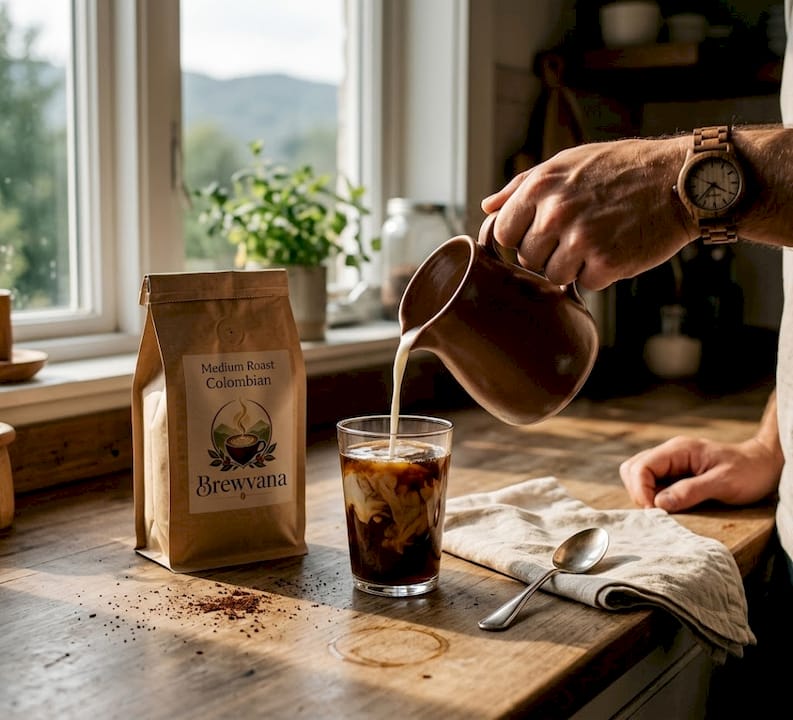
Next, we’ll look at medium-dark and dark roast beans, perfect if you prefer a bolder, richer cold brew experience.
Medium-dark and dark roast beans for bold, low-acid cold brew
Dark roasts are divisive in hot coffee. In cold brew, they make a lot more sense. Cold water extraction suppresses the harsh, bitter compounds that make a dark roast taste burnt in a drip machine, and instead draws out rich chocolate and brown sugar notes with very low acidity.
What dark roast cold brew delivers:
- Deep chocolate and molasses flavors with almost no perceived bitterness when steeped correctly.
- Stone Street Cold Brew Reserve, a dark roast Colombian blend, is a well-known example delivering chocolate and brown sugar notes with low acidity, making it especially strong in milk-based drinks.
- Excellent concentrate performance. Dark roasts dilute well because their bold base flavor survives the addition of water or milk.
- Lower acidity than hot-brewed versions of the same beans, which matters if your stomach is sensitive to coffee.
The catch is steep time. Dark roasts need 12 to 14 hours maximum to avoid ashiness. Push them longer and the cold water starts pulling bitter, acrid compounds that no amount of milk will cover up. This is where many cold brew batches go wrong: people assume longer is always better and over-extract a dark roast into something harsh.
If you want a dark roast concentrate worth drinking, Brewvana’s Max Caf Blend is built for exactly this. Bold, clean, and calibrated for cold extraction.
Pro Tip: When brewing dark roast cold brew as a concentrate, use a 1:4 coffee-to-water ratio and stop at 12 hours. Then taste before you strain. If it’s already hitting the flavor you want, pull it. You can always dilute. You cannot un-steep.
For those curious about lighter, fruitier cold brews, let’s explore the unique challenges and opportunities of light roast beans.
Light roast beans: specialty bright cold brews for adventurous drinkers
Light roasts are the most misunderstood of the cold brew coffee bean types. They are not better or worse than dark roasts by default. They are simply harder to brew well in cold water, and the results, when done right, are genuinely unlike anything a medium or dark roast can produce.
What to know about cold brewing with light roasts:
- Light roasts produce brighter, fruitier cold brews but require longer steep times and tighter coffee-to-water ratios to avoid thin, under-extracted results.
- Ethiopian washed light roasts are the trickiest. Cold water mutes their floral, jasmine, and citrus aromatics, so what you get is a lighter-bodied brew with subdued notes rather than the vibrant cup you’d expect from a pour-over.
- Ethiopian natural-processed beans are a better bet for cold brew, since the fruit-forward sweetness from natural processing survives cold extraction better than delicate floral notes.
- Steep time for light roasts should run 18 to 24 hours.
- Grind slightly less coarse than you would for a dark roast to increase surface area and improve extraction.
Understanding processing methods for cold brew is especially important with light roasts, since the processing choice can be the difference between a memorable bright cup and a watery disappointment.
Pro Tip: If you’re determined to cold brew a washed Ethiopian light roast, try a room-temperature steep for the first 12 hours before moving it to the refrigerator. The slightly warmer extraction phase boosts solubility and brings out more of those floral aromatics.
Having covered the main bean types, let’s compare them side-by-side to help you decide which suits your cold brew preferences best.
Comparing popular cold brew coffee bean types: flavor, roast, and brewing tips
Sometimes the clearest way to choose is to see everything at once. Here’s how the main cold brew coffee varieties stack up:
| Bean origin | Roast level | Flavor notes | Steep time | Best brewing style |
|---|---|---|---|---|
| Brazil | Medium | Chocolate, nut, caramel | 14-16 hours | Black or with milk |
| Colombia | Medium | Brown sugar, mild citrus | 14-18 hours | Black or concentrate |
| Colombia blend | Dark | Chocolate, molasses, low acid | 12-14 hours | Milk-based, concentrate |
| Ethiopia (natural) | Light-medium | Berry, stone fruit, chocolate | 18-22 hours | Black, no dilution |
| Ethiopia (washed) | Light | Floral, citrus, tea-like | 20-24 hours | Black, precision brew |
| Guatemala | Medium-dark | Dark chocolate, brown spice | 14-16 hours | Black or concentrate |
A few patterns worth noting from this table. Cold brew extraction amplifies sweetness, body, and chocolate-caramel notes while suppressing acidity, which is why Brazilian and Colombian beans dominate most best beans for cold brew lists. They are built for this.
For concentrate versus ready-to-drink, the ratio is what separates them. Standard cold brew uses extra-coarse grinds at a 1:4 ratio for concentrate or 1:8 for ready-to-drink, steeped 12 to 18 hours refrigerated, with 16 hours being optimal for most medium roasts.
Quick rules for using this table:
- Match steep time to roast, not just preference.
- Use the concentrate ratio with dark roasts and milk-based preparations.
- Use the ready-to-drink ratio with medium roasts you plan to drink straight.
- Browse Brewvana’s cold brew collections to find beans already optimized for these profiles.
You can also explore the differences between cold brew concentrate vs ready-to-drink formats if you’re still deciding which style fits your routine.
Choosing the right cold brew coffee bean for your palate and lifestyle
Now put it all together. Here is a practical, preference-based guide to cold brew bean recommendations that match real drinking habits:
- You want smooth and sweet, no fuss. Start with a medium roast Brazilian or Colombian bean. Steep 15 to 16 hours. Drink black or with a splash of milk. This is the most forgiving setup for reliable, delicious results.
- You drink cold brew with milk or creamer daily. Go medium-dark or dark roast. The bold base flavor survives dilution. Steep 12 to 14 hours as a concentrate, then dilute 1:1 with water or milk to serve.
- You’re chasing something more interesting. Try a natural-processed Ethiopian or Guatemalan medium-dark. Expect berry undertones and a heavier body. Steep 18 to 20 hours and drink black.
- You’re a light roast loyalist. Cold brew is possible, but it requires patience. Use washed Ethiopian only if you’re willing to do a 22-hour steep with a slightly finer grind and a 1:6 ratio. Results vary, and the flavor will be more subtle than you expect.
- You’re batch-brewing for a week. Medium roast wins. It stores better, maintains flavor longer, and doesn’t develop off-notes as fast as dark roasts do in the refrigerator.
One rule that applies to all cold brew coffee varieties: adjust steeping time based on taste. If it’s bitter, shorten. If it’s weak or sour, lengthen. Always adapt based on the specific bean’s roast and origin rather than following a fixed time blindly.
And when you strain, do it correctly. Strain immediately after steeping without pressing the grounds, and double-filter with paper filters to remove sediment that continues extracting and sours batches within 24 hours.
For additional brewing tips for cold brew, including guides on ratios and equipment, there is a lot more to explore once you’ve nailed your bean choice.
Rethinking cold brew coffee bean choices: more than just roast and origin
Here is the uncomfortable truth most cold brew content avoids: the bean type is only half the equation. We see people invest in genuinely excellent single-origin beans and still produce mediocre cold brew because they ignored grind size, got lazy with steep time, or skipped the second filter pass.
Cold brew is one of the most consistent and repeatable home brewing methods when grind, ratio, and steep time are correct. And one of the most frustrating when they are not. That frustration is almost never the bean’s fault.
Origin stories sell coffee. They should not replace technique. A $9 bag of Colombian medium roast, brewed with correct variables, will outperform a $28 Ethiopian light roast brewed carelessly every single time. The best cold brew drinkers we know treat bean selection and process as equally weighted, not as primary and secondary.
The other frequently overlooked factor is post-steep handling. Most sourness in cold brew comes not from the steep itself but from sediment that keeps extracting in your refrigerator after you think the process is done. Double filtering and immediate straining are not optional finishing touches. They are part of the brew.
Our strongest recommendation: change one variable at a time. Different bean and different steep time in the same batch tells you nothing. Isolate the variable. Let the importance of a fresh roast date be your constant. Fresh beans plus controlled process will get you further faster than chasing exotic origins with sloppy technique.
Explore premium coffee beans and cold brew essentials at Brewvana
Ready to put this knowledge to work? Brewvana’s curated range is built specifically for home brewers who care about what goes into the glass. Every batch is freshly roasted to order, so you’re starting with beans at peak flavor, not ones that have been sitting in a warehouse for months.
From smooth medium roast blends to bold dark roast concentrates, Brewvana’s cold brew coffee collections include options across every roast level and flavor profile covered in this guide. You’ll also find expert brewing guides, sample packs for tasting before committing to a full bag, and the kind of freshly roasted quality that makes the difference you can taste from your first sip. Better cold brew starts with better beans, and those are one click away.
Frequently asked questions
What roast level is best for cold brew coffee beans?
Medium to medium-dark roasts are generally best, delivering balanced sweetness and smooth body through 12 to 18 hour steeps. Light roasts require longer steeping and tighter ratios to avoid thin, under-extracted results.
How long should I steep cold brew coffee beans?
Steep time depends on roast level. Sixteen hours is optimal for most medium roasts, dark roasts need 12 to 14 hours to avoid ashiness, and light roasts often need 18 to 24 hours for full extraction.
Can I use flavored coffee beans for cold brew?
Flavored beans are generally not recommended. They can become cloying over a long steep, and cold brew benefits most from the natural sweetness and clarity that comes from well-chosen unflavored medium roast beans.
How important is grind size for cold brew beans?
It is critical. A coarse grind prevents bitterness and over-extraction that fine particles cause during the long steep window. Extra-coarse is the standard for both clarity and flavor control.
What’s the best way to filter cold brew after steeping?
Strain immediately without pressing the grounds, then double-filter with paper filters to remove sediment that will continue extracting and sour your batch within 24 hours if left in.