

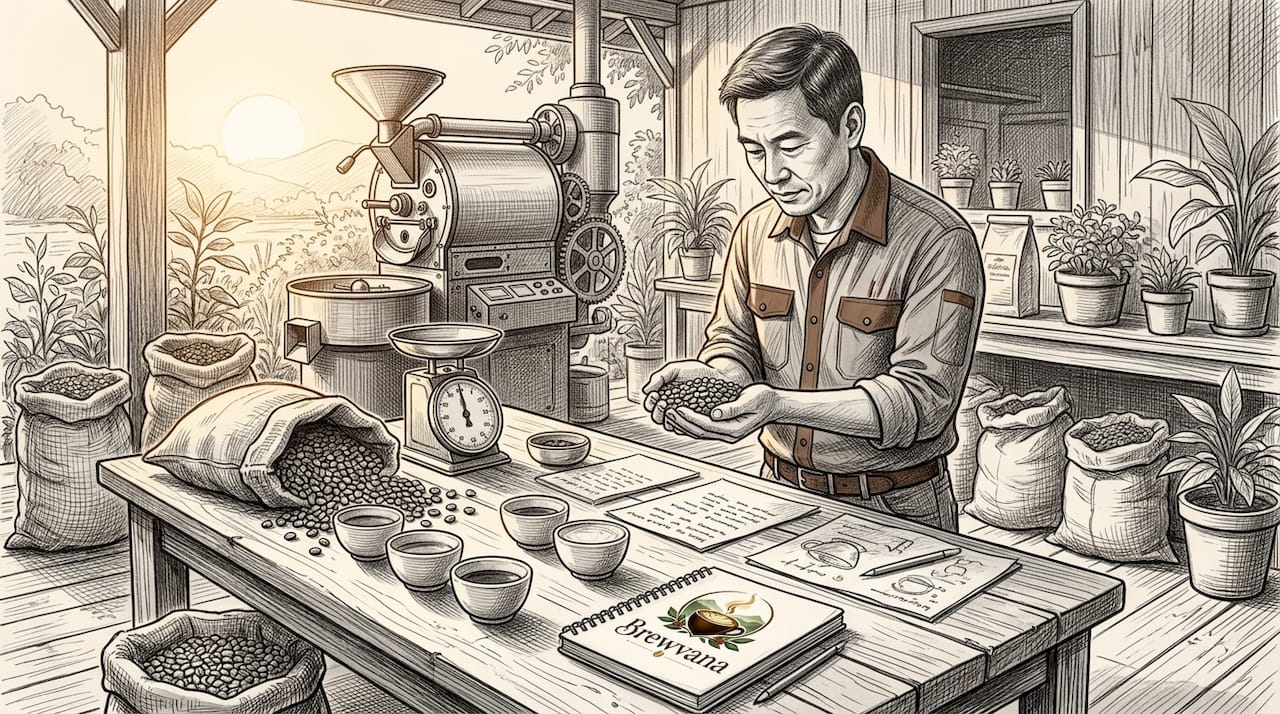
A curated coffee selection is an intentionally assembled lineup of coffees chosen for quality, consistency, provenance, and purposeful flavor roles. This is not a random assortment of popular beans. It is a guided experience built by experts who understand that what you drink matters as much as how it was grown. Think of it as the difference between a chef’s tasting menu and a buffet. Curated selections appear in formats like subscription boxes, coffee omakase experiences, and roaster-led storytelling programs. Each format shares one goal: turning coffee from a commodity into a conversation.
What does a curated coffee selection mean in practice?
A curated specialty coffee lineup is intentionally structured around quality, consistency, and clear purpose. That definition rules out a lot of what gets marketed as “premium.” True curation requires five specific elements working together.
- Proven cup quality. Every coffee in the lineup must pass a consistent quality threshold. One weak batch breaks the trust the curator has built.
- Defined flavor roles. A curated lineup is not ten similar coffees. It includes coffees that serve different purposes: a bright, fruit-forward Ethiopian for morning clarity, a chocolatey Peruvian for afternoon comfort, a complex natural process for weekend exploration.
- Traceability. You should be able to trace your coffee to a specific farm, cooperative, or region. Provenance is not a marketing detail. It is proof that quality was controlled at the source.
- Consistency across batches. A coffee that tastes different every time you order it is not curated. Consistency is the baseline that separates curation from guesswork.
- A clear use case. Every coffee in the lineup should have a reason to be there. Espresso, pour-over, cold brew: the selection should tell you how to use it and why.
Roasters have shifted from bean suppliers to curators who translate complex coffee profiles into accessible narratives. A skilled roaster does not just source good coffee. They frame it with context, tasting notes, and origin stories that invite you to appreciate what is in your cup.
Pro Tip: When evaluating a curated selection, check whether the seller provides a roast date. Roast-to-order freshness is one of the clearest signals that a brand takes curation seriously.
How does curated coffee differ from generic coffee?
The specialty coffee market now offers hundreds of single-origin options, micro-lot releases, and experimental processing styles. That volume creates a real problem. Curation reduces choice overload in specialty coffee markets by acting as a matchmaker between your preferences and the right coffees. Without it, you are left making uninformed decisions in a category that rewards knowledge.
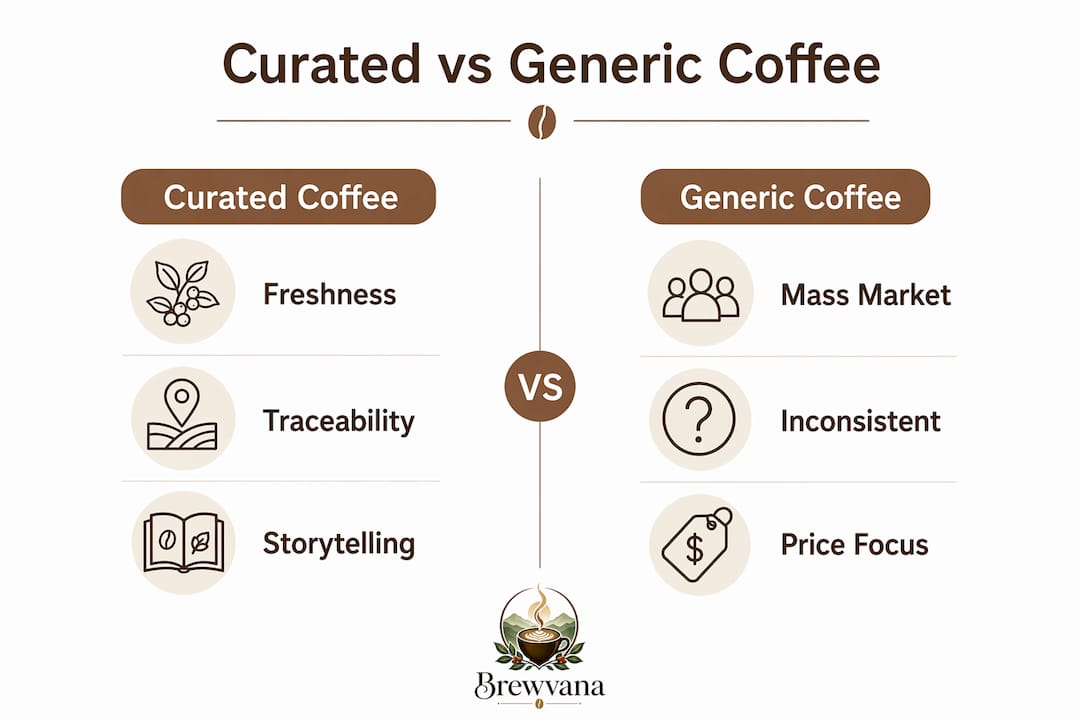
Here is how curated and generic coffee selections compare across the factors that matter most to you:
| Factor | Curated Coffee | Generic or Mass-Market Coffee |
|---|---|---|
| Freshness | Roasted to order, shipped with roast date | Pre-roasted, often weeks or months old |
| Traceability | Farm, region, and processing method disclosed | Country of origin only, or none |
| Flavor transparency | Tasting notes and brew guidance included | Flavor descriptors vague or absent |
| Selection logic | Coffees chosen for distinct flavor roles | Coffees chosen for price and volume |
| Consumer education | Origin stories, processing context provided | No educational component |
True curation emphasizes storytelling rather than simply being expensive coffee. This is a point most people miss. Curated coffee is not defined by its price tag. A $20 bag from a thoughtful roaster who explains the fermentation method, the farmer’s name, and the flavor arc of the coffee is more curated than a $60 bag with no context. The education is the product. Understanding coffee bean processing methods is part of what makes a curated experience meaningful.
What is coffee omakase and how does it use curation?
Coffee omakase is a multi-course, guided tasting experience where a barista manages the sequence of coffees based on origins and brewing methods to educate and engage guests. The term comes from Japanese dining culture, where “omakase” means “I leave it up to you.” In coffee, it means trusting a skilled barista to take you through a structured flavor journey.
Here is how a typical coffee omakase session works:
- The barista introduces the lineup. Before the first cup, you hear about the origins, processing styles, and the logic behind the sequence. This context shapes how you taste.
- Coffees are served in a deliberate order. Light, delicate coffees come first. Heavier, more complex profiles follow. The sequence is designed to build your palate, not overwhelm it.
- Each coffee gets its own brewing method. A washed Ethiopian might be brewed as a pour-over to highlight its clarity. A natural Brazilian might be pulled as espresso to amplify its sweetness. The method is chosen to tell the coffee’s story most clearly.
- Guests are invited to share reactions. The barista uses your feedback to explain what you are tasting and why. This turns a drink into a lesson.
- The experience closes with reflection. A good omakase session ends with a conversation about what you discovered, which coffees resonated, and what to explore next.
Coffee omakase shifts drinking from transactional to experiential by focusing on storytelling, education, and multi-course tastings. This model also creates sustainable revenue for cafes through premium pricing and reservation-based experiences that go beyond volume selling.
Pro Tip: If you want to replicate the omakase experience at home, try brewing three coffees from different origins side by side. Use the same method for each and take notes on what changes. This is how professional tasters train their palates.
How do curated coffee subscriptions work?
Curated coffee subscriptions are the most accessible way for most people to experience intentional coffee selection. The best services combine human expertise with consumer feedback to build a personalized lineup that evolves over time.
- Preference quizzes at signup. Most services start by asking about your brewing method, roast preference, and flavor tendencies. This gives the curator a starting point.
- Human curators, not just algorithms. Services like Mistobox assign a personal curator who selects from over 60 artisan roasters based on your preferences and ratings. An algorithm can match keywords. A human curator understands nuance.
- Roast-to-order delivery. Fresh roast dates and direct roaster relationships are central to quality subscriptions. Coffee shipped within days of roasting tastes dramatically different from coffee sitting in a warehouse.
- Feedback loops that improve over time. Active consumer feedback is what separates meaningful curation from generic selection. When you rate a coffee and explain what you liked or did not, the curator adjusts. Your palate trains the system.
- Controlled exploration. A subscription removes the risk of buying a full bag of something you might not enjoy. You get to explore single-origin coffees from Ethiopia, Costa Rica, Peru, and beyond without committing to a large purchase.
The result is a selection that grows with you. After a few months, you are not just drinking better coffee. You understand why you prefer it, which is the real value of curation.
Key takeaways
A curated coffee selection is defined by quality, traceability, and expert storytelling. It is the structure that turns a good cup into an informed one.
| Point | Details |
|---|---|
| Curation requires five elements | Quality, flavor roles, traceability, batch consistency, and a clear use case define true curation. |
| Storytelling is the product | Tasting notes, origin context, and processing details are what separate curated from generic coffee. |
| Omakase applies curation live | Barista-guided tastings sequence coffees by origin and method to build your palate in real time. |
| Subscriptions personalize curation | Human curators and feedback loops refine your selection over time, not just at signup. |
| Freshness signals seriousness | Roast-to-order shipping and visible roast dates are the clearest proof of genuine curation. |
Why curation changed how i think about coffee
At Brewvana, we have watched the conversation around coffee shift from “what roast do you like” to “where was this grown and how was it processed.” That shift is curation at work. It has changed how we source, how we describe our coffees, and what we think our job actually is.
The uncomfortable truth about curated coffee is that most people do not need more options. They need better context. When we started offering single-origin coffees with full provenance details and tasting notes, the feedback was not “this tastes better.” It was “now I understand what I am tasting.” That is the real outcome of good curation.
We have also learned that trusting a curator does not mean being passive. The best coffee experiences happen when you stay curious, give honest feedback, and push back when something does not land. Curation is a dialogue, not a prescription. The future of curated coffee is not a smarter algorithm. It is a more engaged consumer who knows what questions to ask and has the vocabulary to ask them. That is what we are building toward.
— Brewvana
Explore brewvana’s curated coffee selections
Brewvana builds every lineup around the same principles this article covers: quality, traceability, freshness, and flavor purpose. Each coffee ships roasted to order, so you taste it at its peak.
Start with the Costa Rica single origin for a clean, balanced cup with clear provenance, or go straight to the Ethiopia Natural Process for a fruit-forward experience that shows exactly what processing can do to flavor. Not sure where to begin? The Single Origin Favorites Sample Pack lets you taste across origins before committing to a full bag. Every purchase also supports local schools through Brewvana’s community giving program.
FAQ
What does curated coffee selection mean?
A curated coffee selection is an intentionally chosen lineup of coffees built around quality, consistency, traceability, and defined flavor roles. It is guided by expert roasters or curators who provide context and storytelling to turn coffee into an experience rather than a commodity.
Is curated coffee just expensive coffee?
No. True curation is about transparent narratives and guided consumer experience, not price. A well-curated $18 bag with full origin details and tasting notes delivers more value than an expensive bag with no context.
How does a curated coffee subscription work?
Most services start with a preference quiz, then assign a human curator who selects coffees from artisan roasters based on your tastes. You rate each delivery, and the curator refines future selections based on your feedback.
What is coffee omakase?
Coffee omakase is a multi-course guided tasting where a barista sequences coffees by origin and brewing method to educate guests and build their palate. It shifts coffee from a quick purchase to a slow, intentional ritual.
What makes a coffee selection truly curated vs. just well-marketed?
A truly curated selection includes a roast date, traceable origin information, defined flavor roles for each coffee, and consistent quality across batches. Marketing without those specifics is branding, not curation.