

Small batch roasted coffee delivers something mass-market brands structurally cannot: beans roasted in limited quantities, shipped within days, still carrying the aromatic oils that give coffee its brightness and complexity. Freshly roasted beans preserve those volatile compounds far better than coffee sitting in a warehouse for weeks. Brewvana roasts to order, sources single-origin beans with full supply chain transparency, and donates a portion of every sale to local schools. Here is what separates quality craft roasters from the rest, and how to find the right cup for you.
Why small batch coffee stands out:
- Flavor clarity: Origin-specific notes like citrus, stone fruit, or dark chocolate come through cleanly instead of being buried under over-roasting.
- Roast profile precision: Small batches allow real-time adjustments to temperature, airflow, and time that industrial drum roasters cannot replicate.
- Freshness guarantee: Roasted-to-order means you receive beans at peak flavor, not beans that have been sitting in distribution.
- Ethical sourcing: Direct relationships with growers support fair wages and sustainable farming practices.
- Community impact: Brewvana’s model ties purchases to local school donations, making your coffee habit count for something beyond the cup.
Table of Contents
- What makes a small batch coffee roaster worth your money?
- Why roast batch size changes what’s in your cup
- How do you choose the right small batch coffee for your taste?
- Which small batch roasters are worth comparing?
- How customer reviews reveal what roasters won’t tell you
- Brewvana brings roasted-to-order craft coffee to your door
- Key Takeaways
What makes a small batch coffee roaster worth your money?
Not every roaster calling itself “small batch” earns the label. The ones that do share a few non-negotiable qualities.
Freshness as a business model. The best roasters ship one to two days after the roast date, which means you receive beans at or near their flavor peak. Wirecutter’s subscription testing confirmed that every quality subscription they evaluated shipped within that window consistently. Roasters who print the roast date on the bag are telling you they stand behind their timeline. Those who don’t are hiding something.
Sourcing transparency. Premium small batch roasters publish producer stories, harvest dates, and sometimes even the price paid for green coffee. That level of detail, as documented in supply chain reporting from independent reviewers, helps you understand why a 12-ounce bag costs $18 instead of $9. The price reflects the farmer relationship, not just the roasting labor.
Consistency through craft. A skilled roaster hits the same profile batch after batch because they are monitoring the process actively, not running an automated industrial drum. That consistency is what turns a first-time buyer into a regular.
Other signals worth checking:
- Single-origin offerings with named farms or cooperatives, not just country labels
- Clear roast levels (light, medium, dark) with honest tasting notes
- Customer reviews that mention flavor accuracy and freshness on arrival
- Social responsibility commitments beyond marketing copy
Why roast batch size changes what’s in your cup
Small batch roasting allows precise control over temperature, airflow, and time in ways that large industrial roasters simply cannot match. When a roaster is working with five to fifteen pounds at a time instead of hundreds, they can respond to the bean’s behavior in real time, pulling the roast at exactly the right moment to preserve origin character.
The flavor difference is real. Small batch profiles tend to be complex and bright, with origin-specific notes intact. Mass-produced coffee prioritizes uniformity, which often means roasting darker to mask inconsistencies in bean quality, or holding finished product in storage long enough for aromatic oils to degrade.
Freshness is the other half of the equation. Coffee’s aromatic oils begin breaking down after roasting, and flavor peaks within roughly two weeks of the roast date. Grocery store coffee rarely carries a roast date at all, let alone one recent enough to matter.
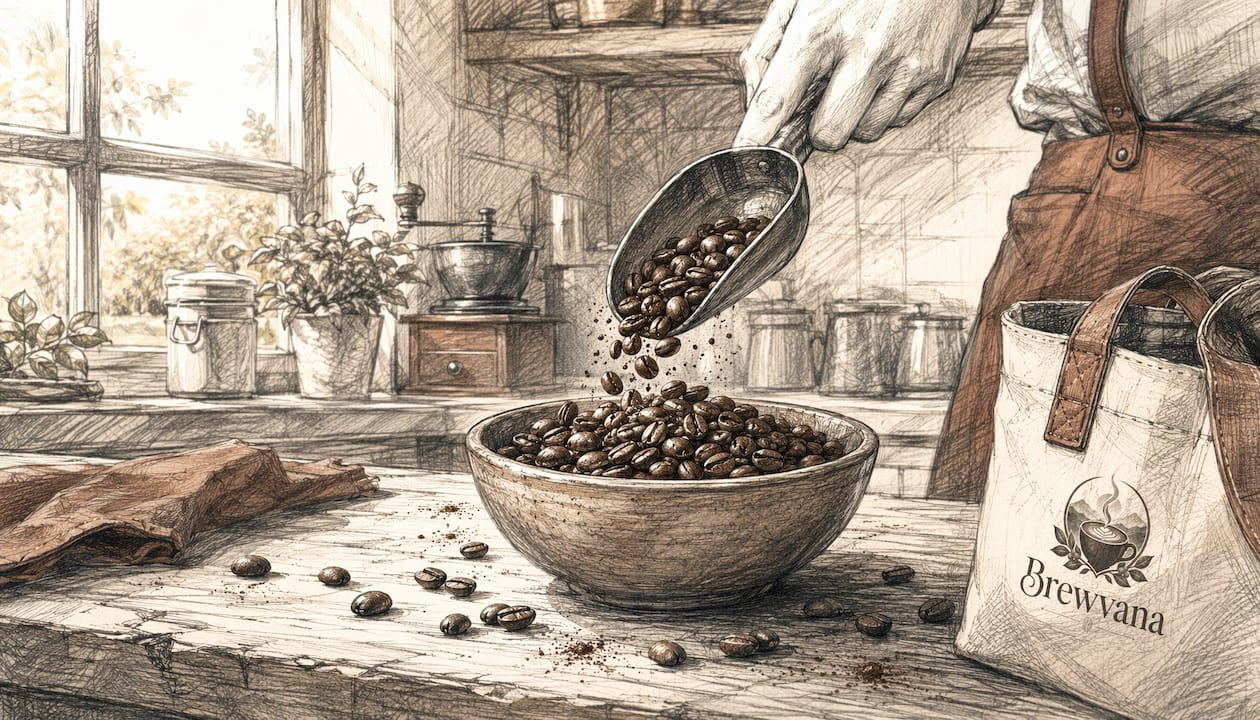
Small batch roasting also opens the door to processing experimentation. Natural process, washed, and honey-processed beans each respond differently to heat, and a small batch roaster can dial in a profile specific to the processing method rather than applying a one-size-fits-all approach.
How do you choose the right small batch coffee for your taste?
Start with roast level and origin, then work backward to your brew method.
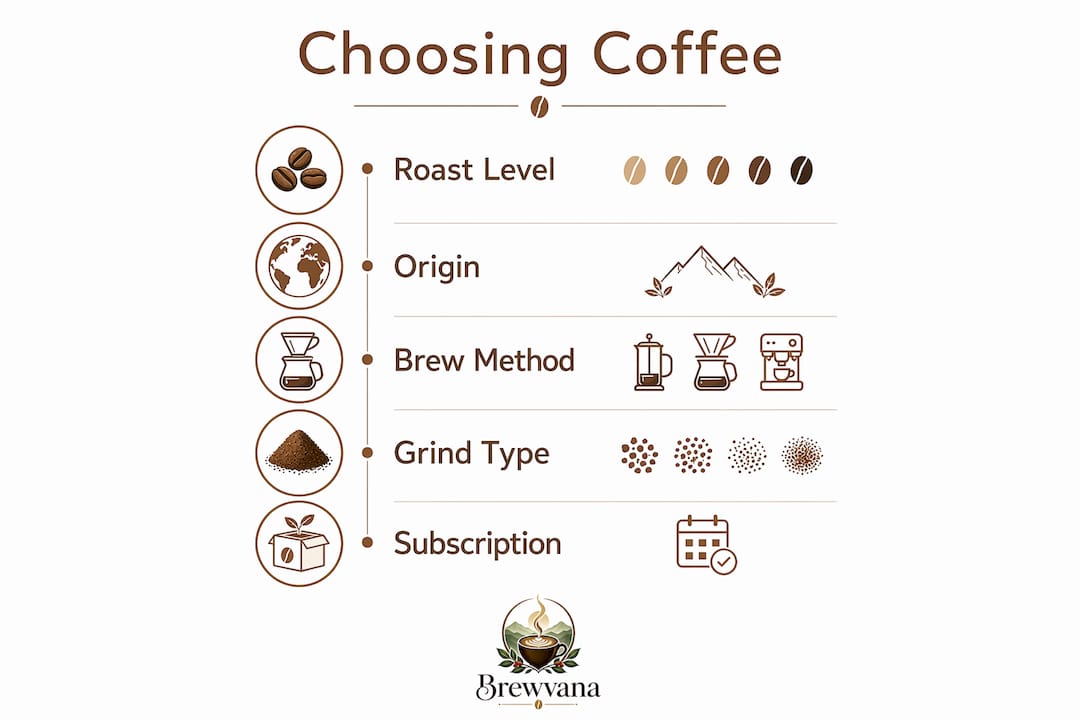
Match roast to flavor preference. Light roasts preserve the most origin character: floral, fruity, tea-like. Medium roasts balance brightness with body. Dark roasts lean into chocolate, caramel, and smoky notes. If you are not sure where you land, a single-origin sample pack across roast levels is the fastest way to find out.
Match origin to your palate. African coffees from Ethiopia and Kenya tend toward fruit and brightness. Latin American origins like Costa Rica and Peru offer cleaner, more balanced cups. Indonesian origins bring earthy, full-bodied weight. Matching coffee origin to your brewing style sharpens the experience considerably.
Consider your brew method. Pour-over and Chemex reward light to medium roasts with clear, nuanced flavor. French press suits medium to dark roasts, where body and oils carry the cup. Espresso works across roast levels but benefits from medium-dark beans that hold up under pressure.
Whole bean vs. ground. Whole beans stay fresh longer because grinding dramatically accelerates oxidation. If you have a grinder, always buy whole bean. If you don’t, buy ground only in quantities you’ll use within a week.
Sampler packs and subscriptions are genuinely the best way to explore without committing to a full bag of something you might not love. Roasters who offer them are confident in their range.
Pro Tip: When evaluating a new roaster, check whether they list the roast date, the specific farm or cooperative, and the processing method. A roaster who publishes sourcing details is one who has nothing to hide about quality.
Which small batch roasters are worth comparing?
The craft coffee market has grown enough that meaningful differentiation exists between roasters. Here is how the main approaches break down.
Single-origin specialists focus on one farm or region per offering, rotating seasonally as harvests come in. Their strength is traceability and flavor clarity. Brewvana’s Kenya single-origin delivers the bright, citrus-forward profile that makes East African coffee so compelling, while the Ethiopia Natural Process brings blueberry and jasmine notes that washed coffees rarely achieve.
Balanced everyday roasters prioritize approachable flavor and consistency over exotic profiles. Brewvana’s Costa Rica single-origin sits here: clean acidity, honey sweetness, reliable cup after cup.
Flavored coffee producers add a layer of creativity on top of quality base beans. Done well, as with Brewvana’s Chocolate Hazelnut and Candy Cane offerings, the flavoring complements rather than masks the coffee underneath.
Price ranges across the small batch market typically run $14–$22 per 12-ounce bag for single-origin offerings, with flavored and specialty options at similar or slightly lower price points. That premium over grocery store coffee reflects direct trade pricing, smaller production runs, and faster turnover.
How customer reviews reveal what roasters won’t tell you
Ratings and reviews surface patterns that marketing copy never will. Look for comments about freshness on arrival, accurate flavor descriptions, and how the roaster handles problems. A roaster with strong reviews mentioning specific tasting notes is one whose customers are actually tasting what was promised.
Watch for reviews that mention the roast date printed on the bag. Customers who notice and comment on it are the ones paying attention, and their feedback tends to be the most reliable signal of consistent quality.
Brewvana brings roasted-to-order craft coffee to your door
If you have spent time comparing small batch roasters and want a single source that covers the full range, from bright single-origin Kenya to festive flavored options, Brewvana roasts every order fresh and ships it fast. You get the sourcing transparency, the roast date on every bag, and the community impact built into every purchase.
Brewvana’s lineup covers light, medium, and dark roast options alongside single-origin favorites and flavored coffees, all roasted to order. The Flavored Coffees Sample Pack is a smart starting point if you want to taste the range before committing. Browse the full selection at brewvana.us and find your next favorite bag.
Key Takeaways
Small batch roasted coffee delivers superior freshness, origin-specific flavor, and ethical sourcing that mass-market brands cannot match at scale.
| Point | Details |
|---|---|
| Freshness window | Flavor peaks within two weeks of the roast date; always check the bag. |
| Batch size matters | Small batches allow real-time roast adjustments that preserve origin character and aromatic oils. |
| Sourcing transparency | Roasters who publish farm names, harvest dates, and purchase prices signal genuine quality commitment. |
| Choosing your coffee | Match roast level and origin to your brew method; sampler packs are the fastest way to find your preference. |
| Brewvana’s offering | Roasted-to-order single-origin and flavored coffees with full sourcing transparency and community impact built in. |