

Grinding whole beans for freshness is the single most effective step a home brewer can take to improve cup quality. Whole beans contain over 800 volatile flavor compounds locked inside a protective cellular structure. The moment you grind them, those compounds begin escaping. Brewing within 15–30 minutes of grinding captures the full aromatic profile before oxidation strips it away. This guide explains the science, the right equipment, and the exact steps to get the best cup every time.
Why grinding whole beans just before brewing matters
The whole bean’s outer shell acts as a barrier against oxygen and moisture. That barrier is the reason freshly roasted beans stay flavorful for weeks while pre-ground coffee goes flat in days.
Grinding fractures that shell and exposes surface area by a factor of 10,000 or more. That massive increase in exposed surface means oxygen reaches flavor compounds almost instantly. The result is rapid oxidation and aroma loss that no amount of careful storage can fully reverse.
The numbers make the case clearly. Ground coffee loses up to 60% of its aromatic intensity within 15 minutes after grinding. Noticeable degradation continues through the first 30–60 minutes, and the difference becomes obvious within 24–48 hours. That timeline means grinding the night before is not a minor inconvenience. It is a meaningful flavor sacrifice.
CO2 release adds another layer to this. Freshly roasted beans off-gas carbon dioxide, and that CO2 plays a role in flavor extraction during brewing. Grinding accelerates CO2 release, so beans ground too far in advance lose the gas that helps push flavor into your cup. The science is consistent: grind late, brew immediately.
Key freshness facts at a glance:
- Grinding increases surface area exposure by a factor of 10,000 or more
- Aroma loss reaches up to 60% within 15 minutes of grinding
- Flavor degradation is noticeable within 30–60 minutes
- CO2 release after grinding affects extraction quality
- Pre-ground coffee stored overnight produces a flat, dull cup
How to choose the right grinder and grind size
The grinder you use shapes both consistency and flavor retention. Burr grinders and blade grinders produce fundamentally different results, and the difference shows up in every cup.
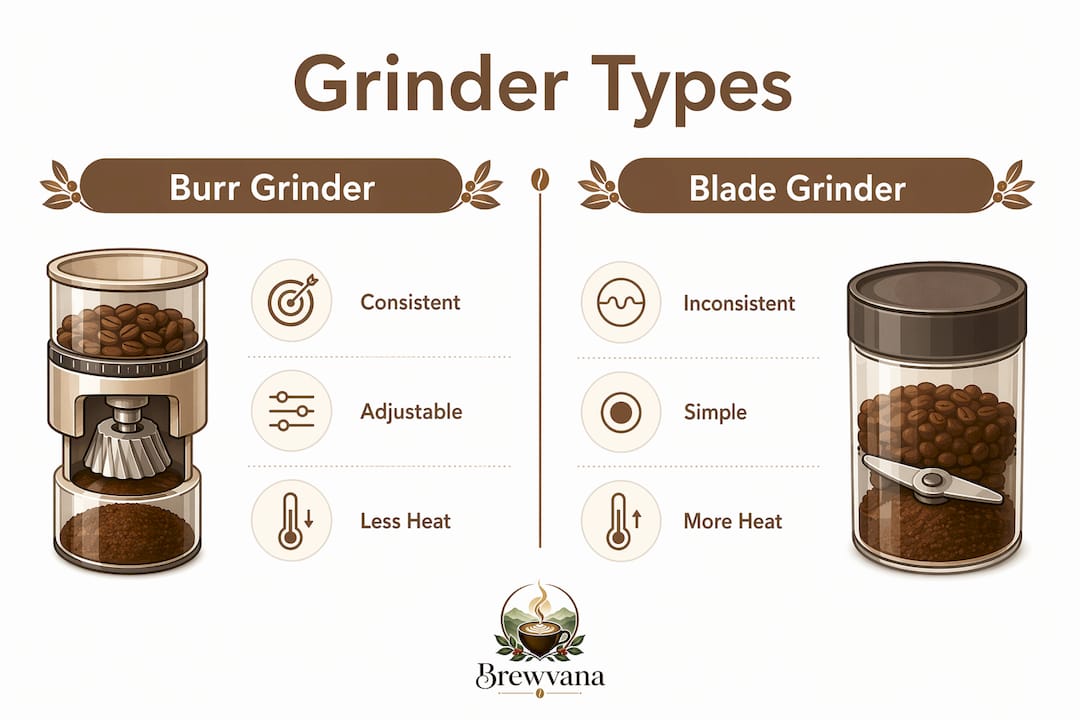
Burr grinders vs. blade grinders
Burr grinders crush beans between two abrasive surfaces set at a fixed distance. That distance controls particle size, so every grind produces a consistent result. Consistent particles extract evenly, which means balanced flavor without bitter or sour notes from mixed particle sizes. Burr grinders also generate less heat than blade grinders, which protects the volatile oils responsible for aroma.
Blade grinders chop beans with a spinning blade, producing a mix of fine dust and large chunks in the same batch. That inconsistency leads to uneven extraction. The blade also generates friction heat, which can damage flavor oils before the coffee even reaches your cup. For home brewers serious about freshness, a burr grinder is the correct choice.
Matching grind size to your brew method
Grind size directly controls how quickly water extracts flavor from coffee particles. A useful mental model uses common textures as reference points.
| Brew method | Grind size | Texture reference |
|---|---|---|
| French press | Coarse | Sea salt |
| Pour-over | Medium-coarse | Rough sand |
| Drip machine | Medium | Table salt |
| Espresso | Fine | Flour |
| Moka pot | Fine-medium | Fine sand |
Using a coarse grind in an espresso machine produces thin, sour coffee because water passes through too quickly. Using a fine grind in a French press produces bitter, muddy coffee because the grounds over-extract and pass through the filter. Match the grind to the method, and you remove one of the most common causes of bad coffee at home.
Pro Tip: Adjust your grind based on taste, not just a chart. Sour or thin coffee means your grind is too coarse. Bitter or harsh coffee means it is too fine. Taste feedback is faster and more reliable than any reference guide.
You can also explore different brewing methods at home to see how grind adjustments change the flavor profile of the same beans.
Step-by-step process for grinding whole beans at home
A repeatable process produces consistent results. These steps apply to any burr grinder and most brew methods.
-
Measure your beans by weight. Use a kitchen scale and measure whole beans before grinding. Weight-based measurement is more consistent than volume because bean density varies by roast level. A standard starting point is roughly 1 gram of coffee per 15 milliliters of water, adjusted to taste.
-
Preheat your grinder if needed. Cold burrs can affect grind consistency on some grinders. Run a few beans through and discard them before grinding your full dose. This step matters most in cold kitchens.
-
Set the correct grind size. Match your setting to the brew method using the table above. If you are brewing for the first time with a new bean, start at medium and adjust based on taste.
-
Grind in short bursts if using a blade grinder. Continuous grinding builds heat. Short pulses of 3–5 seconds with brief pauses reduce heat buildup and produce a slightly more even result. This does not fix the consistency problem, but it limits heat damage.
-
Brew immediately after grinding. Grinding ahead even by one hour diminishes flavor noticeably. Grind directly into your portafilter, filter basket, or French press and start brewing within minutes.
-
Clean your grinder regularly. Rancid oil buildup from old coffee residue taints fresh grounds. Use a small brush to clear the burrs and chute after each use. A deeper clean with a brush or dry rice every few weeks keeps the grinder producing clean-tasting coffee.
Pro Tip: Grind directly into your brewing vessel rather than a separate container. Every transfer exposes the grounds to more air and costs you aroma.
Common mistakes that undermine freshness
Even home brewers who grind fresh make errors that cost them flavor. Knowing the pitfalls is as useful as knowing the right steps.
-
Grinding too far in advance. This is the most common mistake. Grinding the night before, or even an hour before, causes measurable aroma loss. The fix is simple: grind right before you brew, every time.
-
Using the wrong grind size. A mismatched grind causes over-extraction or under-extraction regardless of bean quality. Bitter coffee almost always means the grind is too fine. Weak or sour coffee almost always means it is too coarse.
-
Buying beans in bulk without a storage plan. Large quantities of beans degrade faster once the bag is opened. Airtight containers in a cool, dark place preserve freshness for weeks. Freezing unopened bags extends storage further. One-way valve bags allow CO2 to escape without letting air in, which makes them the best packaging for whole beans. When freezing, tape the valve to prevent moisture from entering. Proper bean storage practices protect the investment you make in quality beans.
-
Skipping grinder maintenance. Old coffee oils go rancid quickly. A grinder that has not been cleaned in weeks adds a stale, bitter undertone to every cup, even when the beans are fresh.
-
Overheating beans during grinding. Blade grinders and long continuous grinding sessions generate friction heat. Heat damages the volatile oils that carry aroma. Short bursts and a burr grinder both reduce this risk.
Avoiding these mistakes is covered in detail in Brewvana’s guide to freshly roasted bean blunders, which addresses the full chain from roast to cup.
Key Takeaways
Grinding whole beans immediately before brewing is the single most effective way to preserve coffee’s aroma and flavor, because oxidation begins destroying volatile compounds within minutes of grinding.
| Point | Details |
|---|---|
| Grind right before brewing | Aroma loss reaches up to 60% within 15 minutes, so timing is critical. |
| Use a burr grinder | Burr grinders produce consistent particle sizes and generate less heat than blade grinders. |
| Match grind size to brew method | Coarse for French press, medium for drip, fine for espresso. |
| Store beans properly | Airtight containers in cool, dark places preserve whole bean freshness for weeks. |
| Clean your grinder regularly | Rancid oil buildup from old grounds taints even the freshest beans. |
What grinding fresh every morning actually taught me
The first time I switched from pre-ground to grinding whole beans right before brewing, the difference was not subtle. The coffee smelled alive in a way that pre-ground never does. That first cup reset my expectations entirely.
What surprised me most was how much grind size mattered beyond the basics. I had read the coarse-to-fine charts, but the real education came from tasting. A half-step finer on my burr grinder with a Guatemala single origin bean turned a flat pour-over into something genuinely complex. No chart told me that. My palate did.
The burr grinder investment felt steep at first. After a few weeks of consistently better coffee, it felt obvious. The grinder is the piece of equipment that touches every cup. Skimping on it while spending on premium beans is the wrong trade-off.
My honest advice: start with one bean, one brew method, and one grind setting. Taste it. Adjust the grind by one step. Taste it again. That loop teaches you more in a week than months of reading. Freshness is the foundation, but personal calibration is what turns a good cup into your best cup.
— Brewvana
Fresh beans worth grinding at home
The best grinding habit in the world only goes as far as the quality of the beans you start with. Brewvana sources and roasts whole beans specifically for home brewers who want to grind fresh and taste the difference.
The 6 Bean Dark Roast blend delivers a rich, full-bodied cup that holds up beautifully through any grind size. The hazelnut medium roast opens up with natural sweetness when ground fresh right before brewing. For home brewers who want a distinct, traceable flavor profile, the Guatemala single origin medium roast rewards careful grind adjustment with bright, layered complexity. Every bag ships roasted to order, so you get beans at peak freshness, ready for your grinder.
FAQ
How soon after grinding should I brew coffee?
Brew within 15–30 minutes of grinding for the best flavor. Ground coffee loses up to 60% of its aromatic intensity within 15 minutes due to oxidation.
What grind size is best for preserving freshness?
The best grind size depends on your brew method. Coarse for French press, medium for drip, and fine for espresso. Grinding to the correct size for your method also prevents over or under-extraction.
Is a burr grinder really necessary for fresh coffee?
A burr grinder produces consistent particle sizes and generates less heat than a blade grinder. Both factors directly improve flavor extraction and protect the volatile oils that carry aroma.
Can I grind beans the night before to save time?
Grinding the night before causes noticeable flavor loss. The coffee will taste flat and dull compared to beans ground fresh that morning. Grind right before brewing every time for the best result.
How do I store whole beans to keep them fresh before grinding?
Keep whole beans in an airtight container in a cool, dark place. One-way valve bags are ideal because they let CO2 escape without letting air in. Freezing unopened bags extends freshness further.