

Coffee crema is defined as the golden, velvety foam that forms on top of a freshly pulled espresso shot, caused by pressurized water forcing dissolved CO2 out of freshly roasted coffee beans and emulsifying it with coffee oils. This process, known as crema formation, is the direct result of physics and chemistry working together at 9 bars of pressure. Coffee crema explained what causes it comes down to three factors: bean freshness, extraction pressure, and the emulsification of oils and gases. Far from being decorative, crema is a real-time diagnostic signal that tells you exactly how well your shot was pulled.
What causes coffee crema formation?
Crema forms because freshly roasted coffee beans trap CO2 inside their cellular structure during the roasting process. When high-pressure water at 9 bars pushes through the compacted coffee grounds, it forces that dissolved CO2 out of the bean matrix. As the pressurized liquid exits the portafilter and pressure drops, the CO2 expands rapidly into microscopic bubbles.
Those bubbles do not simply pop. Coffee oils and melanoidins stabilize the gas bubbles to form a persistent foam, creating what scientists call a colloidal suspension. Melanoidins are brown compounds formed during roasting through the Maillard reaction. Proteins in the coffee also contribute to bubble wall stability, which is why crema holds its structure for several minutes rather than dissolving instantly.
The optimal freshness window for maximum crema quality is 2–4 weeks post-roast. Beans lose most of their trapped CO2 by 6–8 weeks after roasting. That timeline explains why freshly roasted beans from a source like Brewvana produce noticeably richer crema than grocery store beans that have been sitting on a shelf for months.
Pro Tip: Check the roast date on your bag before pulling a shot. Beans roasted more than 8 weeks ago will produce thin, pale crema regardless of how well you dial in your grind or pressure.
Key contributors to crema formation include:
- CO2 degassing: Freshly roasted beans release CO2 when hot pressurized water contacts them.
- 9 bars pressure: This is the industry standard that forces emulsification of oils and gases.
- Coffee oils: Natural lipids in the bean coat the CO2 bubbles and hold them stable.
- Melanoidins and proteins: These roasting byproducts reinforce the foam structure.
- Roast date: Beans within 2–4 weeks of roasting carry the most CO2 for crema production.
How grind size, temperature, and extraction time affect crema
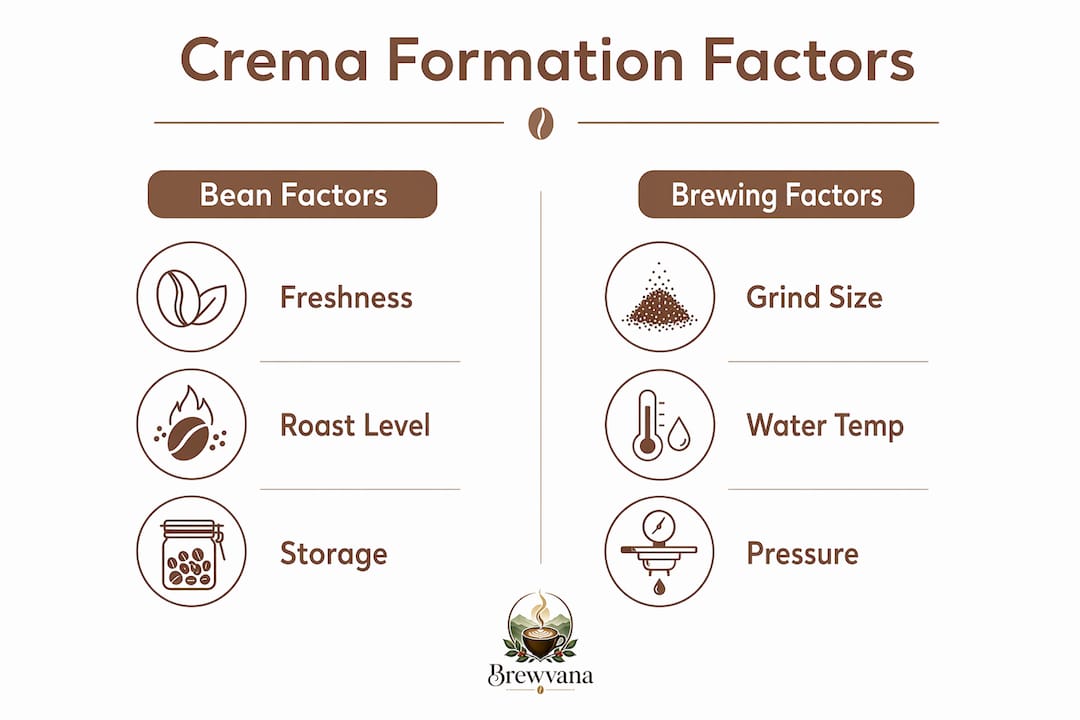
Grind size is the most direct variable a home barista controls. The recommended grind size for espresso is slightly finer than table salt. That fineness creates the resistance the pressurized water needs to slow down enough to extract oils and CO2 properly. Grind too coarse and water rushes through without emulsification. Grind too fine and the shot chokes, producing a bitter, dark, and thin-crema result.
Water temperature is equally critical. The optimal water temperature range sits between 190–196°F (88–91°C). Below that range, the water cannot dissolve enough oils and CO2 from the grounds. Above it, the extraction turns harsh and the crema takes on a dark, burnt appearance.
Extraction time ties everything together. A properly dialed shot runs for 25–30 seconds at a 1:2 ratio (one gram of coffee in for every two grams of liquid out). Shots that finish in under 20 seconds are under-extracted, producing pale, thin crema. Shots that drag past 35 seconds are over-extracted, yielding dark, bitter crema with a white dot in the center.
Pro Tip: Adjust your grind in half-step increments rather than large jumps. A single half-step finer can add 3–5 seconds to your extraction time and visibly thicken your crema.
Follow this sequence to dial in crema quality:
- Set your dose. Use a consistent coffee-to-water ratio, starting at 1:2 by weight.
- Grind slightly finer than table salt. This creates the resistance needed for proper emulsification.
- Tamp evenly with firm, level pressure. Uneven tamping causes channeling, which creates streaky or patchy crema.
- Target 190–196°F water temperature. Most quality espresso machines hold this range automatically.
- Pull for 25–30 seconds. Time from the first drop of espresso, not from when the pump starts.
- Observe the crema flow. Slow, even, reddish-brown flow signals a balanced extraction.
Uneven distribution of grounds before tamping causes channeling, where water finds a path of least resistance through the puck. Channeling shows up immediately in the crema as pale streaks or white edges. Tools like a WDT (Weiss Distribution Technique) needle help break up clumps and distribute grounds evenly before tamping.
How bean freshness, roast level, and storage shape crema
Roast level changes crema color and texture in predictable ways. Light roasts produce thinner, lighter-colored crema because they contain fewer melanoidins and less surface oil. Dark roasts produce thicker, darker crema with a reddish-brown hue because the roasting process pushes more oils to the bean surface. Medium roasts sit in the middle, offering a balance of crema volume and stability that many espresso enthusiasts prefer. The roast profile directly shapes both the color and the longevity of the crema layer.
A common myth is that thick crema equals a great shot. Crema thickness mostly depends on bean freshness and roast level, not extraction quality. A very fresh dark roast will produce a thick crema even if the extraction is slightly off. Conversely, a perfectly extracted shot from a lightly roasted, older bean may show thin crema but taste exceptional.
Beans roasted within 5 days can actually cause problems. Very fresh beans produce excessive CO2, creating unstable, over-gassed crema that collapses quickly and makes it harder to dial in consistent extraction. The sweet spot for most espresso work is 5–14 days post-roast, with peak crema quality in the 2–4 week window.
| Roast level | Crema color | Crema texture | CO2 content |
|---|---|---|---|
| Light | Pale tan | Thin, less stable | Moderate |
| Medium | Golden brown | Balanced, stable | High |
| Dark | Deep reddish-brown | Thick, oily | Very high initially |
Proper storage in an airtight container in a cool, dark place slows CO2 loss and preserves crema quality. Refrigeration is not recommended because condensation accelerates staling. Understanding the roast date’s role in CO2 retention is the single most underrated factor in home espresso quality.
What does crema tell you about your espresso shot?
Crema is a real-time diagnostic tool. Experienced baristas read crema color, texture, and flow to identify extraction problems before they even taste the shot. That skill is learnable, and it starts with knowing what each crema signal means.
The sensory experience of crema extends beyond appearance. Its velvety mouthfeel comes from suspended insoluble fibers and microscopic solids that coat the tongue and help flavor linger. Crema also traps aromatic compounds, which is why the first sip of a well-pulled espresso hits with a burst of fragrance that a crema-free shot simply cannot replicate.
Read your crema with these signals in mind:
- Even, slow-flowing, reddish-brown crema: Balanced extraction. Grind, temperature, and timing are dialed in.
- Pale or white crema: Under-extraction. Grind finer, raise temperature, or extend extraction time.
- Very dark brown or black crema: Over-extraction. Grind coarser, lower temperature, or shorten extraction time.
- Streaky or patchy crema: Channeling. Improve distribution and tamping evenness.
- Crema that collapses in under 30 seconds: Beans are either too fresh (under 5 days) or too old (over 8 weeks).
- Thick but flavorless crema: Roast level is high but beans may be stale or extraction is off.
Crema thickness alone does not reliably indicate flavor quality. A thick crema does not guarantee a good shot. The color gradient, stability, and flow pattern together give a far more accurate picture of what is happening inside the portafilter.
Key Takeaways
Coffee crema forms when 9 bars of pressure forces CO2 from freshly roasted beans to emulsify with coffee oils, and its color, texture, and stability directly reflect bean freshness, roast level, and extraction precision.
| Point | Details |
|---|---|
| Crema formation cause | High pressure forces CO2 from fresh beans to emulsify with oils, forming stable microbubbles. |
| Optimal bean freshness | Beans 5–14 days post-roast produce the most stable, quality crema. |
| Extraction parameters | Target 190–196°F water, slightly finer than table salt grind, and 25–30 second pull time. |
| Crema as a diagnostic tool | Color and flow reveal under-extraction, over-extraction, or channeling before you taste the shot. |
| Thick crema myth | Crema thickness reflects freshness and roast level, not shot quality on its own. |
What I’ve learned from years of chasing the perfect crema
The biggest mistake I see enthusiasts make is treating crema as the goal rather than the signal. Early on, I chased thick crema by using very dark roasts and very fresh beans. The shots looked spectacular. They tasted flat and harsh. That experience taught me that crema is feedback, not the finish line.
The most surprising lesson was how much unstable crema from beans roasted less than 5 days ago can throw off your entire dialing-in process. You adjust the grind, the shot time changes, but the crema still collapses. The problem is not your technique. The beans just need more time to rest. Patience with the rest period is the skill no one talks about enough.
Crema’s mouthfeel is genuinely underappreciated. When I started paying attention to how crema coats the tongue and extends the aftertaste, I began evaluating shots differently. A thin but stable crema from a well-rested medium roast often delivers a more satisfying sensory experience than a thick crema from a dark roast pulled slightly off. I encourage you to evaluate your espresso beyond the visual and start tasting with intention.
— Brewvana
Brewvana’s Breakfast Blend+ for espresso crema worth pulling
The science of crema starts with the bean, and bean freshness is non-negotiable.
Brewvana’s Breakfast Blend+ medium roast is roasted to order, which means it arrives in your hands within the ideal 2–4 week freshness window for crema production. The medium roast profile hits the sweet spot for crema: enough melanoidins and surface oils to produce stable, golden foam without the harsh bitterness of a dark roast. Every bag ships with a roast date so you know exactly where you are in the degassing window. If you are serious about pulling shots with consistent, quality crema, starting with freshly roasted beans is the only move that makes sense.
FAQ
What is coffee crema made of?
Coffee crema is a colloidal foam made of CO2 gas bubbles stabilized by emulsified coffee oils, melanoidins, and proteins. These compounds form a persistent, velvety layer on top of a freshly pulled espresso shot.
Why does my espresso have no crema?
The most common causes are stale beans (over 6–8 weeks post-roast), insufficient extraction pressure, or a grind that is too coarse. Freshly roasted beans and a properly calibrated espresso machine at 9 bars are the fastest fixes.
Does thick crema mean better espresso?
No. Crema thickness reflects bean freshness and roast level, not shot quality. A thick crema from stale dark-roast beans can accompany a flat-tasting shot, while thin crema from a well-rested light roast can taste exceptional.
How long should crema last on an espresso?
Quality crema holds for 1–2 minutes before breaking down. Crema that collapses in under 30 seconds usually signals beans that are either too fresh (under 5 days post-roast) or too old (over 8 weeks post-roast).
Can capsule machines produce real crema?
Capsule machines produce a foam that resembles crema, but it is primarily CO2 with minimal oil emulsification. True espresso crema requires pump-driven extraction at 9 bars, which most capsule machines do not achieve.