

Freshness in premium beverages is defined as the preservation of peak sensory compounds, including aroma volatiles, flavor precursors, and color pigments, from the moment of processing to the moment of consumption. The role of freshness in premium beverages determines everything you taste, smell, and experience in the cup. A specialty coffee or single-origin tea that reaches you at its freshest delivers a complexity that no amount of blending or flavoring can replicate. Brewvana builds its entire sourcing and roasting model around this principle, because freshness is not a marketing claim. It is a measurable, chemical reality that separates a memorable cup from a forgettable one.
How does freshness chemically affect premium coffee and tea?
Freshness degrades through chemistry, not just time. The moment coffee is roasted or tea leaves are processed, a countdown begins at the molecular level. Understanding what happens during that countdown explains why two bags of the same origin can taste completely different based on handling alone.
In green tea, flavor deterioration during storage causes a shift from “fresh and brisk” to “stale and dull” through oxidative degradation of amino acids and polymerization of catechins. Catechins are the antioxidant compounds that give green tea its clean, slightly astringent brightness. Once they polymerize, that brightness collapses into a flat, papery taste that no brewing technique can reverse.
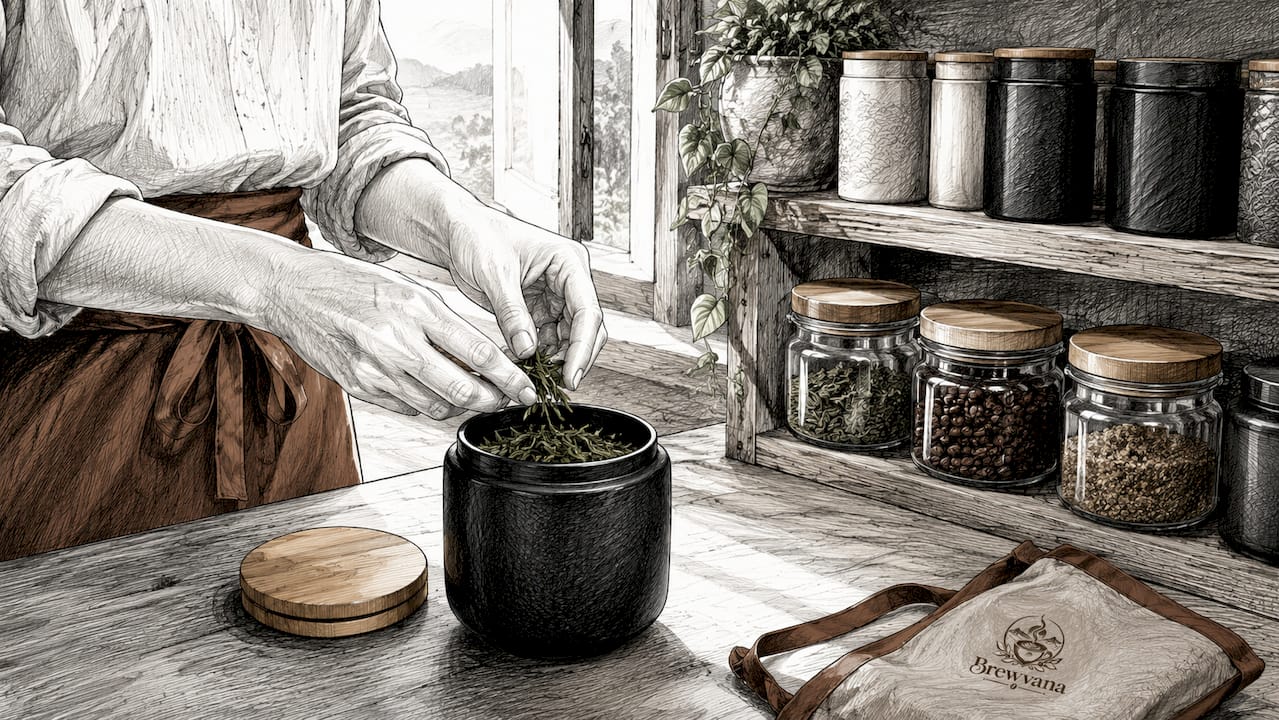
Coffee follows a parallel path. Immediately after roasting, beans release carbon dioxide in a process called degassing. Brewing too early, before degassing completes, produces off-flavors because CO2 interferes with extraction. Brewing too late, after the peak window closes, yields a stale, muted profile. Peak flavor windows degrade quickly without appropriate handling, even when the expiration date still shows weeks of shelf life. That gap between “not expired” and “actually fresh” is where most consumers lose quality without realizing it.
Aroma is the fastest casualty of freshness loss. Volatile aromatic compounds evaporate or oxidize within days of exposure to air. A freshly opened bag of quality coffee should release an immediate, complex scent. If it does not, the aromatics are already gone, and the cup will confirm it.
- Oxidation of catechins in green tea destroys brightness and astringency
- CO2 degassing in coffee must complete before brewing for clean extraction
- Volatile aromatics are the first compounds lost to air exposure
- Amino acid degradation in tea produces flat, papery off-notes
- Light and heat accelerate all chemical degradation reactions
Pro Tip: Smell your coffee or tea before brewing. A weak or absent aroma is the clearest sign that freshness has already declined, regardless of the date on the package.
What packaging techniques preserve freshness in premium beverages?
Packaging is the first line of defense against freshness loss, and its design choices directly determine how much quality survives the supply chain. Packaging barriers like nitrogen flushing and multi-layer opaque materials prevent oxidation that begins the moment a product leaves processing. Nitrogen flushing replaces oxygen inside the package with an inert gas, halting the oxidation reactions that destroy flavor compounds. Opaque multi-layer films block light, which triggers photo-oxidation and accelerates degradation even through clear packaging.
Packaging design also shapes how you perceive freshness before you open the bag. Visual realism and motion cues in packaging significantly increase consumer perceptions of freshness and purchase intention. A bag showing a lush coffee farm or a vibrant tea garden activates spatial imagery that primes your expectation of quality. That expectation is not just psychological. It reflects real information about how the brand treats its product from field to shelf.
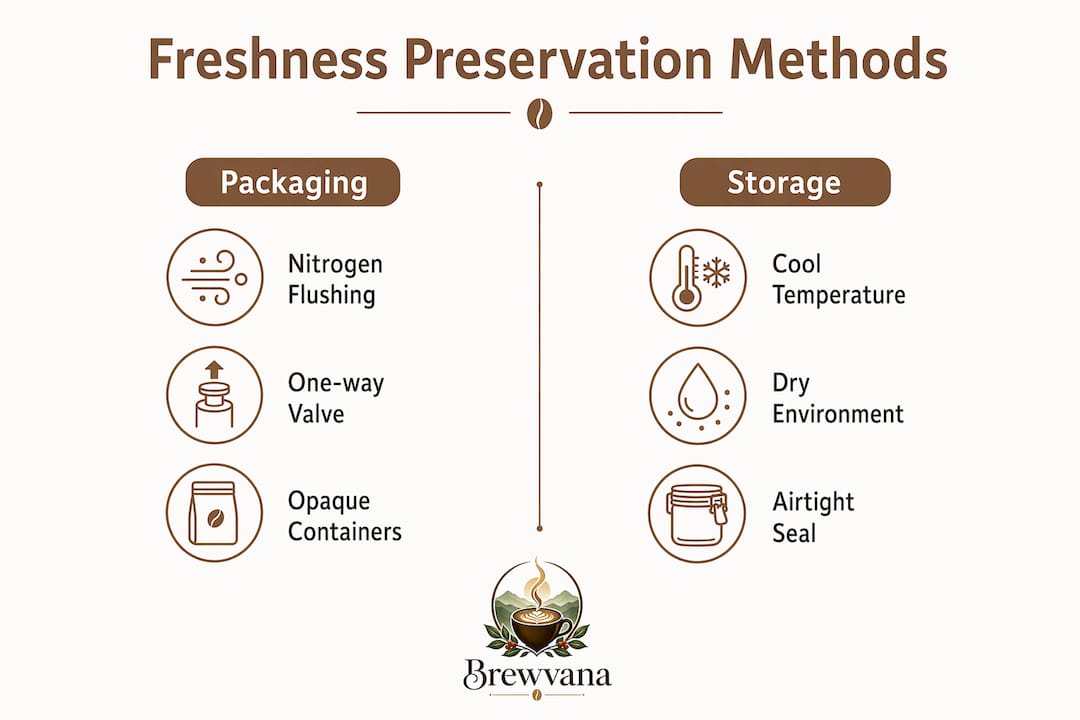
Refrigerated premium beverages typically carry a designed shelf life of 30–90 days, balancing ingredient integrity with distribution needs. A pH below 4.6 is critical for microbial safety in those products. Dry shelf-stable products like roasted coffee and loose-leaf tea rely on different preservation science. Water activity is a key factor controlling microbial and chemical spoilage beyond expiration dates. Lower water activity reduces microbial growth and enzymatic reactions, which is why properly dried tea and low-moisture roasted coffee last significantly longer than beverages with higher moisture content.
| Packaging method | What it prevents | Best used for |
|---|---|---|
| Nitrogen flushing | Oxidation of flavor compounds | Roasted coffee, premium teas |
| Multi-layer opaque film | Photo-oxidation from light exposure | All shelf-stable beverages |
| One-way degassing valve | CO2 buildup without oxygen entry | Freshly roasted coffee |
| Airtight resealable seal | Air exposure after opening | Loose-leaf tea, ground coffee |
| pH control below 4.6 | Microbial growth in refrigerated drinks | Cold-brew, bottled tea beverages |
Pro Tip: Check for a one-way degassing valve on any bag of roasted coffee. Its presence signals that the roaster packaged the beans fresh enough to still be releasing CO2, which is exactly what you want.
How can you recognize and maintain freshness at home?
Freshness recognition starts with your senses, not the label. Consumers experience freshness through aroma, clarity, and taste rather than dates alone, and inconsistent freshness erodes brand trust quickly. A vibrant aroma, a clear and bright liquor in tea, and a clean initial taste are the three sensory signals that confirm a product is still at its peak.
Knowing what to look for on the package matters just as much. For coffee, the roast date is more informative than the best-by date. For tea, the plucking date or harvest season tells you how recently the leaves were processed. Freshness in coffee hinges on roast and plucking dates, the degassing period, and protection from light and moisture. A roast date within the past two to four weeks is the target for most brewing methods.
Home storage habits determine how long that freshness lasts after purchase. These are the practices that protect what you paid for.
- Store coffee and tea in airtight containers away from light, heat, and moisture.
- Never store coffee in the refrigerator. Condensation introduces moisture that accelerates staling.
- Buy in quantities you will consume within two to four weeks of the roast or harvest date.
- Avoid reusing packaging that has lost its seal integrity. Transfer to a proper airtight container immediately.
- Keep tea away from strong-smelling foods. Dry tea leaves absorb ambient odors rapidly.
For loose-leaf tea storage at home, opaque tins or ceramic canisters with tight lids outperform clear glass jars. Light is a silent destroyer of tea freshness, and most consumers underestimate its impact. Freshness also drives repeat purchase decisions. When a product consistently delivers on its sensory promise, you return to it. When it does not, you do not.
What is the role of freshness in cocktails and mixed beverages?
Freshness is the single most critical variable in cocktail quality. No technique compensates for stale ingredients in premium beverages, and this truth applies as directly to a bar program as it does to a specialty coffee shop. A cocktail built on fresh citrus, house-made syrups, and live herbs delivers aromatic complexity that pre-bottled alternatives cannot match.
Sensory elements beyond ingredients critically define premium positioning in drinks. Aromatic complexity and chemesthesis, the physical sensation of carbonation, heat, or cooling, separate occasion-driven premium drinks from commodity options. Fresh ingredients deliver both. A freshly squeezed lime releases volatile aromatic compounds that a bottled juice product has already lost. Fresh mint bruised at service releases menthol and chlorophyll that dried or pre-cut mint cannot replicate.
The freshness impact on beverages in a cocktail context extends to every component.
- Freshly squeezed citrus must be prepared daily. Juice oxidizes within hours and loses its brightness.
- Fresh herbs should be added at service, not during prep, to preserve volatile aromatics.
- House-made syrups use fresh fruit or botanicals and carry a shelf life of one to two weeks maximum.
- Ice quality matters. Cloudy or off-smelling ice transfers those qualities directly to the drink.
- Garnishes are not decorative. A fresh citrus peel or herb sprig adds aromatic top notes that define the first impression.
Freshness preserved through the supply chain builds consumer trust and loyalty in every beverage category. A bar or brand that consistently delivers fresh, vibrant drinks earns repeat visits. One that cuts corners on ingredient freshness loses customers without ever knowing why.
Key Takeaways
Freshness is the defining factor in premium beverage quality, and protecting it from processing through consumption requires deliberate choices at every stage.
| Point | Details |
|---|---|
| Freshness is chemical, not just temporal | Oxidation and compound degradation begin immediately after processing, regardless of expiration dates. |
| Packaging determines survival | Nitrogen flushing, opaque films, and degassing valves protect flavor compounds through the supply chain. |
| Roast and harvest dates matter most | The roast date for coffee and plucking date for tea are more reliable freshness indicators than best-by dates. |
| Sensory cues confirm freshness | Strong aroma, clear liquor, and bright taste are the three signals that a product is still at its peak. |
| Fresh ingredients define premium cocktails | Daily preparation of citrus, herbs, and syrups is non-negotiable for cocktail quality at any level. |
Freshness is not a feature. It is the product.
After years of working with specialty coffee and tea, the biggest misconception I encounter is that freshness is a bonus, something nice to have on top of good sourcing or skilled roasting. That framing gets it exactly backward. Freshness is not layered on top of quality. It is the condition that allows quality to exist at all.
The second misconception is that expiration dates tell the whole story. They do not. A bag of coffee roasted six weeks ago and stored in a clear jar on a sunny counter is stale, even if the best-by date says otherwise. The chemistry does not wait for the label. What I have found actually works is treating freshness as a supply chain discipline, not a marketing claim. That means roasting to order, packaging immediately, and giving consumers the roast date so they can make informed decisions. At Brewvana, that transparency is the baseline, not a differentiator.
The reward for getting freshness right is not just better flavor. It is the moment a customer opens a bag and the aroma alone confirms they made the right choice. That moment builds trust faster than any description on a website. Prioritize freshness in what you buy and how you store it, and your daily cup will tell the difference.
— Brewvana
Brewvana’s freshness commitment, in every cup
Brewvana roasts to order and ships with roast date transparency so you always know exactly where your coffee stands in its peak flavor window. Every product in the catalog reflects that same standard, from single-origin Colombia coffee with traceable sourcing to premium loose-leaf green teas packed for maximum freshness retention.
Not sure where to start? The Single Origin Favorites Sample Pack lets you taste freshness across multiple origins side by side, so you can find what your palate responds to before committing to a full bag. Brewvana also donates a portion of every sale to local schools, so your purchase supports something beyond the cup.
FAQ
What does freshness mean in specialty coffee and tea?
Freshness in specialty coffee and tea refers to the preservation of volatile aromatics, flavor compounds, and color pigments from processing to consumption. It is measured by roast date, harvest date, and sensory performance, not just expiration labels.
How quickly does coffee go stale after roasting?
Coffee reaches its peak flavor window roughly four to fourteen days after roasting, once degassing completes. After four weeks without proper airtight storage, most of the volatile aromatics that define specialty coffee have already dissipated.
Why does green tea taste flat when it is old?
Oxidative degradation of catechins and amino acids during storage causes green tea to shift from “fresh and brisk” to “stale and dull.” These chemical changes are irreversible, which is why storage conditions matter as much as the quality of the leaf itself.
What is the best way to store coffee at home?
Store coffee in an airtight, opaque container at room temperature, away from heat and light. Coffee bean storage best practices consistently recommend against refrigeration, as condensation introduces moisture that accelerates staling faster than ambient air.
Does packaging really affect how fresh a beverage tastes?
Packaging barriers like nitrogen flushing and multi-layer opaque films prevent oxidation that begins immediately after processing. A product in well-designed packaging can retain its peak sensory profile significantly longer than the same product in permeable or clear packaging.