

Start with a quality vanilla syrup and match syrup intensity to roast weight. That single rule covers most issues when home baristas add flavored syrups to freshly roasted coffee. Light roasts need floral or citrus syrups; medium roasts take caramel, vanilla, or nutty profiles; dark roasts can handle chocolate and toasted sugar. Keep it to two syrups maximum, add them to hot espresso or warm coffee before milk or ice, and always start with fewer pumps than the bottle suggests.
Quick-start checklist:
- Pick vanilla as your first bottle (vanilla is the most versatile coffee syrup flavor for home baristas)
- Match syrup intensity to roast level (see the pairing table below)
- Start with 1 pump, taste, then add only if needed
- Use at most two syrups per drink
- Add syrup before milk or ice for even distribution
Table of Contents
- What are the best starter syrup flavors to buy first?
- How do you match syrups to different roast levels?
- Which two-syrup combinations actually work?
- How do you choose a quality syrup worth buying?
- How much syrup should you actually use?
- How does milk choice change your syrup dosing?
- Why does temperature change how syrups taste?
- Quick recipes for common flavored drinks
- How do you make simple syrups at home?
- How do you fix a flavored coffee that tastes off?
- Key Takeaways
- Brewvana’s take on syrups and freshly roasted coffee
- Try Brewvana’s flavored coffees with your next syrup experiment
- Useful sources and further reading
What are the best starter syrup flavors to buy first?
Vanilla is the right first bottle. It works hot and iced, pairs with every milk type, and doesn’t compete with origin notes in freshly roasted beans. A good vanilla syrup reads as warm and slightly floral, not flat-sweet like imitation extract. That distinction matters most when you’re working with quality beans.
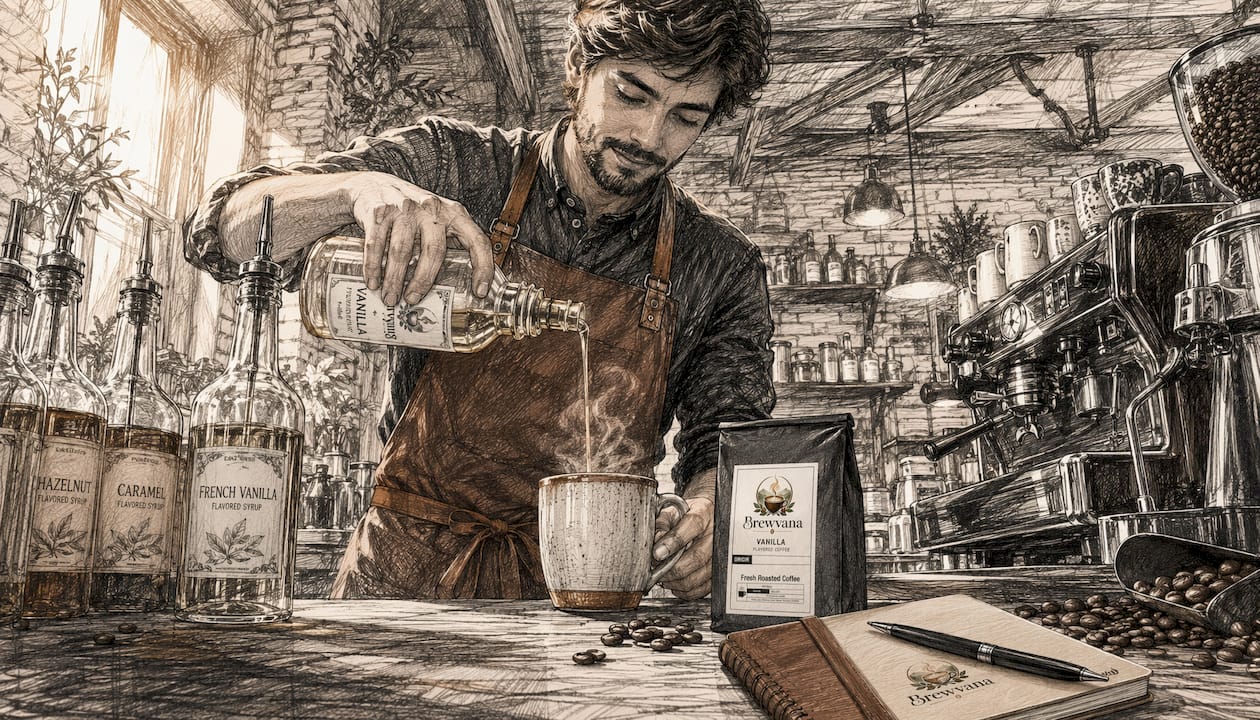
Your second bottle should be either caramel or hazelnut. Caramel adds buttery depth and works in almost every format, from a straight latte to a blended iced drink. Hazelnut brings warm, toasty complexity that pairs especially well with medium-roast espresso. If you’re drawn to lighter, single-origin roasts, a botanical option like lavender or bergamot opens up a different direction entirely.
One neutral base (vanilla) plus one character bottle (caramel or hazelnut) unlocks a dozen different drinks without cluttering your shelf.
Pro Tip: Buy a small bottle of each before committing to a liter. Flavor perception shifts dramatically between hot and iced formats, and a syrup you love in a latte may taste cloying over ice.
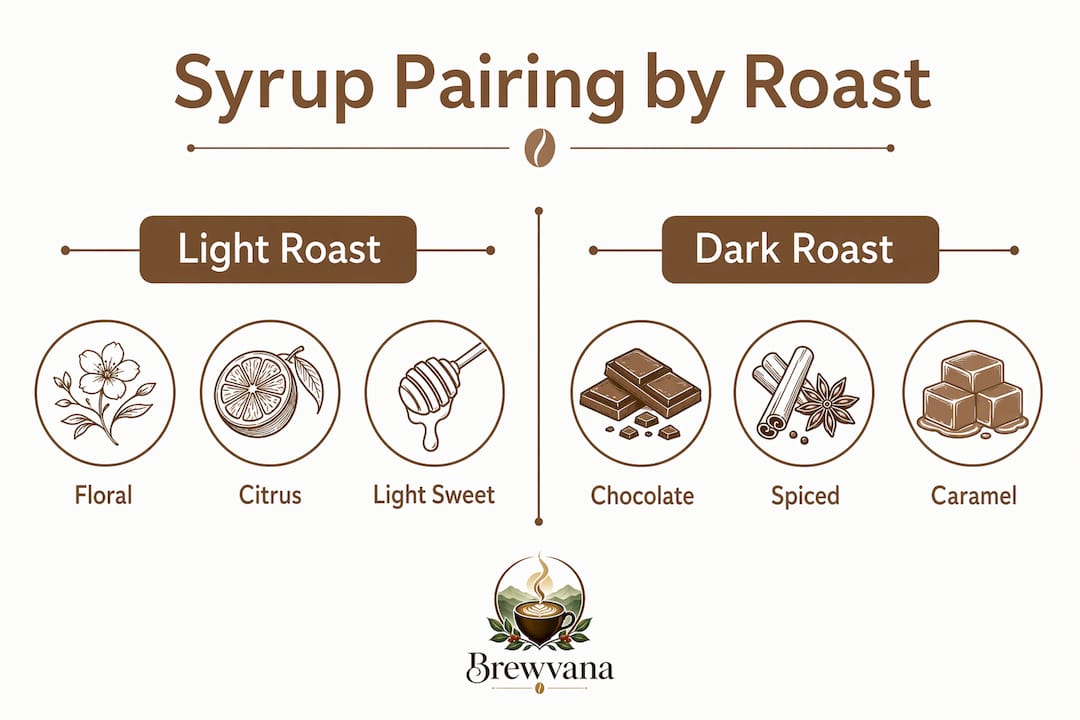
How do you match syrups to different roast levels?
The goal with freshly roasted coffee is to add flavor without erasing what makes the beans worth buying. A light Ethiopian with jasmine and stone-fruit notes doesn’t need caramel on top of it. A dark Sumatra can handle it.
| Roast Level | Syrup Families | Avoid |
|---|---|---|
| Light | Floral (lavender, rose), citrus (bergamot, orange), light honey | Caramel, chocolate, toasted sugar |
| Medium | Vanilla, caramel, toffee, hazelnut, almond | Heavy chocolate, peppermint |
| Medium-dark / Dark | Dark chocolate, toasted sugar, brown sugar, toffee, mocha | Delicate florals, citrus |
The roast-to-pairing matrix above reflects a practical principle: syrup intensity should rise with roast weight. Single-origin light roasts are the most fragile. Use subtle syrups at low doses, or skip syrup entirely and let the origin speak.
Pro Tip: When you’re unsure, choose the lighter syrup option and under-dose. Adding more is easy. Fixing an over-sweetened cup means starting over.
Which two-syrup combinations actually work?
Vanilla and caramel is the foundational pairing. It works hot, iced, with dairy, and with oat milk. The vanilla rounds out the caramel’s sweetness and prevents it from reading as one-dimensional. Split the pumps evenly: 1 vanilla + 1 caramel for an 8–12 oz drink.
Other reliable combinations:
- Hazelnut + dark chocolate: The Nutella effect. Rich, dessert-forward, and best in steamed-milk drinks. Avoid this one in a delicate pour-over.
- Cinnamon + brown sugar: Warm and seasonal. Excellent in cold brew and iced lattes where the spice note holds up well.
- Lavender + vanilla: Subtle and floral. Best in oat-milk lattes with a light-roast espresso base.
- Peppermint + mocha: A classic winter pairing. The mint cuts through the chocolate’s richness in milk-heavy drinks.
Three syrups in one drink almost always muddies the cup. Two is the ceiling.
How do you choose a quality syrup worth buying?
The ingredient list tells you most of what you need to know. Look for real extracts, fruit purees, botanical distillates, or organic and invert sugars. Higher-quality syrups made with clean sugar bases preserve clarity in layered drinks, while cheaper syrups can stack artificial notes when combined.
Three syrup categories to know: sugar-based (most versatile, best flavor accuracy), sugar-free (thinner mouthfeel, works in iced formats), and concentrated artisan lines (lower sweetness, more nuanced, shorter shelf life once opened). For premium, freshly roasted beans, concentrated artisan syrups tend to complement rather than overpower.
Avoid high-fructose corn syrup bases and anything labeled only “natural flavor” with no further ingredient detail. Both tend to taste flat in espresso-forward drinks.
How much syrup should you actually use?
Home baristas consistently over-pump. Start with fewer pumps than the bottle suggests, add syrup to warm coffee before milk or ice, then taste before adding more.
| Drink Size | Single Syrup | Two Syrups (split) |
|---|---|---|
| 8 oz | 1 pump (~½ tsp) | ½ + ½ pump |
| 12 oz | 1–2 pumps (~1 tsp) | 1 + 1 pump |
| 12 oz | 2–3 pumps (~1½ tsp) | 1–2 + 1 pump |
For the taste-test: evaluate sweetness first, then mouthfeel, then whether the coffee’s origin is still detectable. If you can’t taste the bean at all, the syrup dose is too high. Adjust in half-pump increments.
Pro Tip: No pump? Use ¼ teaspoon as your starting unit. It’s close enough to a standard pump for practical dosing.
How does milk choice change your syrup dosing?
Fuller-bodied milks like oat and whole dairy amplify perceived sweetness. If you’re using oat milk, reduce your syrup dose by roughly half a pump compared to what you’d use with skim. The fat and body in oat milk carry flavor more efficiently.
Lighter milks work the other way:
- Almond milk: Mutes sweetness slightly; a small dose increase keeps the flavor present.
- Soy milk: Similar to almond in sweetness perception; also adds a slight nuttiness that pairs well with hazelnut or vanilla.
- Skim milk: Thinner body; may need a touch more syrup than whole dairy for the same perceived sweetness.
Practical pairing notes: vanilla and caramel shine with oat milk. Hazelnut and chocolate hold up better with whole dairy. Lavender and citrus syrups are best with almond or oat for a cleaner, less heavy finish.
Why does temperature change how syrups taste?
Cold mutes volatile aromatics. A syrup that smells and tastes vibrant in a hot latte can seem flat and one-dimensional over ice. That’s why cold brew benefits from slightly richer syrup profiles — vanilla, caramel, and chocolate all hold up when chilled.
Ice and added milk dilute flavor concentration. For iced drinks, use the upper end of the dosing range. For hot drinks, stay at the lower end.
Pro Tip: For cold brew, add syrup to the concentrate before diluting with water or milk. The syrup integrates more evenly at that stage.
Quick recipes for common flavored drinks
- Vanilla caramel latte (12 oz): Pull a double shot, add 1 pump vanilla + 1 pump caramel to the hot espresso, stir, then add 8 oz steamed oat or whole milk.
- Iced hazelnut coffee (12 oz): Brew 4 oz strong coffee or a double shot, add 2 pumps hazelnut, stir until dissolved, pour over ice, top with 6 oz cold milk.
- Cold brew with cinnamon brown sugar (12 oz): Combine 6 oz cold brew concentrate with 6 oz water or milk, stir in 1½ pumps cinnamon brown sugar syrup before adding ice.
- Caramel mocha (12 oz): Pull a double shot, add 1 pump caramel + 1 pump dark chocolate syrup, stir, add 8 oz steamed milk, finish with a light caramel drizzle.
| Drink | Espresso/Coffee | Syrup Total | Milk |
|---|---|---|---|
| 12 oz latte | 2 shots | 2 pumps | 8 oz steamed |
| 12 oz iced coffee | 2 shots or 4 oz strong brew | 2 pumps | 6 oz cold |
| 12 oz cold brew | 6 oz concentrate | 1½ pumps | 6 oz water or milk |
| 12 oz mocha | 2 shots | 2 pumps (split) | 8 oz steamed |
How do you make simple syrups at home?
Homemade syrups give you full ingredient control, which matters when you’re pairing with gourmet flavored coffee or single-origin beans.
Vanilla bean simple syrup: Combine 1 cup water and 1 cup sugar in a saucepan over medium heat. Split one vanilla bean, scrape the seeds in, and add the pod. Stir until sugar dissolves, simmer 5 minutes, cool, strain.
Brown sugar cinnamon syrup: Same ratio, swap white sugar for brown sugar, add 2 cinnamon sticks. Simmer 8 minutes for deeper spice extraction.
Berry reduction: Simmer 1 cup mixed berries with ½ cup sugar and ½ cup water for 10–12 minutes. Strain and cool. Bright and tart; excellent with light-roast iced coffee.
| Syrup | Shelf Life (refrigerated) | Discard When |
|---|---|---|
| Vanilla bean | 2–3 weeks | Cloudy or off-smell |
| Brown sugar cinnamon | 2–3 weeks | Mold visible or sour smell |
| Berry reduction | 1–2 weeks | Color fades or fermented smell |
How do you fix a flavored coffee that tastes off?
Run through this checklist before dumping the drink:
- Aroma check: Does it smell like coffee with a hint of the syrup, or does the syrup dominate? If the syrup dominates, you’re over-dosed.
- Acidity check: Can you detect any brightness from the bean? If the coffee tastes flat and one-dimensional, the syrup is masking origin character.
- Mouthfeel check: Does it feel balanced and smooth, or cloying and thick? Thick usually means too much syrup or a low-quality base.
- Aftertaste check: A clean finish means good balance. A lingering artificial sweetness points to a low-quality syrup.
Common fixes: too sweet, cut syrup by 25–50% next time or dilute with a splash of black coffee. Muddled flavors, remove one syrup entirely. Origin completely masked, reduce dose or switch to a subtler syrup. Always taste with the same milk and temperature you plan to serve.
Key Takeaways
Matching syrup intensity to roast level is the single most important rule in any flavored coffee syrup pairing guide — everything else is refinement.
| Point | Details |
|---|---|
| Start with vanilla | Vanilla is the most versatile starter syrup, working hot, iced, and with every milk type. |
| Match intensity to roast | Light roasts need floral or citrus syrups; dark roasts take chocolate and toasted sugar. |
| Under-dose and taste | Start with 1 pump per 8–12 oz, taste before adding more, and adjust in small increments. |
| Two syrups maximum | Three syrups in one drink muddies flavor; split pumps evenly when using two. |
| Try Brewvana’s sample pack | The Flavored Coffee Sample Pack lets you dial in pairings with freshly roasted beans before committing to a full bag. |
Brewvana’s take on syrups and freshly roasted coffee
The advice in this guide reflects something Brewvana thinks about with every roast: freshness is the foundation, and everything added to the cup should serve it, not compete with it. A syrup that masks a well-sourced bean is a waste of both the syrup and the bean.
The reason Brewvana roasts to order is precisely so the origin character in each bag is still alive when it reaches you. A light Ethiopian with natural fruit notes, a medium Colombian with caramel and walnut, a dark Sumatra with earthy depth — these profiles are worth preserving. The right syrup, at the right dose, can frame those notes rather than bury them. That’s the whole point of a pairing approach.
Brewvana’s curated sample packs exist specifically for this kind of experimentation. Trying a vanilla syrup against two or three different roast levels in the same week teaches you more about pairing than any guide can.
Try Brewvana’s flavored coffees with your next syrup experiment
If you want to test these pairing principles with beans that are actually fresh, Brewvana’s Flavored Coffee Sample Pack is the lowest-friction way to start. It gives you multiple roast profiles and flavor bases in one order, roasted to order, so you’re tasting the bean at its peak when you dial in your syrup ratios.
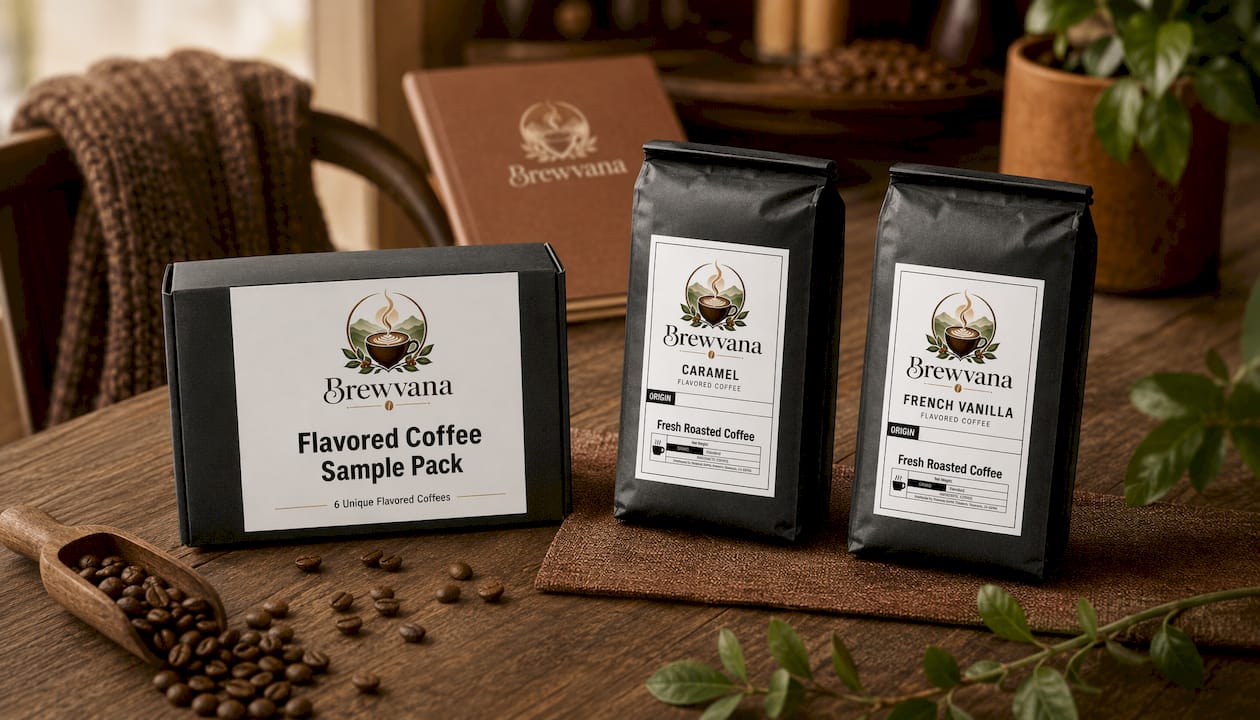
For readers who already know their direction, the Caramel Flavored Coffee and French Vanilla Flavored Coffee are single-bag options that pair naturally with the syrup combinations covered here. The caramel coffee works beautifully with a vanilla or chocolate syrup layered on top. The French vanilla pairs cleanly with a caramel or hazelnut syrup for a richer, dessert-style finish. Start with the sample pack to find your roast match, then order the single bag you keep reaching for.
Useful sources and further reading
- Best Coffee Syrups of 2026: A Barista’s Guide to Café-Style Flavor at Home — Amoretti. Supports vanilla-as-starter recommendation, syrup quality guidance, and cold-brew temperature effects.
- Best Coffee Syrup Flavor Combinations: The Home Barista’s Complete Pairing Guide — Coffee Treasures. Primary source for the roast pairing matrix and pump-count examples.
- Coffee And Syrup Recipes & Pairings — SummerStirs. Supports syrup function explanation, temperature effects, and taste-test checklist.
- Barista Syrup Guide — Best Flavors & Uses — SummerStirs. Syrup type breakdown and milk-dosing adjustments.
- Coffee Syrups: Everything You Need to Know Before You Pour — CoffeeAtLaShQ. Operational dosing steps and tasting workflow.
- Best Coffee Syrups for Home Baristas: 2026 Picks — Portland Syrups / BeverageMixers. Ingredient quality standards and milk pairing guidance.