

Common coffee brewing mistakes are errors in measurement, grind, temperature, or technique that cause under-extraction, over-extraction, or uneven extraction, producing a cup that tastes sour, bitter, or flat. Most home brewers repeat the same handful of coffee preparation errors without realizing it, and fixing them produces a dramatically better result without buying new equipment. This guide covers the top coffee brewing blunders in order of impact, with specific corrections you can apply on your next brew.
1. Common coffee brewing mistakes start with measuring by volume
Measuring coffee with scoops or tablespoons is the single most common source of inconsistency at home. Bean density varies by roast level and origin, so the same tablespoon holds a different mass of coffee every time. A light roast bean is denser than a dark roast, meaning a scoop of light roast delivers more coffee by weight than the same scoop of dark roast.
The fix is a digital kitchen scale. Standard ratios by mass run from 1:15 for French press to 1:16–1:17 for drip and pour-over. The Specialty Coffee Association recommends 55g of coffee per liter of water for drip brewing, which works out to roughly a 1:18 ratio. That number gives you a repeatable baseline you can adjust up or down to taste.
- Weigh both coffee and water, not just the coffee
- Start at 1:16 and adjust by 1 gram at a time
- Log your ratio alongside your tasting notes so you can repeat a good cup
Pro Tip: Tare your brewing vessel on the scale before adding water. Pouring directly onto the scale removes the guesswork of measuring water in a separate container.
2. Using the wrong grind size for your brew method
Grind size controls how fast water extracts flavor from coffee. A grind that is too coarse lets water pass through too quickly, pulling only the acidic compounds and leaving a sour, thin cup. A grind that is too fine slows water down, pulling bitter compounds and producing a harsh, muddy result. Extraction progresses from acids to sugars to bitter compounds, and the goal is to stop in the middle.
Match your grind to your method:
- French press: coarse, like rough sea salt
- Drip or pour-over: medium, like table salt
- Espresso: fine, like powdered sugar
Pro Tip: If your cup tastes sour, grind finer. If it tastes bitter, grind coarser. One adjustment at a time tells you exactly what changed.
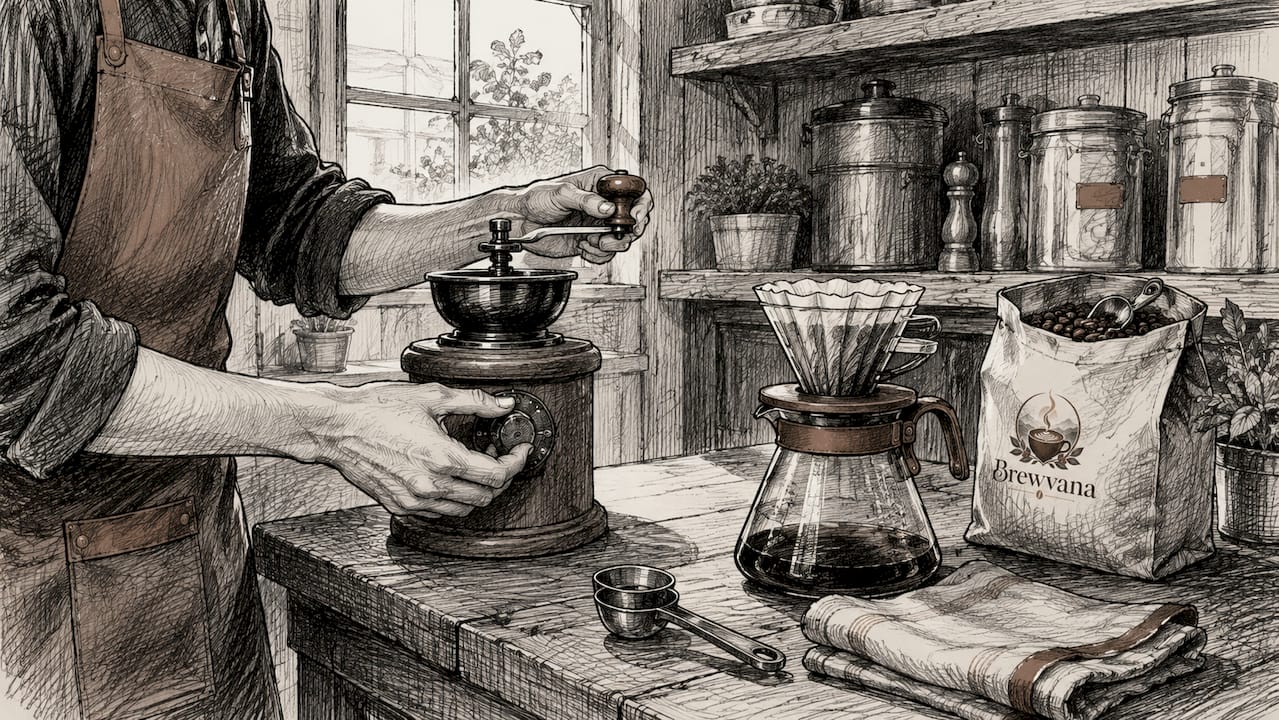
The grinder type matters as much as the setting. Blade grinders produce uneven particle sizes called fines, which over-extract while larger chunks under-extract simultaneously. The result is a cup that is both bitter and sour at once. A burr grinder, even an entry-level hand burr grinder, produces a consistent particle size that makes every other variable easier to control. Grind immediately before brewing. Pre-ground coffee goes stale within minutes of exposure to air.
3. Getting water temperature wrong
Water temperature is the throttle on extraction speed. The correct brewing range is 195°F–205°F. Below 195°F, water cannot dissolve the sugars and aromatic compounds that make coffee taste balanced. Above 205°F, it scorches the grounds and pulls harsh, bitter compounds too aggressively.
Most home brewers make one of two errors. They pour boiling water (212°F) directly onto grounds, or they let the kettle sit too long and pour water that has cooled below 190°F. Both produce a noticeably worse cup. The practical fix is to pull the kettle off heat and wait 30 seconds before pouring, which drops the temperature into the correct range without a thermometer.
- Preheat your brewer, carafe, and mug before brewing
- Pouring into cold vessels drops brew temperature by 10–15°F instantly
- A gooseneck kettle with a built-in thermometer removes all guesswork
Pro Tip: Fill your pour-over dripper or French press with hot water for 30 seconds, then dump it before adding grounds. That single step keeps your brew temperature stable from the first pour to the last.
4. Brewing with stale or improperly stored beans
Freshness is the variable most home brewers underestimate. Coffee loses over 60% of its volatile aromas within 15 minutes of grinding. That loss is irreversible. Pre-ground coffee sold in grocery stores has already lost most of its aromatic complexity before it reaches your kitchen.
Whole beans stay fresh longer, but only if stored correctly. Heat, light, moisture, and oxygen all accelerate staling. A bag left open on the counter loses quality within days.
- Store beans in an airtight, opaque container at room temperature
- Keep the container away from the stove, window, and refrigerator
- Use roast-dated beans within 2–3 weeks of the roast date for peak flavor
- Never freeze beans you plan to use within the month
Brewvana’s roast-to-order model ships beans within days of roasting, which means you receive coffee at peak freshness rather than coffee that has sat in a warehouse for weeks. For more detail on keeping beans fresh after they arrive, the Brewvana storage guide covers container types, temperature, and shelf life in practical terms.
5. Skipping the bloom step
The bloom is a 30-second pre-infusion step where you pour a small amount of hot water (about twice the weight of your coffee grounds) and let it sit before continuing the full pour. Fresh coffee releases CO2 gas when it contacts hot water. That gas creates a barrier between the water and the grounds, blocking even extraction if you skip the bloom.
Skipping this step is one of the most frequent coffee preparation errors in pour-over and drip brewing. The result is channeling, where water finds the path of least resistance through the grounds rather than saturating them evenly. Channeling produces a cup with both under-extracted and over-extracted flavors at the same time.
The bloom takes 30 seconds. Pour just enough water to wet all the grounds, watch them puff up and release gas, then continue your pour. That single step improves extraction evenness more than almost any equipment upgrade.
6. Ignoring equipment hygiene
Dirty equipment causes bitterness and off-flavors through rancid coffee oils that build up on grinders, carafes, and brewers. Coffee oil oxidizes quickly and turns acrid. A brewer that has not been cleaned in a week is coating every fresh batch with old, stale residue.
| Mistake | Impact | Fix |
|---|---|---|
| Unwashed carafe | Rancid oil bitterness | Rinse with hot water after every use |
| Dirty grinder burrs | Stale flavor in every grind | Brush burrs weekly; deep clean monthly |
| Mineral buildup in brewer | Reduced water flow, weak extraction | Descale with white vinegar monthly |
| Leaving coffee on a warming plate | Burnt, harsh flavor | Transfer to a thermal carafe immediately |
Pro Tip: Run a cycle of equal parts white vinegar and water through your drip brewer once a month, followed by two plain water cycles. Your brewer will flow better and your coffee will taste cleaner.
7. Using poor-quality water
Water makes up more than 98% of a brewed cup of coffee. Unfiltered tap water with chlorine and minerals dulls flavor clarity and interferes with extraction. Chlorine in particular suppresses the bright, fruity, and floral notes that make specialty coffee worth drinking.
The fix is simple. Use filtered water from a pitcher filter or a faucet-mounted filter. Avoid distilled water, which has no mineral content and produces flat, lifeless coffee. The target is water that tastes clean and neutral on its own. If you would not drink it straight, it will not make good coffee.
8. Grinding too far in advance
Grinding whole beans immediately before brewing is one of the highest-impact brewing coffee tips for home brewers. The surface area of ground coffee is enormous compared to whole beans, and that surface area is exposed to oxygen the moment grinding stops. Flavor compounds escape within minutes.
Many home brewers grind the night before to save time in the morning. By the time they brew, the coffee has already lost a significant portion of its aroma. Grinding takes 20–30 seconds with a hand grinder and under 10 seconds with an electric burr grinder. That time investment pays off in every sip.
9. Misreading astringency as bitterness
Astringency is a dry, puckering mouthfeel that many brewers confuse with bitterness. Astringency signals over-extraction or old beans, not just a grind that is too fine. The correction for bitterness (coarsen the grind) does not fix astringency caused by stale beans. Recognizing the difference saves you from chasing the wrong variable.
If your cup tastes dry and coating on the palate rather than sharp and harsh, check your beans first. Stale beans produce astringency even with a perfect grind and temperature. Fresh beans brewed at the same settings will taste clean and balanced.
Key Takeaways
Avoiding the most common coffee brewing mistakes, specifically errors in measurement, grind, temperature, freshness, and hygiene, produces a consistently better cup without requiring new equipment.
| Point | Details |
|---|---|
| Measure by mass | Use a digital scale with a 1:15–1:17 ratio for consistent extraction every time. |
| Match grind to method | Coarse for French press, medium for drip, fine for espresso; use a burr grinder. |
| Control water temperature | Brew between 195°F and 205°F; preheat vessels to prevent temperature drop. |
| Use fresh beans | Grind immediately before brewing and use roast-dated beans within 2–3 weeks. |
| Clean your equipment | Rinse carafes daily and descale brewers monthly to eliminate rancid oil bitterness. |
What I’ve learned from fixing one mistake at a time
The most useful thing I’ve found about improving home brewing is that you do not need to fix everything at once. Brewers who try to change their grind, ratio, temperature, and beans simultaneously cannot tell which adjustment made the difference. One variable at a time gives you real feedback.
Start with measurement. Buy a scale before you buy a better grinder. A scale costs less than most grinders and immediately makes every other variable more controllable. Once your ratio is consistent, move to grind size. Once grind is dialed in, address temperature. The quality jump from eliminating just two or three key mistakes is significant enough that most brewers notice it within the first week.
The other thing I’d push back on is the idea that better coffee requires expensive equipment. A $20 hand burr grinder, a $10 kitchen scale, and a bag of freshly roasted beans from a roast-to-order source will outperform a $200 drip machine loaded with stale pre-ground coffee from a grocery store shelf. Freshness and technique beat equipment almost every time.
— Brewvana
Fresh beans make every technique work better
Correcting your technique matters most when your beans are worth the effort. Brewvana roasts to order, which means your coffee ships within days of roasting rather than sitting in a warehouse. Every bag carries a roast date so you know exactly where you are in the freshness window.

The Max Caf High-Caffeine Coffee Blend is a strong starting point for home brewers who want a forgiving, full-bodied coffee that holds up well across grind sizes and brew methods. If you want to explore flavor differences across origins, the single-origin sample pack lets you taste how technique changes affect different bean profiles. Fresh coffee makes every correction you apply to your brewing process immediately audible in the cup.
FAQ
What is the correct coffee-to-water ratio?
The Specialty Coffee Association recommends 55g of coffee per liter of water for drip brewing. For French press, a 1:15 ratio by mass produces a fuller-bodied cup.
Why does my coffee taste sour?
Sourness signals under-extraction, caused by water that is too cool, a grind that is too coarse, or a brew time that is too short. Grind finer or raise your water temperature to 195°F–205°F.
How does grind size affect coffee flavor?
Grind size controls extraction rate. A coarse grind extracts slowly and produces sour, thin coffee. A fine grind extracts quickly and produces bitter, harsh coffee. Matching grind size to your brew method hits the balanced middle.
How long do coffee beans stay fresh after roasting?
Whole beans stay at peak flavor for 2–3 weeks after the roast date when stored in an airtight, opaque container at room temperature. Pre-ground coffee loses most of its aroma within 15 minutes of grinding.
Does water quality really affect coffee taste?
Filtered water produces noticeably cleaner, brighter coffee compared to unfiltered tap water. Chlorine and excess minerals in tap water suppress delicate flavor compounds and dull the cup.