

Coffee community initiatives are defined as programs that combine coffee culture with social, environmental, or educational goals to create lasting local impact. These programs span six continents and address everything from gender equity on farms to mental health support for growers. The Women-Powered Coffee Coalition, SANA, and the Global Coffee Alliance for Good represent the most active forces shaping this movement in 2026. What makes these programs distinct from standard charity work is their integration of coffee skills training with deeper community needs, including economic resilience, ecological restoration, and psychological wellbeing.
1. Examples of coffee community initiatives: social empowerment programs
Social empowerment is the most common thread running through coffee community projects worldwide. These programs treat coffee skills as a vehicle for broader life change, not just a job skill.
The most prominent example is the Women-Powered Coffee Coalition, which supports 500 women smallholder farmers in Chiapas, Mexico with training and direct grants. That scale matters because it moves beyond pilot programs into measurable regional impact. The coalition pairs technical coffee skills with business literacy, giving women tools to negotiate better prices and manage farm finances independently.
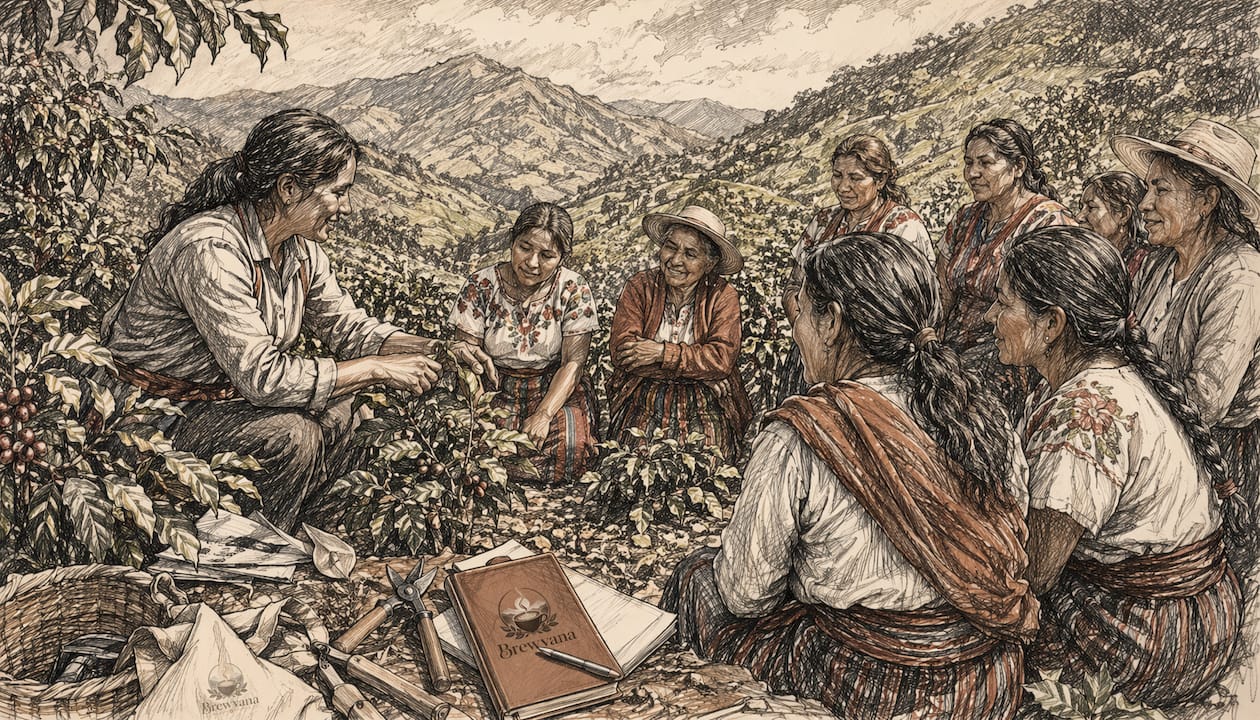
In Australia, Carrie’s Coffee Van trains domestic violence survivors in coffee service skills. The first cohort of six survivors completed the program, gaining both barista credentials and a pathway to stable employment. The mobile format keeps overhead low while reaching women who may not access traditional training centers.
Street Bean, based in Seattle, runs apprenticeship programs that give homeless youth paid work experience in specialty coffee. Participants earn wages, build a professional reference, and gain food handler certifications that transfer across the hospitality industry.
- Women-Powered Coffee Coalition: Grants and training for 500 women farmers in Chiapas, Mexico
- Carrie’s Coffee Van: Barista training for domestic violence survivors in Australia
- Street Bean: Paid apprenticeships for homeless youth in Seattle
Pro Tip: If you want to support social empowerment programs, look for initiatives that combine income generation with skills certification. Certifications create lasting economic mobility, while income alone rarely does.
2. Environmental sustainability projects tied to coffee farming
Environmental sustainability and community livelihoods are not competing goals in the best coffee programs. The most effective projects treat ecological restoration as an economic strategy.
The Forest Coffee Reforest Project works directly with Colombian producers and aims to plant 500 trees in 2026. Tree planting in coffee regions serves dual purposes: it restores biodiversity corridors and provides shade that improves bean quality over time. Farmers who participate gain both environmental credentials and a higher-value product.
The Mindanao agroforestry pilot in the Philippines transformed 10 hectares across 20 indigenous households. The project improved biodiversity and community resilience by introducing multi-strata cropping systems that layer food crops, timber trees, and coffee plants. This approach reduces financial risk because households are not dependent on a single harvest.
| Project | Location | Environmental Focus | Community Benefit |
|---|---|---|---|
| Forest Coffee Reforest | Colombia | Tree planting, shade cover | Higher-quality beans, carbon offset |
| Mindanao Agroforestry Pilot | Philippines | Biodiversity, multi-strata crops | Food security, income diversification |
| Women-Powered Coalition Farms | Mexico | Sustainable farm practices | Economic independence for women |
The Mindanao project also integrated cultural practices into its planting schedule, aligning work cycles with indigenous rituals. That integration built genuine community ownership rather than compliance. Projects that skip this step often see land revert to previous use within two years of funding ending.
Pro Tip: When evaluating environmental coffee programs, ask whether local farmers hold decision-making power over the land. Farmer ownership is the single strongest predictor of long-term ecological success.
3. Mental health support for coffee farming communities
Mental health is the most underfunded area in coffee community support. Most programs focus on income or skills, leaving psychological wellbeing unaddressed despite its direct effect on farm productivity and family stability.
SANA is the clearest exception. The program provides tele-counseling and virtual workshops for women coffee farmers in Colombia. It expanded from 39 women in its pilot phase to 66 participants in 2025, with a goal to reach 500 annually by 2029. That growth rate reflects genuine demand from a population that rarely has access to mental health services.
The SANA model works because it removes the two biggest barriers to mental health access in rural areas: travel distance and social stigma. Virtual sessions let women participate privately from their farms. Workshops cover stress management, relationship dynamics, and financial anxiety, all of which are directly connected to farming pressures.
- Tele-counseling: One-on-one virtual sessions for women dealing with farm stress and trauma
- Group workshops: Peer-supported learning on mental health and financial wellbeing
- Expansion target: 500 participants annually by 2029
Economic income alone does not break poverty or trauma cycles in farming communities. SANA’s approach recognizes that sustainable coffee communities require psychological resilience alongside financial stability. This shift toward service-oriented support represents the next evolution in how the coffee industry thinks about social responsibility.
4. Community collaboration and education programs
Education and tool access are the foundation of self-sustaining coffee communities. Programs that distribute knowledge alongside physical resources create the most durable local impact.
The Global Coffee Alliance for Good (GCAG) supports farmers in Indonesia with free training programs, tool donations from brands like TIMEMORE, and global cupping events that raise funds and awareness simultaneously. The cupping event model is particularly effective because it connects urban coffee consumers directly to rural farming communities through a shared sensory experience.
“Small-scale, local cupping events and modest actions can create significant collaborative impact internationally. Hosting a cupping with available specialty coffees and campaign materials mobilizes community support at a scale that individual donations rarely achieve.”
The GCAG model also demonstrates that low-barrier participation matters. Small cafes and independent roasters can join global campaigns without large budgets. A single cupping event at a neighborhood café can generate both funds and awareness that reach farming communities thousands of miles away.
Social preparation is equally critical. The Mindanao project found that building trust with tribal councils and elders was more important than the quality of training materials or the size of the budget. Projects that skipped this relationship-building phase failed regardless of their funding level.
Readers who want to understand how these education models connect to broader supply chain ethics can explore community-supported agriculture coffee models that apply similar principles at the consumer level.
- Identify a local cupping event or campaign tied to a global initiative like GCAG
- Host or attend a cupping that features single-origin coffees from initiative regions
- Share campaign materials through your café, workplace, or community group
- Donate tools or supplies to partner organizations working in farming communities
- Connect with indigenous-led cooperatives to support governance-first programs
5. How to compare and choose which initiatives to support
Not every initiative fits every supporter. The right match depends on your values, resources, and the type of impact you want to create.
Social empowerment programs like the Women-Powered Coffee Coalition and Street Bean are best for supporters who prioritize direct human outcomes: employment, safety, and economic independence. These programs show measurable results quickly because they track participant employment rates and income changes.
Environmental programs like the Forest Coffee Reforest Project and the Mindanao agroforestry pilot suit supporters focused on long-term ecological outcomes. Results take longer to materialize. The first coffee harvest from a newly planted agroforestry system takes 3–4 years, so patience and multi-year commitment are required.
Mental health and education programs like SANA and GCAG are ideal for supporters who believe systemic change requires addressing root causes. These programs are harder to evaluate through simple metrics but produce the deepest community transformation over time.
| Initiative Type | Best For | Time to Impact | Engagement Options |
|---|---|---|---|
| Social empowerment | Employment and safety advocates | Short term | Donations, volunteer training |
| Environmental sustainability | Ecology-focused supporters | Long term (3–4 years) | Land sponsorship, tree planting |
| Mental health support | Systemic change advocates | Medium term | Program funding, awareness campaigns |
| Education and collaboration | Community builders | Medium term | Hosting events, tool donations |
New initiatives often require upfront investment in communal infrastructure beyond what coffee revenue alone can cover. Programs like Vida Café and mobile coffee vans rely on grants and communal ownership models to fund equipment upkeep and operational costs. Understanding this financial reality helps supporters set realistic expectations and contribute in ways that actually sustain programs long-term.
Readers interested in making consumer choices that align with these values can start by learning how to choose ethically sourced coffee beans, which connects purchasing decisions to the communities behind the cup.
Key Takeaways
The most effective coffee community initiatives combine social empowerment, environmental restoration, and education because each element reinforces the others and creates resilience that income generation alone cannot achieve.
| Point | Details |
|---|---|
| Social empowerment drives real change | Programs like the Women-Powered Coffee Coalition and Street Bean link skills training to lasting economic mobility. |
| Environmental and community goals align | Agroforestry projects in Colombia and the Philippines show that ecological restoration improves farm income simultaneously. |
| Mental health is the missing layer | SANA’s tele-counseling model proves that psychological support is as critical as financial aid for farming communities. |
| Trust-building precedes everything | Projects that engage indigenous governance and local leadership succeed; those that skip this step fail regardless of funding. |
| Small actions scale globally | Local cupping events and tool donations through programs like GCAG create measurable international impact at low cost. |
Why I think coffee community programs are the industry’s most underrated force
Most conversations about ethical coffee focus on certification labels: Fair Trade, Rainforest Alliance, organic. Those labels matter, but they measure compliance, not transformation. The programs covered here do something different. They treat coffee farming communities as partners in designing their own futures, not as recipients of external standards.
What strikes me most is the mental health gap. The coffee industry has spent decades improving farm economics and environmental practices. SANA’s work in Colombia reveals that we largely ignored the psychological toll of farming under climate stress, market volatility, and gender inequality. Expanding from 39 to 66 participants in a single year, with a target of 500 annually, shows how fast demand grows once access exists.
The indigenous governance lesson from Mindanao is equally important. Funding and training are not enough. Projects that synchronize with traditional rituals and earn the trust of tribal councils create community ownership that outlasts the program itself. That is the difference between a project and a movement.
My prediction: by 2030, the coffee brands with the strongest community relationships will outperform those focused solely on supply chain efficiency. Consumers are already choosing based on origin stories and social impact. The initiatives listed here are building exactly the kind of authentic relationships that will define the next decade of specialty coffee.
— Brewvana
Brewvana’s commitment to coffee with community impact
Brewvana sources coffee from regions where community programs like those described here are actively shaping farming practices and farmer wellbeing. Every purchase contributes to Brewvana’s commitment to donating a portion of sales to local schools, connecting your daily cup to real community benefit.
Readers who want to experience coffee from community-supported origins can start with Brewvana’s Costa Rica single origin or the Ethiopia Natural Process, both sourced from regions with active sustainability programs. For those who want to sample across origins, the single origin sample pack offers a practical way to explore the stories behind each cup. Choosing coffee this way turns a daily habit into a small but consistent act of community support.
FAQ
What are coffee community initiatives?
Coffee community initiatives are programs that use coffee culture, skills training, or supply chain relationships to create social, environmental, or educational benefits for farming and local communities.
How does the Women-Powered Coffee Coalition work?
The Women-Powered Coffee Coalition provides training and grants to 500 women smallholder farmers in Chiapas, Mexico, combining technical coffee skills with business literacy to support economic independence.
What is SANA’s role in coffee farming communities?
SANA provides tele-counseling and virtual mental health workshops for women coffee farmers in Colombia, expanding from 39 pilot participants to 66 in 2025 with a goal of 500 annually by 2029.
How can small cafes participate in global coffee community programs?
Small cafes can host local cupping events through programs like the Global Coffee Alliance for Good, donate tools, or join campaigns like Equal Origins 2026 without requiring large budgets or operational changes.
Why do some coffee community projects fail?
Projects that skip social preparation and fail to build trust with local leadership or indigenous governance structures often fail regardless of funding quality, as demonstrated by the Mindanao agroforestry project’s findings.